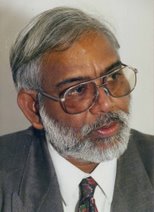
Dr. John Dayal
Member: National Integration Council
Government of India
National President: All India Catholic Union (Founded 1919)
Secretary General: All India Christian Council (Founded 1999)
President: United Christian Action, Delhi (Founded 1992)
MOST URGENT
505 Link, 18 IP Extension, Delhi 110092 India
Email:
\u003c/span\>\u003c/p\>\n\u003cp style\u003d\"margin:0in 0in 0pt;text-align:right\" align\u003d\"right\"\>\u003cspan style\u003d\"font-size:10pt\"\>Phone: \n91-11-22722262 Mobile 09811021072\u003c/span\>\u003c/p\>\n\u003cp style\u003d\"margin:0in 0in 0pt;text-align:justify\"\>\u003cu\>\u003cspan style\u003d\"font-size:14pt\"\>\u003cfont face\u003d\"Times New Roman\"\>PRESS STATEMENT \n\u003c/font\>\u003c/span\>\u003c/u\>\u003c/p\>\n\u003cp style\u003d\"margin:0in 0in 0pt;text-align:justify\"\>\u003cfont face\u003d\"Times New Roman\" size\u003d\"3\"\>14 July 007\u003c/font\>\u003c/p\>\n\u003cp style\u003d\"margin:0in 0in 0pt;text-align:justify\"\>\u003cu\>\u003cspan style\u003d\"font-size:14pt\"\>\u003cspan style\u003d\"text-decoration:none\"\>\u003cfont face\u003d\"Times New Roman\"\> \u003c/font\>\u003c/span\>\u003c/span\>\u003c/u\>\u003c/p\>\n\u003cp style\u003d\"margin:0in 0in 0pt;text-align:justify\"\>\u003cb\>\u003cu\>\u003cspan style\u003d\"font-size:14pt\"\>\u003cfont face\u003d\"Times New Roman\"\>Civil Society distressed at racial Profiling of Indian \nMuslims\u003c/font\>\u003c/span\>\u003c/u\>\u003c/b\>\u003c/p\>\n\u003cp style\u003d\"margin:0in 0in 0pt;text-align:justify\"\>\u003cfont face\u003d\"Times New Roman\" size\u003d\"3\"\> \u003c/font\>\u003c/p\>\n\u003cp style\u003d\"margin:0in 0in 0pt;text-align:justify\"\>\u003cfont face\u003d\"Times New Roman\" size\u003d\"3\"\>Civil Society in India must be deeply distressed \nthat our democratic Government admits to have started religious profiling of its \nown Muslim citizens in the wake of the bombings in the Untied Kingdom in which \nat least one Indian doctor is a prime suspect.\u003c/font\>\u003c/p\>\n\u003cp style\u003d\"margin:0in 0in 0pt;text-align:justify\"\>\u003cfont face\u003d\"Times New Roman\" size\u003d\"3\"\>No activist or association working for Human \nRights, Civil Liberties and Freedom of Faith issues condones terrorism, or the \nkilling and maiming of civilians – or for that matter even of combatants – in \nbombings, shootouts, or attacks. It is because of this that we condemn landmines \nand booby traps as much as we do torture, custodial deaths and fake \nencounters.\u003c/font\>\u003c/p\>\n\u003cp style\u003d\"margin:0in 0in 0pt;text-align:justify\"\>\u003cfont face\u003d\"Times New Roman\" size\u003d\"3\"\>We are also all of one accord that terrorism and \nterrorists can not be labeled by religion, caste, race or nationality, and at \nthe end whatever motivates the killers, it is ordinary men, women and children \nwho have nothing to do with the confrontation, who get killed. This has been the \ncase all through.",1]
);
//-->
johndayal@vsnl.com
Phone: 91-11-22722262 Mobile 09811021072
PRESS STATEMENT
14 July 007
Civil Society distressed at racial Profiling of Indian Muslims
Civil Society in India must be deeply distressed that our democratic Government admits to have started religious profiling of its own Muslim citizens in the wake of the bombings in the Untied Kingdom in which at least one Indian doctor is a prime suspect.
No activist or association working for Human Rights, Civil Liberties and Freedom of Faith issues condones terrorism, or the killing and maiming of civilians – or for that matter even of combatants – in bombings, shootouts, or attacks. It is because of this that we condemn landmines and booby traps as much as we do torture, custodial deaths and fake encounters.
We are also all of one accord that terrorism and terrorists can not be labeled by religion, caste, race or nationality, and at the end whatever motivates the killers, it is ordinary men, women and children who have nothing to do with the confrontation, who get killed. This has been the case all through.
\u003c/p\>\n\u003cp style\u003d\"margin:0in 0in 0pt;text-align:justify\"\>\u003cfont face\u003d\"Times New Roman\" size\u003d\"3\"\>Profiling of communities because of the actions of \nindividuals is a shortcut that States take when their respect for their own \npeople is overwhelmed by the colossal failure of their security forces. The \nworse case scenario is when governments and authorities in charge of security \nand police forces are themselves guilty of partisanship, bigotry and \nhate.\u003c/font\>\u003c/p\>\n\u003cp style\u003d\"margin:0in 0in 0pt;text-align:justify\"\>\u003cfont face\u003d\"Times New Roman\" size\u003d\"3\"\>Christians have been victims of religious \nprofiling in Gujarat for almost ten years now, \nand have borne the brunt of it under the chief ministership of Mr. Narendra \nModi, a hero to a political ideology that feeds on hate.\u003cspan\> \u003c/span\>Sikhs suffered religious profiling for \nmore than a decade through the Seventies and into the Nineteen hundred and \nEighties. \u003cspan\> \u003c/span\>Muslims, whether we have \nthe courage to accept it or not, have been victims of an informal, unofficial \nand latent profiling since Independence, and the absence of the community from \nthe Intelligence Bureau, Raw, and till quite recently, from the higher echelons \nof the Army, are directly linked to this national aberration.\u003c/font\>\u003c/p\>\n\u003cp style\u003d\"margin:0in 0in 0pt;text-align:justify\"\>\u003cfont face\u003d\"Times New Roman\" size\u003d\"3\"\>As is obvious, once it is given legitimacy, \nreligious, caste and racial profiling spreads its tentacles far beyond the \nimmediate police needs of surveillance. An entire community is stigmatized, its \npatriotism and nationalism tested and made suspect.\u003c/font\>\u003c/p\>\n\u003cp style\u003d\"margin:0in 0in 0pt;text-align:justify\"\>\u003cfont face\u003d\"Times New Roman\" size\u003d\"3\"\>It is the worst in the case of stigmatizing of the \nreligious minorities. No one, quite correctly, bothers about the religion of the \narmed militants of the ULFA or of the many terrorist groups of the North East. \nNo one bothers about the religion of dacoits and the many thugs and gang-lords \nwhose writ runs in large tracts of Haryana, Uttar Pradesh, Rajasthan, ",1]
);
//-->
Profiling of communities because of the actions of individuals is a shortcut that States take when their respect for their own people is overwhelmed by the colossal failure of their security forces. The worse case scenario is when governments and authorities in charge of security and police forces are themselves guilty of partisanship, bigotry and hate.
Christians have been victims of religious profiling in Gujarat for almost ten years now, and have borne the brunt of it under the chief ministership of Mr. Narendra Modi, a hero to a political ideology that feeds on hate. Sikhs suffered religious profiling for more than a decade through the Seventies and into the Nineteen hundred and Eighties. Muslims, whether we have the courage to accept it or not, have been victims of an informal, unofficial and latent profiling since Independence, and the absence of the community from the Intelligence Bureau, Raw, and till quite recently, from the higher echelons of the Army, are directly linked to this national aberration.
As is obvious, once it is given legitimacy, religious, caste and racial profiling spreads its tentacles far beyond the immediate police needs of surveillance. An entire community is stigmatized, its patriotism and nationalism tested and made suspect.
It is the worst in the case of stigmatizing of the religious minorities. No one, quite correctly, bothers about the religion of the armed militants of the ULFA or of the many terrorist groups of the North East. No one bothers about the religion of dacoits and the many thugs and gang-lords whose writ runs in large tracts of Haryana, Uttar Pradesh, Rajasthan,
\u003c/p\>\n\u003cp style\u003d\"margin:0in 0in 0pt;text-align:justify\"\>\u003cfont face\u003d\"Times New Roman\" size\u003d\"3\"\>I, personally, am deeply distressed that the Union \nHome Minister, Mr Shivraj Patil whose name was at the top of the list for the \nNational Presidency, and the Prime Minister, himself the pride of the minority \ncommunities in India, should be so directly party to the decision to profile the \nMuslim community. And this even as lip service is paid to the plight of Indian \nMuslim doctors who may now find it difficult to get a visa to the \nUK. There is something morbid in the \ncynicism of senior bureaucrats who say there should be no surprise in Indians \nfacing visa problems for has not India itself been denying visas to Pakistani \nand Bangladesh citizens. No remorse, so feeling for the human tragedy, no sense \nof guilt.\u003c/font\>\u003c/p\>\n\u003cp style\u003d\"margin:0in 0in 0pt;text-align:justify\"\>\u003cspan style\u003d\"font-size:12pt;color:windowtext\"\>As \nthe report by Laskshmi Iyer in Bombay and New Delhi newspapers chains said on 14 \nJuly 2007, officials `admitted that instructions have gone to states to keep \ntrack of the activities of the community.` \u003cspan\> \u003c/span\>Before the Glasgow case, it was enough to \nprofile just those who attended madrasas and were members of fundamentalist \ngroups. Now even those who have had liberal education are being \nprofiled.\u003c/span\>\u003c/p\>\n\u003cp style\u003d\"margin:0in 0in 0pt;text-align:justify\"\>\u003cspan style\u003d\"font-size:12pt;color:windowtext\"\>It is \ngood that social and political leadership of the Muslim community has made clear \nin the words of Justice Sachchar Committee secretary and eminent economist Dr \nAbu Salah Sharief, the suspected bombers are individuals “whose actions cannot \nbe a reflection of the entire community or the nation.”\u003c/span\>\u003c/p\>\n\u003cp style\u003d\"margin:0in 0in 0pt;text-align:justify\"\>\u003cspan style\u003d\"font-size:12pt;color:windowtext\"\>The \ngovernment of India must make it clear that it has \nnot put the Muslim community under the microscope. It must, of course, also make \nsure that anyone who in due process of law is found guilty of conspiracies \nagainst the state and against the people will not be spared, whether he or she \nbelongs to the majority community, or to the minority communities. The rule of \nlaw demands – and expects -- no \nless.",1]
);
//-->
Bihar and Madhya Pradesh.
I, personally, am deeply distressed that the Union Home Minister, Mr Shivraj Patil whose name was at the top of the list for the National Presidency, and the Prime Minister, himself the pride of the minority communities in India, should be so directly party to the decision to profile the Muslim community. And this even as lip service is paid to the plight of Indian Muslim doctors who may now find it difficult to get a visa to the UK. There is something morbid in the cynicism of senior bureaucrats who say there should be no surprise in Indians facing visa problems for has not India itself been denying visas to Pakistani and Bangladesh citizens. No remorse, so feeling for the human tragedy, no sense of guilt.
As the report by Laskshmi Iyer in Bombay and New Delhi newspapers chains said on 14 July 2007, officials `admitted that instructions have gone to states to keep track of the activities of the community.` Before the Glasgow case, it was enough to profile just those who attended madrasas and were members of fundamentalist groups. Now even those who have had liberal education are being profiled.
It is good that social and political leadership of the Muslim community has made clear in the words of Justice Sachchar Committee secretary and eminent economist Dr Abu Salah Sharief, the suspected bombers are individuals “whose actions cannot be a reflection of the entire community or the nation.”
The government of India must make it clear that it has not put the Muslim community under the microscope. It must, of course, also make sure that anyone who in due process of law is found guilty of conspiracies against the state and against the people will not be spared, whether he or she belongs to the majority community, or to the minority communities. The rule of law demands – and expects -- no less.
\u003c/p\>\u003c/font\>\u003c/div\>\u003c/div\>\n",0]
);
D(["ma",[1,"\u003ctable class\u003datt cellspacing\u003d0 cellpadding\u003d5 border\u003d0\>\u003ctr\>\u003ctd\>\u003ctable cellspacing\u003d0 cellpadding\u003d0\>\u003ctr\>\u003ctd\>\u003cimg width\u003d16 height\u003d16 src\u003d\"/mail/images/doc.gif\"\>\u003ctd width\u003d7\>\u003ctd\>\u003cb\>j aicc statement on muslim profiling 14 july 07.doc\u003c/b\>\u003cbr\>29K \u003ca target\u003d_blank href\u003d\"/mail/?attid\u003d0.1&disp\u003dvah&view\u003datt&th\u003d113c4c65e48e2c0c\"\>View as HTML\u003c/a\> \u003ca target\u003d_blank href\u003d\"/mail/?attid\u003d0.1&disp\u003dattd&view\u003dwtatt&th\u003d113c4c65e48e2c0c\"\>Open as a Google document\u003c/a\> Scanning for viruses...\u003c/table\>\u003c/table\>","113c4c65e48e2c0c"]
]
);
//-->
Saturday, July 14, 2007

Government of India must not profile the Muslim community
PRESS STATEMENT
14 July 007
Civil Society distressed at racial Profiling of Indian Muslims
Civil Society in India must be deeply distressed that our democratic Government admits to have started religious profiling of its own Muslim citizens in the wake of the bombings in the Untied Kingdom in which at least one Indian doctor is a prime suspect.
No activist or association working for Human Rights, Civil Liberties and Freedom of Faith issues condones terrorism, or the killing and maiming of civilians – or for that matter even of combatants – in bombings, shootouts, or attacks. It is because of this that we condemn landmines and booby traps as much as we do torture, custodial deaths and fake encounters.
We are also all of one accord that terrorism and terrorists can not be labeled by religion, caste, race or nationality, and at the end whatever motivates the killers, it is ordinary men, women and children who have nothing to do with the confrontation, who get killed. This has been the case all through.
Profiling of communities because of the actions of individuals is a shortcut that States take when their respect for their own people is overwhelmed by the colossal failure of their security forces. The worse case scenario is when governments and authorities in charge of security and police forces are themselves guilty of partisanship, bigotry and hate.
Christians have been victims of religious profiling in Gujarat for almost ten years now, and have borne the brunt of it under the chief ministership of Mr. Narendra Modi, a hero to a political ideology that feeds on hate. Sikhs suffered religious profiling for more than a decade through the Seventies and into the Nineteen hundred and Eighties. Muslims, whether we have the courage to accept it or not, have been victims of an informal, unofficial and latent profiling since Independence, and the absence of the community from the Intelligence Bureau, Raw, and till quite recently, from the higher echelons of the Army, are directly linked to this national aberration.
As is obvious, once it is given legitimacy, religious, caste and racial profiling spreads its tentacles far beyond the immediate police needs of surveillance. An entire community is stigmatized, its patriotism and nationalism tested and made suspect.
It is the worst in the case of stigmatizing of the religious minorities. No one, quite correctly, bothers about the religion of the armed militants of the ULFA or of the many terrorist groups of the North East. No one bothers about the religion of dacoits and the many thugs and gang-lords whose writ runs in large tracts of Haryana, Uttar Pradesh, Rajasthan, Bihar and Madhya Pradesh.
I, personally, am deeply distressed that the Union Home Minister, Mr Shivraj Patil whose name was at the top of the list for the National Presidency, and the Prime Minister, himself the pride of the minority communities in India, should be so directly party to the decision to profile the Muslim community. And this even as lip service is paid to the plight of Indian Muslim doctors who may now find it difficult to get a visa to the UK. There is something morbid in the cynicism of senior bureaucrats who say there should be no surprise in Indians facing visa problems for has not India itself been denying visas to Pakistani and Bangladesh citizens. No remorse, so feeling for the human tragedy, no sense of guilt.
As the report by Laskshmi Iyer in Bombay and New Delhi newspapers chains said on 14 July 2007, officials `admitted that instructions have gone to states to keep track of the activities of the community.` Before the Glasgow case, it was enough to profile just those who attended madrasas and were members of fundamentalist groups. Now even those who have had liberal education are being profiled.
It is good that social and political leadership of the Muslim community has made clear in the words of Justice Sachchar Committee secretary and eminent economist Dr Abu Salah Sharief, the suspected bombers are individuals “whose actions cannot be a reflection of the entire community or the nation.”
The government of India must make it clear that it has not put the Muslim community under the microscope. It must, of course, also make sure that anyone who in due process of law is found guilty of conspiracies against the state and against the people will not be spared, whether he or she belongs to the majority community, or to the minority communities. The rule of law demands – and expects -- no less.
14 July 007
Civil Society distressed at racial Profiling of Indian Muslims
Civil Society in India must be deeply distressed that our democratic Government admits to have started religious profiling of its own Muslim citizens in the wake of the bombings in the Untied Kingdom in which at least one Indian doctor is a prime suspect.
No activist or association working for Human Rights, Civil Liberties and Freedom of Faith issues condones terrorism, or the killing and maiming of civilians – or for that matter even of combatants – in bombings, shootouts, or attacks. It is because of this that we condemn landmines and booby traps as much as we do torture, custodial deaths and fake encounters.
We are also all of one accord that terrorism and terrorists can not be labeled by religion, caste, race or nationality, and at the end whatever motivates the killers, it is ordinary men, women and children who have nothing to do with the confrontation, who get killed. This has been the case all through.
Profiling of communities because of the actions of individuals is a shortcut that States take when their respect for their own people is overwhelmed by the colossal failure of their security forces. The worse case scenario is when governments and authorities in charge of security and police forces are themselves guilty of partisanship, bigotry and hate.
Christians have been victims of religious profiling in Gujarat for almost ten years now, and have borne the brunt of it under the chief ministership of Mr. Narendra Modi, a hero to a political ideology that feeds on hate. Sikhs suffered religious profiling for more than a decade through the Seventies and into the Nineteen hundred and Eighties. Muslims, whether we have the courage to accept it or not, have been victims of an informal, unofficial and latent profiling since Independence, and the absence of the community from the Intelligence Bureau, Raw, and till quite recently, from the higher echelons of the Army, are directly linked to this national aberration.
As is obvious, once it is given legitimacy, religious, caste and racial profiling spreads its tentacles far beyond the immediate police needs of surveillance. An entire community is stigmatized, its patriotism and nationalism tested and made suspect.
It is the worst in the case of stigmatizing of the religious minorities. No one, quite correctly, bothers about the religion of the armed militants of the ULFA or of the many terrorist groups of the North East. No one bothers about the religion of dacoits and the many thugs and gang-lords whose writ runs in large tracts of Haryana, Uttar Pradesh, Rajasthan, Bihar and Madhya Pradesh.
I, personally, am deeply distressed that the Union Home Minister, Mr Shivraj Patil whose name was at the top of the list for the National Presidency, and the Prime Minister, himself the pride of the minority communities in India, should be so directly party to the decision to profile the Muslim community. And this even as lip service is paid to the plight of Indian Muslim doctors who may now find it difficult to get a visa to the UK. There is something morbid in the cynicism of senior bureaucrats who say there should be no surprise in Indians facing visa problems for has not India itself been denying visas to Pakistani and Bangladesh citizens. No remorse, so feeling for the human tragedy, no sense of guilt.
As the report by Laskshmi Iyer in Bombay and New Delhi newspapers chains said on 14 July 2007, officials `admitted that instructions have gone to states to keep track of the activities of the community.` Before the Glasgow case, it was enough to profile just those who attended madrasas and were members of fundamentalist groups. Now even those who have had liberal education are being profiled.
It is good that social and political leadership of the Muslim community has made clear in the words of Justice Sachchar Committee secretary and eminent economist Dr Abu Salah Sharief, the suspected bombers are individuals “whose actions cannot be a reflection of the entire community or the nation.”
The government of India must make it clear that it has not put the Muslim community under the microscope. It must, of course, also make sure that anyone who in due process of law is found guilty of conspiracies against the state and against the people will not be spared, whether he or she belongs to the majority community, or to the minority communities. The rule of law demands – and expects -- no less.
Tuesday, July 10, 2007
Threat from Down Under
Australia breeding ground even for Hindu fundamentalists
Chetan Chauhan , Hindustan Times
Email Author
New Delhi, July 10, 2007
Australia may be a new home for fundamentalists, if the Delhi Police investigation about a threatening religious hate mail from an unknown Hindu religious group to Congress president Sonia Gandhi and member of National Integration Council John Dayal is considered.
Deputy Commissioner of Police, Economic Offences Wing, Prabhakar told Hindustan Times: “We have received the email and are trying to locate its origin. The complaint is being investigated”.
John Dayal, who received the mail recently, said, “I was shocked to see the letter in an envelope bearing Australian postage stamps and marking. There was a print from a website saying devout Hindus stop conversion in Madhya Pradesh and a page full of derogatory remarks”.
The letter asked all Christians, including Sonia Gandhi, to leave the country and mentioned that former Prime Minister Rajiv Gandhi was killed by a Hindu. “Keep doing this and see what we can do,” the letter said, referring to conversions of Hindus into Christians and Gandhi’s assassination.
The hate mail also contains derogatory and unparliamentary remarks against Gandhis not fit to be reproduced. Recently, Australian Prime Minister John Howard said that his country is harbouring would-be terrorists who may want to launch attacks like those witnessed in United Kindgom last month.
A government research reported by an Australian newspaper said that in Sydney alone there may be 3,000 young Muslims, who are in a danger of being radicalized by fundamentalist groups.
Dayal says the mail received by him clearly demonstrates that even Hindu fundamentalist groups have a strong base in Australia. “It appears that Australia is emerging as a base for Indian fundamentalist groups loyal to Al Queeda or Hindutva fundamentalist organizations,” he said.
Number of Indians is growing in Australia with the country being a new education destination for Indian students. Every year about 30,000 Indian students land in Australia for education as compared to just 10,000 in 2001 and 500 in early 1990s. One of such students, Mohammad Haneef, resident of Bangalore, was detained in Australia last Monday in connection with the Glasgow explosions.
Chetan Chauhan , Hindustan Times
Email Author
New Delhi, July 10, 2007
Australia may be a new home for fundamentalists, if the Delhi Police investigation about a threatening religious hate mail from an unknown Hindu religious group to Congress president Sonia Gandhi and member of National Integration Council John Dayal is considered.
Deputy Commissioner of Police, Economic Offences Wing, Prabhakar told Hindustan Times: “We have received the email and are trying to locate its origin. The complaint is being investigated”.
John Dayal, who received the mail recently, said, “I was shocked to see the letter in an envelope bearing Australian postage stamps and marking. There was a print from a website saying devout Hindus stop conversion in Madhya Pradesh and a page full of derogatory remarks”.
The letter asked all Christians, including Sonia Gandhi, to leave the country and mentioned that former Prime Minister Rajiv Gandhi was killed by a Hindu. “Keep doing this and see what we can do,” the letter said, referring to conversions of Hindus into Christians and Gandhi’s assassination.
The hate mail also contains derogatory and unparliamentary remarks against Gandhis not fit to be reproduced. Recently, Australian Prime Minister John Howard said that his country is harbouring would-be terrorists who may want to launch attacks like those witnessed in United Kindgom last month.
A government research reported by an Australian newspaper said that in Sydney alone there may be 3,000 young Muslims, who are in a danger of being radicalized by fundamentalist groups.
Dayal says the mail received by him clearly demonstrates that even Hindu fundamentalist groups have a strong base in Australia. “It appears that Australia is emerging as a base for Indian fundamentalist groups loyal to Al Queeda or Hindutva fundamentalist organizations,” he said.
Number of Indians is growing in Australia with the country being a new education destination for Indian students. Every year about 30,000 Indian students land in Australia for education as compared to just 10,000 in 2001 and 500 in early 1990s. One of such students, Mohammad Haneef, resident of Bangalore, was detained in Australia last Monday in connection with the Glasgow explosions.
Saturday, July 7, 2007
They don't kill Christians, do they?
REPORT: 200 MILLION CHRISTIANS AT RISK OF SUFFERING PERSECUTION
[JOHN DAYAL’s NOTE: The problems of Christians in India suffering persecution at the hands of the Sangh Parivar, and often enough now at the hands of the State in some provinces, do seem to pale into insignificance compared to the plight of our brethren in faith in China, Africa, and nearer home, in Pakistan, Sri Lanka, Burma, Bhutan and Bangladesh. Each victim of persecution is as precious as the other, and deserving of our support, prayers and whenever possible, our intervention and advocacy. Even if there are no rivers of Christian blood flowing in India – rivulets of Muslim and Sikh blood have stained this great land in the past. What should worry Indians in general, the Church and the Government in particular, is that persecution takes place in India despite a written secular and democratic Constitution, with guarantees of freedom of faith, and a political culture that affirmed the polyglot, multicultural and multinational nature of Indian society, its people and its systems of governance. And yet it is possible for a small but powerful group such as the Sangh Parivar to force its writ and its will even on the state, to dictate to the media, to penetrate the police and the administration, to openly carry on hate campaigns, often using government-owned postal and telegraph systems. We are warned,]
[Source: Assist news Service and Catholic News Service]
A report in Sunday Express magazine quotes a British Secret Service, MI6, report that some 200 million Christians in 60 countries around the world are at risk of suffering persecution.
The report reveals that in Sudan, for example, "thousands of Christians have been massacred and the fundamentalist government has done little to protect them." In Iraq "Christians do not have their own militia to defend them, and Sunni and Shiite factions accuse them of collaborating with the American `crusaders.'"
The study also reveals that during the last year, at least 70 Christians were killed in Pakistan. In the Central Asian nations of Turkmenistan, Uzbekistan and Tajikistan, Islamic preachers "under the influence of al-Qaeda" present Christians as followers of a religion closely associated with Western colonialism, and they call for their expulsion.
The report also mentions North Korea, China, Ethiopia, Nigeria and Uganda as other countries where Christians are persecuted. "North Korea has sent some 50,000 Christians to concentration camps while in China some 40,000 have suffered the same fate," the report stated
[JOHN DAYAL’s NOTE: The problems of Christians in India suffering persecution at the hands of the Sangh Parivar, and often enough now at the hands of the State in some provinces, do seem to pale into insignificance compared to the plight of our brethren in faith in China, Africa, and nearer home, in Pakistan, Sri Lanka, Burma, Bhutan and Bangladesh. Each victim of persecution is as precious as the other, and deserving of our support, prayers and whenever possible, our intervention and advocacy. Even if there are no rivers of Christian blood flowing in India – rivulets of Muslim and Sikh blood have stained this great land in the past. What should worry Indians in general, the Church and the Government in particular, is that persecution takes place in India despite a written secular and democratic Constitution, with guarantees of freedom of faith, and a political culture that affirmed the polyglot, multicultural and multinational nature of Indian society, its people and its systems of governance. And yet it is possible for a small but powerful group such as the Sangh Parivar to force its writ and its will even on the state, to dictate to the media, to penetrate the police and the administration, to openly carry on hate campaigns, often using government-owned postal and telegraph systems. We are warned,]
[Source: Assist news Service and Catholic News Service]
A report in Sunday Express magazine quotes a British Secret Service, MI6, report that some 200 million Christians in 60 countries around the world are at risk of suffering persecution.
The report reveals that in Sudan, for example, "thousands of Christians have been massacred and the fundamentalist government has done little to protect them." In Iraq "Christians do not have their own militia to defend them, and Sunni and Shiite factions accuse them of collaborating with the American `crusaders.'"
The study also reveals that during the last year, at least 70 Christians were killed in Pakistan. In the Central Asian nations of Turkmenistan, Uzbekistan and Tajikistan, Islamic preachers "under the influence of al-Qaeda" present Christians as followers of a religion closely associated with Western colonialism, and they call for their expulsion.
The report also mentions North Korea, China, Ethiopia, Nigeria and Uganda as other countries where Christians are persecuted. "North Korea has sent some 50,000 Christians to concentration camps while in China some 40,000 have suffered the same fate," the report stated
Friday, July 6, 2007
Why does Indian government want to re define Religious Minorities?
[John Dayal's Note: On 7th May this year, I transmitted news that the Union Cabinet, India’s highest decision making group, had decided to make seminal changes in the definition of `Religious Minorities’ and in the manner in which they were given an official identity. I conveyed the early caution of secular jurists and fellow activists that this decision of the Cabinet had serious ramifications for all denominations of Christians in every part of the country as it had for Muslims, and indeed even for Sikhs. At first reading, we noted, the Cabinet decision if made law would take away minority status from the Christian community in Goa, Kerala, Nagaland, Meghalaya and Mizoram, seriously compromising activities in Education. My appeal for a nation-wide church consultations on this issue has so far not had any response from the Catholic Bishops Conference of India, the National Council of Churches, the Evangelical Fellowship of India and other major religious conglomerations and umbrella organisations. Meanwhile, I on behalf of the All India Catholic Union, the All India Christian Council and the United Christian Action have decided to go ahead with a national consultation on the issue in collaboration with major organisations of other religious minorities, specially the Jamat e Islami, the Jamiat-e -Ulema Hind and Muslim academics, heads of institutions and activists. The consultations, at which former Chief Justice Ahmadi has been invited together with an illustrious panel of Constitutional experts, are scheduled to be held on 24th July 2007 at the India International Centre. Meanwhile, the National Commission for Minority Educational Institutions has become the first major governmental Institution to raise doubts about the Cabinet proposal.]
National Commission worried over State-wise redefining of Religious groups
Activists call for Consultations on 24th July
Chetan Chauhan, Hindustan Times New Delhi, July 06, 2007
Not just political parties, even institutions governed by the National Commission for Minority Education are opposing the move to define the term minority. The reason: not only will it change the character of minority-run institutions in India, it is also against the basic framework of the Constitution.
For instance, students and institutions now claiming minority status in states like Punjab, Jammu and Kashmir, Meghalaya and Mizoram will no longer be members of the minority community. In these states, Hindus will be the new minorities.
The 103rd Constitutional Amendment seeks to have state-wise minority status rather than national status, as is the norm now. Minorities in states will be decided through a presidential notification in consultation with the state government. The amendment will be introduced in the monsoon session of Parliament starting in August.
The National Commission for Minority Education says the amendment will make Christian students from Meghalaya and Mizoram ineligible for admission in Christian colleges like St Stephens, as they will not have domicile minority status.
Likewise, Sikhs from Punjab and Muslims from J&K will not have minority status. Christian-run institutions in Kerala may also lose their minority tag.
"It will create a divide between the so-called minority communities. In some states, they will have minority status and in others they won't," a commission official told HT. He added, "In case the states don't declare minority communities, it can even lead to confusion."
Commission member BS Ramoowalia said: "Muslims will be increasingly alienated in Kashmir, as will Sikhs in Punjab, Christians in Northeast."
Commission chairperson MMA Siddique has written to HRD Minister Arjun Singh and Minority Affairs Minister AR Antulay saying the constitutional amendment that the Cabinet approved in May first week is against the spirit of Article 30 of the Constitution.
"Articles 25 to 30 guarantee protection of religious, cultural and educational rights to both majority and minority communities. Therefore, it was felt not to define minority. We cannot supersede this vision," Siddique has written.
He has quoted BR Ambedkar saying in the Constituent Assembly that the term minority is used to "prevent political safeguards" and its definition can result in its interpretation in a narrow sense. The government decision, the Commission felt, will defeat the purpose of Article 30.
The Akali Dal is backing the commission and has written to the PM opposing the move.
November 4, 2006
Aloke Tikku
\
New Delhi, May 06, 2007
Minorities to be defined, state-wise
The term ‘minority’ is set to get a clear-cut legal definition. The government will soon move a constitutional amendment in Parliament to establish the procedure for defining minorities and laying down the criteria to be fulfilled for a group to find place in the list of minorities.
The proposed amendment will do away with the very concept of ‘minorities’ at the national level. There will only be state-specific minorities. This move is in keeping with the spirit of a number of Supreme Court judgments. It defines a ‘minority’ as a section of citizens of a state which has been specified as a minority in that state, by a presidential notification issued after consultations with the state government.
Another provision gives Parliament the final say in the matter of defining ‘minorities’. Parliament will be empowered to enact laws to include or exclude any section of citizens from the list of minorities. “The amendment is a major step,” a senior government functionary, who did not wish to be named, told HT. “This is the first time that minorities are going to be defined.”
Once in place, the amendment will obviate any confusion on the question of minorities, like the one that led to last month’s Allahabad High Court judgment. The court held that Muslims — 18.5 per cent of Uttar Pradesh’s population in 2001 — were not a religious minority in the state. It said the state government should treat members of the Muslim community as equal to those belonging to the non-minority communities without discrimination in accordance with the law. A division bench, however, stayed the ruling the next day.
The cabinet cleared the official amendment to the Constitution — the 103rd Amendment Bill 2004 — at a meeting chaired by the prime minister last week. The bill could come up for discussion during the ongoing budget session.
http://www.hindustantimes.com/StoryPage/Print.aspx?Id=d61334cf-b886-4345-8711-4275fdfa4c1c
© Copyright 2007 Hindustan Times
Muslims have ceased to be minority in UP: HC
PTI Thursday, April 05, 2007
ALLAHABAD: In a landmark judgement, the Allahabad High Court on Thursday held that Muslims cannot be treated as a religious minority anymore in Uttar Pradesh.
Justice SN Srivastava gave the ruling after considering various criteria including the population of Muslims as enumerated in the census reports of 1951 and 2001.
The judgment, which is likely to cause polarisation among political parties, comes two days ahead of the first phase of the crucial Assembly elections in UP starting on Saturday.
The Court said the UP government should treat members of the Muslim community as equal to those belonging to the non-minority communities without discrimination in accordance with law.
The judgment was given on a writ petition filed by a Madarsa of Ghazipur district, challenging out of turn grant-in-aid to certain other minority institutions.
The Court also asking the UP government to treat all Muslim institutions applying for grant-in-aid at par with non-minority institutions without any discrimination.
Justice Srivastava also issued a notice to the Centre and the UP government to take appropriate steps to modify an October 23, 1993 notification issued by the Central government on grant of minority status. Allowing the writ petition challenging out-of-turn grant-in-aid to certain institutions, Justice Srivastava took note of the petitioners' allegations of corruption.
The Judge directed the UP Chief Secretary to initiate an inquiry into the allegations and said that it should cover all the orders passed since 2003 recognising institutions for grant-in-aid. "The inquiry will be conducted by an officer not below the rank of Principal Secretary and completed within three months of the presentation of a certified copy of this order," Justice Srivastava said.
Badal criticises Centre's move to deprive minorities of their status
Chandigarh, May 12: Punjab Chief Minister Parkash Singh Badal today took strong exception to the reported move of the Union Government to tamper with the Constitution in order to ''deprive'' minorities of their legitimate status in the country.
In a statement here, he said that doing away with the concept of national minorities and replacing it with state-wise criterion would play havoc with the basic trust and understanding on which our national polity is based.
''The only way to justify this highly provocative move was to declare the states as entirely autonomous federal provinces with the Centre having no say in any of the domestic areas'', he said.
Only if the states enjoy complete autonomy can one consider them as independent units for the purpose of determining and bestowing the status of minorities on the concerned groups, he added. ''So long as we live in a single country, we can only talk about minorities in the country on the whole'', said Mr. Badal, adding that it was absurd even to talk of determination of minority status at the state level.
The move, he said, would actually mean that the Sikhs would not be a minority even in Punjab and all the protection and safeguards enjoyed by them as a national minority would go, he added. ''This can have very serious implications for the cause of national unity which is based on a constitutional safeguards for different religious, linguistic and regional groups'', the Chief Minister said.
Describing the reported move as extremely ''ill-conceived'' and ''flawed in concept'', Mr. Badal said that this be a serious violation of the basic structure of the constitution which recognizes India as a federal polity.
''It is absurd even to suggest that the Sikhs would be deemed a majority in a state and for that reason alone be deprived of all the constitutional safeguards throughout the country'', he said. In addition, the move will have a bearing on a variety of critical areas such as education and culture, he added.
The Chief Minister appealed to the Union government to reconsider this ''highly irresponsible and inflammable move''. --- UNI
National Commission worried over State-wise redefining of Religious groups
Activists call for Consultations on 24th July
Chetan Chauhan, Hindustan Times New Delhi, July 06, 2007
Not just political parties, even institutions governed by the National Commission for Minority Education are opposing the move to define the term minority. The reason: not only will it change the character of minority-run institutions in India, it is also against the basic framework of the Constitution.
For instance, students and institutions now claiming minority status in states like Punjab, Jammu and Kashmir, Meghalaya and Mizoram will no longer be members of the minority community. In these states, Hindus will be the new minorities.
The 103rd Constitutional Amendment seeks to have state-wise minority status rather than national status, as is the norm now. Minorities in states will be decided through a presidential notification in consultation with the state government. The amendment will be introduced in the monsoon session of Parliament starting in August.
The National Commission for Minority Education says the amendment will make Christian students from Meghalaya and Mizoram ineligible for admission in Christian colleges like St Stephens, as they will not have domicile minority status.
Likewise, Sikhs from Punjab and Muslims from J&K will not have minority status. Christian-run institutions in Kerala may also lose their minority tag.
"It will create a divide between the so-called minority communities. In some states, they will have minority status and in others they won't," a commission official told HT. He added, "In case the states don't declare minority communities, it can even lead to confusion."
Commission member BS Ramoowalia said: "Muslims will be increasingly alienated in Kashmir, as will Sikhs in Punjab, Christians in Northeast."
Commission chairperson MMA Siddique has written to HRD Minister Arjun Singh and Minority Affairs Minister AR Antulay saying the constitutional amendment that the Cabinet approved in May first week is against the spirit of Article 30 of the Constitution.
"Articles 25 to 30 guarantee protection of religious, cultural and educational rights to both majority and minority communities. Therefore, it was felt not to define minority. We cannot supersede this vision," Siddique has written.
He has quoted BR Ambedkar saying in the Constituent Assembly that the term minority is used to "prevent political safeguards" and its definition can result in its interpretation in a narrow sense. The government decision, the Commission felt, will defeat the purpose of Article 30.
The Akali Dal is backing the commission and has written to the PM opposing the move.
November 4, 2006
Aloke Tikku
\
New Delhi, May 06, 2007
Minorities to be defined, state-wise
The term ‘minority’ is set to get a clear-cut legal definition. The government will soon move a constitutional amendment in Parliament to establish the procedure for defining minorities and laying down the criteria to be fulfilled for a group to find place in the list of minorities.
The proposed amendment will do away with the very concept of ‘minorities’ at the national level. There will only be state-specific minorities. This move is in keeping with the spirit of a number of Supreme Court judgments. It defines a ‘minority’ as a section of citizens of a state which has been specified as a minority in that state, by a presidential notification issued after consultations with the state government.
Another provision gives Parliament the final say in the matter of defining ‘minorities’. Parliament will be empowered to enact laws to include or exclude any section of citizens from the list of minorities. “The amendment is a major step,” a senior government functionary, who did not wish to be named, told HT. “This is the first time that minorities are going to be defined.”
Once in place, the amendment will obviate any confusion on the question of minorities, like the one that led to last month’s Allahabad High Court judgment. The court held that Muslims — 18.5 per cent of Uttar Pradesh’s population in 2001 — were not a religious minority in the state. It said the state government should treat members of the Muslim community as equal to those belonging to the non-minority communities without discrimination in accordance with the law. A division bench, however, stayed the ruling the next day.
The cabinet cleared the official amendment to the Constitution — the 103rd Amendment Bill 2004 — at a meeting chaired by the prime minister last week. The bill could come up for discussion during the ongoing budget session.
http://www.hindustantimes.com/StoryPage/Print.aspx?Id=d61334cf-b886-4345-8711-4275fdfa4c1c
© Copyright 2007 Hindustan Times
Muslims have ceased to be minority in UP: HC
PTI Thursday, April 05, 2007
ALLAHABAD: In a landmark judgement, the Allahabad High Court on Thursday held that Muslims cannot be treated as a religious minority anymore in Uttar Pradesh.
Justice SN Srivastava gave the ruling after considering various criteria including the population of Muslims as enumerated in the census reports of 1951 and 2001.
The judgment, which is likely to cause polarisation among political parties, comes two days ahead of the first phase of the crucial Assembly elections in UP starting on Saturday.
The Court said the UP government should treat members of the Muslim community as equal to those belonging to the non-minority communities without discrimination in accordance with law.
The judgment was given on a writ petition filed by a Madarsa of Ghazipur district, challenging out of turn grant-in-aid to certain other minority institutions.
The Court also asking the UP government to treat all Muslim institutions applying for grant-in-aid at par with non-minority institutions without any discrimination.
Justice Srivastava also issued a notice to the Centre and the UP government to take appropriate steps to modify an October 23, 1993 notification issued by the Central government on grant of minority status. Allowing the writ petition challenging out-of-turn grant-in-aid to certain institutions, Justice Srivastava took note of the petitioners' allegations of corruption.
The Judge directed the UP Chief Secretary to initiate an inquiry into the allegations and said that it should cover all the orders passed since 2003 recognising institutions for grant-in-aid. "The inquiry will be conducted by an officer not below the rank of Principal Secretary and completed within three months of the presentation of a certified copy of this order," Justice Srivastava said.
Badal criticises Centre's move to deprive minorities of their status
Chandigarh, May 12: Punjab Chief Minister Parkash Singh Badal today took strong exception to the reported move of the Union Government to tamper with the Constitution in order to ''deprive'' minorities of their legitimate status in the country.
In a statement here, he said that doing away with the concept of national minorities and replacing it with state-wise criterion would play havoc with the basic trust and understanding on which our national polity is based.
''The only way to justify this highly provocative move was to declare the states as entirely autonomous federal provinces with the Centre having no say in any of the domestic areas'', he said.
Only if the states enjoy complete autonomy can one consider them as independent units for the purpose of determining and bestowing the status of minorities on the concerned groups, he added. ''So long as we live in a single country, we can only talk about minorities in the country on the whole'', said Mr. Badal, adding that it was absurd even to talk of determination of minority status at the state level.
The move, he said, would actually mean that the Sikhs would not be a minority even in Punjab and all the protection and safeguards enjoyed by them as a national minority would go, he added. ''This can have very serious implications for the cause of national unity which is based on a constitutional safeguards for different religious, linguistic and regional groups'', the Chief Minister said.
Describing the reported move as extremely ''ill-conceived'' and ''flawed in concept'', Mr. Badal said that this be a serious violation of the basic structure of the constitution which recognizes India as a federal polity.
''It is absurd even to suggest that the Sikhs would be deemed a majority in a state and for that reason alone be deprived of all the constitutional safeguards throughout the country'', he said. In addition, the move will have a bearing on a variety of critical areas such as education and culture, he added.
The Chief Minister appealed to the Union government to reconsider this ''highly irresponsible and inflammable move''. --- UNI
Wednesday, June 27, 2007
Former Civil Service officer Harsh Mander lists the many forms of Persecution of Christians in Secular India
A heavy cross to bear
Harsh Mander [Editorial Page article , Hindustan Times, New Delhi, 27 June 2007]
Gusts of hot winds have scorched India’s hills, plains, valleys and forests. These winds are of hatred manufactured systematically against bitterly demonised communities. The campaigns of hate that target the populous Muslim community are better known than those mounted against the tiny Christian minority who peacefully inhabit most corners of this diverse land.
The attacks on Christians, unlike in Hindu-Muslim riots, very rarely involve mass clashes between people of Christian and non-Christian faiths. Instead, the intimidation takes mainly three other forms. The first is of violent assaults on Christian priests, rape of nuns of numerous denominations, destruction and desecration of churches and chapels, and burning of Bibles. These have recurred with growing frenzy since 1997-98, when a priest was paraded naked in Dumka, and nuns were raped in Jhabua and Mayurbhan. In the same district, a priest was murdered in 1999. Churches were destroyed in the Dangs in Gujarat in 1998. India’s then Home Minister LK Advani admitted in Parliament that there were 400 attacks on Christian priests, nuns and churches between 1998 and 2000.
These attacks have continued unabated in the new century and recently spread to cities. The intensity of these attacks may be gauged by the fact that in the month of May 2007 alone, physical attacks on priests were reported from locations in Jharkhand, Madhya Pradesh, Karnataka, Tamil Nadu, Rajasthan, Kerala, Orissa, Maharashtra, Chhatisgarh, Andhra Pradesh and Uttar Pradesh. There was a common pattern, of armed mobs of Hindutva activists thrashing the priests, often in front of their families, sometimes proudly before the cameras of invited television channels, accusing them of propagating a ‘foreign’ religion by fraud, insulting the Hindu faith and demanding that they are permanently expelled. The police, on occasion, accompanied the mobs, but rarely restrained or registered complaints against the attackers. Instead, at times, it arrested the priests.
A second form of intimidation is when converts themselves are attacked. A people’s tribunal convened by Angana Chatterji and Mihir Desai painstakingly tracks the frightening sequence of such recent attacks for the state of Orissa alone. Their long and chilling litany includes: in 1999, 157 Christian homes were set ablaze in Ranalai village, and three people suffered gunshot wounds; in 2003, seven women converts and a pastor were forcibly tonsured in Kilipal village, and a socio-economic boycott imposed on them; 15 homes were burnt in 2005 in Gandhavati village, and so on.
The third strategy for intimidation is of mobilising large masses for ‘re-conversion’ ghar wapsi ceremonies, mainly in tribal regions, in which thousands of alleged Christian converts are welcomed ‘home’ to Hinduism. Dilipsingh Judeo, BJP leader (caught receiving bribes in a television sting) who led the campaign with vicious speeches goading violence against converts, claimed in 1999 that by then 1,65,000 persons were reconverted. But all such claims are highly exaggerated, because independent investigations confirm that the majority of those who are bundled for these rallies are not converts to start with. Also most tribal people were not Hindus in the first place, but animists who worship the wind, forests, hills and animals that inhabit their world.
The Sangh propaganda is fuelling the attacks on Christians.These attacks are justified by the Sangh and its supporters as righteous expressions of mass popular resistance by an enraged Hindu majority against allegedly anti-national machinations of Christian missionaries. It is claimed that these missionaries coerce and bribe hapless dispossessed tribal people and Dalits with their foreign funded educational and health services, into the ‘foreign’ Christian faith. At its most extravagant, the missionaries are depicted as instruments of the CIA and the Pope with the mission to evangelise all of India and reduce Hindus to a minority. Sangh propaganda graphically depicts this alleged clash of patriots with traitors in pamphlets, posters and more recently CDs, through emotive images such as of the cross being triumphantly pierced by a trishul or trident and dripping with blood, or comparing the destruction of churches with Ram’s final assault on the demon Ravana.
These claims find a sympathetic echo among many middle-class people. Arun Shourie reacts with anguish to this sinister ‘'harvesting of souls’. And former Prime Minister Vajpayee sheds his masterly ambiguity in the wake of stunned international outrage followed the gruesome burning alive with his two small sons, in the interiors of Orissa in 1999, of Australian missionary Graham Staines who served highly- stigmatised leprosy patients. Vajpayee called for a national debate on conversions. Even Congress governments in states like Himachal Pradesh think it fit to bring in anti-conversion legislation. In this clouded climate, prejudice refuses to be illuminated or chastened by voices of reason. In the first place, as John Dayal, journalist and human rights worker
In this clouded climate, prejudice refuses to be illuminated or chastened by voices of reason. In the first place, as John Dayal, journalist and human rights worker, argues in his book ‘A Matter of Equity: Freedom of Faith in Secular India’, Christianity was not a British colonial import. This is another falsehood propagated by the Sangh. Indian soil was from the start uniquely welcoming of the world's diversity and persecuted, and Christianity struck deep roots in it one millennium before it gathered millions of followers in Europe. Although there is no evidence to confirm the folklore that Apostle Thomas, disciple of Jesus, himself preached the message of the Christian faith on Indian soil, it is historically confirmed that the Indian Christian community had established itself in India’s southern peninsular by the 200 AD. Dayal celebrates this as one more contribution to the diversity of this “wondrous and great” land of as many as 4,635 communities, only 3 per cent of which incidentally derive their names from their religious faith.
In many districts that I served, missionaries have reached love and hope to the most wretched of the Indian earth, its leprosy patients, orphans, disabled and infirm, rarely with conversions, in ways that few others have tried to achieve. But it is also true that missionary conversions of the past have tended to de-tribalise the proud tribal people, just as the Ramakrishna Mission has also done in their wake. There have no doubt also been problems with the missionaries that acted as an adjunct of colonial rule.
But Ram Punyani points out that even after nearly 2,000 years since it first came to India and 200 years of British colonial rule, and constitutional protection in free India of the right to pursue and propagate one’s religious faith, the percentage of Christians was reported in the 1971 census to be a tiny 2.6 per cent of the Indian population. Their share in the population fell further to 2.44 in 1981, and 2.3 percent in 2001. If numerous new souls were indeed being harvested to this faith, the ratios would obviously not have so dropped.
The orchestrated battery of assaults over the past decade mounted on Christians is actually calculated to reduce the entire diverse Indian people of Christian faith to fear and subjugation. There have been rich electoral harvests of this hate in all tribal regions of India. The focus of the campaign is now gradually shifting to cities. This new agenda of the Sangh was probably crafted because the objective of breaking the spirit of Muslims, to live in fear in ghettoes, has already been substantially achieved after the Babri demolition and Gujarat massacre. A new minority has now to be domesticated into living in fear. Brick by brick, the secular democracy of this land is being demolished as the dangerous and incendiary politics of hate besiege new frontiers.
Harsh Mander [Editorial Page article , Hindustan Times, New Delhi, 27 June 2007]
Gusts of hot winds have scorched India’s hills, plains, valleys and forests. These winds are of hatred manufactured systematically against bitterly demonised communities. The campaigns of hate that target the populous Muslim community are better known than those mounted against the tiny Christian minority who peacefully inhabit most corners of this diverse land.
The attacks on Christians, unlike in Hindu-Muslim riots, very rarely involve mass clashes between people of Christian and non-Christian faiths. Instead, the intimidation takes mainly three other forms. The first is of violent assaults on Christian priests, rape of nuns of numerous denominations, destruction and desecration of churches and chapels, and burning of Bibles. These have recurred with growing frenzy since 1997-98, when a priest was paraded naked in Dumka, and nuns were raped in Jhabua and Mayurbhan. In the same district, a priest was murdered in 1999. Churches were destroyed in the Dangs in Gujarat in 1998. India’s then Home Minister LK Advani admitted in Parliament that there were 400 attacks on Christian priests, nuns and churches between 1998 and 2000.
These attacks have continued unabated in the new century and recently spread to cities. The intensity of these attacks may be gauged by the fact that in the month of May 2007 alone, physical attacks on priests were reported from locations in Jharkhand, Madhya Pradesh, Karnataka, Tamil Nadu, Rajasthan, Kerala, Orissa, Maharashtra, Chhatisgarh, Andhra Pradesh and Uttar Pradesh. There was a common pattern, of armed mobs of Hindutva activists thrashing the priests, often in front of their families, sometimes proudly before the cameras of invited television channels, accusing them of propagating a ‘foreign’ religion by fraud, insulting the Hindu faith and demanding that they are permanently expelled. The police, on occasion, accompanied the mobs, but rarely restrained or registered complaints against the attackers. Instead, at times, it arrested the priests.
A second form of intimidation is when converts themselves are attacked. A people’s tribunal convened by Angana Chatterji and Mihir Desai painstakingly tracks the frightening sequence of such recent attacks for the state of Orissa alone. Their long and chilling litany includes: in 1999, 157 Christian homes were set ablaze in Ranalai village, and three people suffered gunshot wounds; in 2003, seven women converts and a pastor were forcibly tonsured in Kilipal village, and a socio-economic boycott imposed on them; 15 homes were burnt in 2005 in Gandhavati village, and so on.
The third strategy for intimidation is of mobilising large masses for ‘re-conversion’ ghar wapsi ceremonies, mainly in tribal regions, in which thousands of alleged Christian converts are welcomed ‘home’ to Hinduism. Dilipsingh Judeo, BJP leader (caught receiving bribes in a television sting) who led the campaign with vicious speeches goading violence against converts, claimed in 1999 that by then 1,65,000 persons were reconverted. But all such claims are highly exaggerated, because independent investigations confirm that the majority of those who are bundled for these rallies are not converts to start with. Also most tribal people were not Hindus in the first place, but animists who worship the wind, forests, hills and animals that inhabit their world.
The Sangh propaganda is fuelling the attacks on Christians.These attacks are justified by the Sangh and its supporters as righteous expressions of mass popular resistance by an enraged Hindu majority against allegedly anti-national machinations of Christian missionaries. It is claimed that these missionaries coerce and bribe hapless dispossessed tribal people and Dalits with their foreign funded educational and health services, into the ‘foreign’ Christian faith. At its most extravagant, the missionaries are depicted as instruments of the CIA and the Pope with the mission to evangelise all of India and reduce Hindus to a minority. Sangh propaganda graphically depicts this alleged clash of patriots with traitors in pamphlets, posters and more recently CDs, through emotive images such as of the cross being triumphantly pierced by a trishul or trident and dripping with blood, or comparing the destruction of churches with Ram’s final assault on the demon Ravana.
These claims find a sympathetic echo among many middle-class people. Arun Shourie reacts with anguish to this sinister ‘'harvesting of souls’. And former Prime Minister Vajpayee sheds his masterly ambiguity in the wake of stunned international outrage followed the gruesome burning alive with his two small sons, in the interiors of Orissa in 1999, of Australian missionary Graham Staines who served highly- stigmatised leprosy patients. Vajpayee called for a national debate on conversions. Even Congress governments in states like Himachal Pradesh think it fit to bring in anti-conversion legislation. In this clouded climate, prejudice refuses to be illuminated or chastened by voices of reason. In the first place, as John Dayal, journalist and human rights worker
In this clouded climate, prejudice refuses to be illuminated or chastened by voices of reason. In the first place, as John Dayal, journalist and human rights worker, argues in his book ‘A Matter of Equity: Freedom of Faith in Secular India’, Christianity was not a British colonial import. This is another falsehood propagated by the Sangh. Indian soil was from the start uniquely welcoming of the world's diversity and persecuted, and Christianity struck deep roots in it one millennium before it gathered millions of followers in Europe. Although there is no evidence to confirm the folklore that Apostle Thomas, disciple of Jesus, himself preached the message of the Christian faith on Indian soil, it is historically confirmed that the Indian Christian community had established itself in India’s southern peninsular by the 200 AD. Dayal celebrates this as one more contribution to the diversity of this “wondrous and great” land of as many as 4,635 communities, only 3 per cent of which incidentally derive their names from their religious faith.
In many districts that I served, missionaries have reached love and hope to the most wretched of the Indian earth, its leprosy patients, orphans, disabled and infirm, rarely with conversions, in ways that few others have tried to achieve. But it is also true that missionary conversions of the past have tended to de-tribalise the proud tribal people, just as the Ramakrishna Mission has also done in their wake. There have no doubt also been problems with the missionaries that acted as an adjunct of colonial rule.
But Ram Punyani points out that even after nearly 2,000 years since it first came to India and 200 years of British colonial rule, and constitutional protection in free India of the right to pursue and propagate one’s religious faith, the percentage of Christians was reported in the 1971 census to be a tiny 2.6 per cent of the Indian population. Their share in the population fell further to 2.44 in 1981, and 2.3 percent in 2001. If numerous new souls were indeed being harvested to this faith, the ratios would obviously not have so dropped.
The orchestrated battery of assaults over the past decade mounted on Christians is actually calculated to reduce the entire diverse Indian people of Christian faith to fear and subjugation. There have been rich electoral harvests of this hate in all tribal regions of India. The focus of the campaign is now gradually shifting to cities. This new agenda of the Sangh was probably crafted because the objective of breaking the spirit of Muslims, to live in fear in ghettoes, has already been substantially achieved after the Babri demolition and Gujarat massacre. A new minority has now to be domesticated into living in fear. Brick by brick, the secular democracy of this land is being demolished as the dangerous and incendiary politics of hate besiege new frontiers.
Monday, June 25, 2007
A reminder from Nehru
Nehru, Secularism and Dalit Christians
John Dayal
The brief, if checkered, history of the struggle of Christians of Scheduled Caste origin for justice is, hopefully, coming to a fruitful conclusion with the Justice Rangnath Misra Commission having given its report and the Supreme Court expected to take up the matter by resuming hearings in July on the clutch of Writ Petitions before it, filed not just by the Dalit Christians, as they call themselves, but also by their brothers in the Muslim community and Civil society.
It is time to take stock -- and to wonder why did the crisis arise, and the circumstances in which it may become possible once again for Muslims and Christians converted from India’s submerges castes to hope to enjoy the same benefits that the Constitution of India gives their brethren professing the Hindu, Sikh and Buddhist faiths, mending injury caused not by religion and philosophy but by the same, common social milieu in which this malaise thrived, and to some extent, continues to prosper.
Jawaharlal Nehru, builder of modern India, whose complex relationship with Babasaheb Ambedkar is the weft and waft of the fabric of argument and speculation wherever political scientists and Constitutional experts meet, must both take credit for the environment in which there will be a solution, but also to an extent for not having acted on their own apprehensions to ensure that the taint of religious bigotry would not touch the Indian Constitution they had together nurtured with such care.
Conversions, another word for freedom of faith, are a preoccupation not just of the RSS but of an entire stream in Indian polity which fought an unceasing war with the great Jawaharlal Nehru. Ever since 1950, there has been a systematic effort, through Parliament, courts and largely through the administrative machinery, to curtail the freedoms guaranteed in the Constitution, and none more aggressively than the Freedom of Faith.
The Presidential Order of 1950 on the affirmative action for Dalits effectively banned their freedom to choose their religion, retaining them firmly in the Brahminical stranglehold. The Niyogi commission was set up to malign the Church, and was followed by the so called Freedom of Religion Bills in Madhya Pradesh, Orissa and Arunachal.
Not surprisingly, both the Centre and several of the states have tried many times in the past three decades to bring forward more such laws. Courts have interpreted freedoms under Article 30 and have put severe restrictions on minority institutions in matters of administration. In the states curbs are sought to be placed on schools, orphanages and other institutions. The list is unending if one sits down to identify the erosions that have taken place in the implantation of the Constitution since 26th January 1950 when the document drafted by Ambedkar in the Constituent assembly was promulgated as the law of the land.
The demonisation of the minorities, which we have seen in the post Durban and Post New York World Trade Tower attacks, is inevitable. Their first response has been to say that Buddhism is nothing but another sect of Hinduism, much as they said Sikhism is just another sect. The Sikhs protested when their identity was sought to be hijacked, and so have the Buddhists, maintaining that they are distinct religions with their own way of life, their own identity, and their own cultures. The Sangh Parivar and the Congress have not commented so far in the mass conversions in Mumbai recently when over 50,000 Hindu Dalits converted to Buddhism under the glare of television lights, even though the same cameras had a month earlier shown two Karnataka pastors being beaten up in Kolhapur on suspicion of converting a family to Christianity.
A clever response has been to try to bind the Church into disowning freedom of faith at a mass scale. In their several encounters with religious heads of several Churches, who they cornered into dialogues through the self appointed champion of the BJP government, the then National Commission for Minorities, the Parivar almost forced them into denouncing conversions and foreswearing any future activity. Many Congress leaders by their words and deeds seem to agree with the Sangh Parivar, and even Mulayam Singh Yadav, recently deposed as the Muslim-loving `secular’ Chief Minister of Uttar Pradesh, is known to frown on Christian mission activity. Conversion of one type – to Buddhism -- is Okay, says the Sangh, but not of another, to Christianity or Islam. Many political parties have agreed with this argument. Even Mayawati, riding to power on a religious political matrix that includes Brahmins, Muslims and Dalits, could neither find a Christian candidate in India’s largest State to fight an Assembly seat on her Bahujan Samaj Party ticket, she has even nominated one. And for the record, she has not found the courage to say she will never bring about an anti Conversion Bill which her neighbours Himachal and Madhya Pradesh have, and which her northern neighbor Uttarakhand threatens to bring any day.
The academic fraud perpetrated on the secular discourse in India by Sangh intellectuals in coining such words as `Indic” religions and “Non Indic Faiths’ has very quickly found its way into the vocabulary of even self-described secular teacher and writers. That also includes men and women in he media who have studied in Western universities and are today anchor persons in the popular television news channels/. One has only to see and listen to these screaming young men and women harangue Christian and Muslim guests on their channels even as they meekly and very tamely allow a Thakarey here and a Singhal there foul-mouth religious minorities who share a common motherland..
Letters to the Congress leadership over the new Bill passed in Himachal which reminds us of the Sangh Parivar’s conversion-fixation, it is imperative we remember that if it were not for the ethos that Nehru created, almost single handed at the conclusion of the Freedom Struggle and the Birth of the New Nation, and the Congress party under Indira Gandhi and Rajiv Gandhi decided to follow in the face of extreme opinion in their own party, the entire campaign by Dalit Christians would have met with a stone wall.
Chairman of the National Minorities Commission Hamid Ansari, who has been ambassador to Iran, Vice Chancellor of Aligarh Muslim University and was once Chief of Protocol of the Government of India, wrote to every State government to tell the Commission the number of cases of forcible and fraudulent conversions they had ever reported. Barring one state which says it has had a couple of cases, the other states either have remained silent, or has the courage to say they have not seen any such case at all to merit such a draconian law.
And by the way when senior Congressmen questioned the Himachal Congress leadership and specially it chief minister, Mr. Vir Bahadur Singh as to why they had passed a Freedom of Religion Bill when Mrs. Sonia Gandhi had opposed a similar Bill in Madhya Pradesh and Rajasthan, the sly answer was “we thought why should we not have it if others had it.” And yes, Himachal too has not seen any case of fraudulent and forcible conversions to Christianity.
One must Congratulate the Central government over reports that its Attorney general, Mr. Milon Bannerjee’s, has unequivocally trashed the Madhya Pradesh governments efforts to impose a harsher version of the old anti conversion or Freedom of religion Act which successive congress governments, quite correctly, had put deep in cold storage.
Nehru had seen it coming He knew what harm gossip does, and how hate campaigns are generated. The Sangh Parivar’s mouthpieces, and their gullible friends in the India still make nee to be reminded of what Jawaharlal Nehru said.
In his September 2001 letter to Chief Ministers of all States in his circular letter dated 17 October 1952, he said: “I have sometimes received complaints from Christian missions and missionaries both foreign and Indian, about the differential treatment accorded to them in certain States. It is said that there is some kind of harassment also occasionally. Some instances of this kind have come to my notice. I hope that your Government will take particular care that there is no such discrimination, much less harassment.
“I know that there is a hangover still of the old prejudice against Christian missions and missionaries. In the old days many of them except in the far south, where they were indigenous, represented the foreign power and sometimes even acted more or less as its agents. I know also that some of them in the north-east encouraged separatist and disruptive movements. That phase is over. If any person, foreigner or Indian, behaves in that way still certainly we should take suitable action.
“But remember that Christianity is a religion of large numbers of people in India and that it came to the south of India nearly 2000 years ago. It is as much a part of the Indian scene. As any other religion. Our policy of religious neutrality and protection of minorities must not be affected or sullied by discriminatory treatment or harassment. While Christian missionaries have sometimes behaved objectionably from the political point of view, they have undoubtedly done great service to India in the social field and they continue to give that service. In the tribal areas many of them have devoted their lives to the tribes there. I wish that there were Indians who were willing to serve the tribal folk in this way. I know that there are some Indians now who are doing this, but I would like more of them to do so. It must be remembered that the Christian community, by and large, is poor and is sometimes on the level of the backward or depressed classes.
“We permit, by our Constitution, not only freedom of conscience and belief but also proselytism. Personally I do not like proselytism and it is rather opposed to the old Indian outlook which is, in this matter, one of live and let live. But I do not want to come in other people’s ways provided they are not objectionable in some other sense. In particular, I would welcome any form of real social service by anyone, missionary or not.
“A question arises, however, how far we should encourage foreigners to come here for purely evangelical work. Often these foreign countries raise funds on the plea of converting the savage heathens. I do no want anyone to come here who looks upon me as a savage heathen, not that I mind being called a heathen or a pagan by anybody. But I do not want any foreigner to come who looks down upon us or who speaks about us in their own countries in terms of contempt. But if any foreigner wants to come here for social service, I would welcome him.”
There is a sharp rebuke to aggressive evangelists, and they are going against the Bible too.
But Nehru’s admonition is to the Indian State, and to the various communities too. Do not fall into the trap of the Sangh Parivar. There is place in India for us all, and it is only if all of us are in India that she becomes the nation which we so love.
There are several serious questions before the Indian Church Will faith and mission be overawed by the fear of sponsored terror? Will we be co-opted once again by the establishment, as happened during the rule of the BJP’s National development Alliance? How far is India’s Dalit Church ready to go in obedience to its own solidarity with the Poor and the Dalits. Post-Durban, is it ready to respond to the Dalit request that our schools cater not to the elite of Mumbai and new Delhi – who treat us like we were teaching shops and therefore have no qualms in persecuting the Church – but for Dalits in rural areas. Not Low Cost Schools for Low Caste People, but real, high quality English medium schools which will allow Dalit children to find their place under the sun in the modern age? The answers are now being given.
The declaration by St Stephen’s College, Delhi, that it will give seats in the elite institutions to Christians of Dalit origin has stirred a hornet’s next. The Dalit Bishop’s declaration that he is open to even more seats to all Dalits, irrespective of their religion, is being looked askance as if he has committed a sin. The so called meritocrats, who are not averse to nepotism and buying seats in medical colleges, are crying hoarse over the decline of august institutions. They need to cry. They will now have to compete harder with their peers for the seats they want – and not get a walkover by defeating the Dalits in loaded interviews.
God bless. And God bless the memory of Jawaharlal Nehru as we continue the struggle for secular India.
John Dayal
The brief, if checkered, history of the struggle of Christians of Scheduled Caste origin for justice is, hopefully, coming to a fruitful conclusion with the Justice Rangnath Misra Commission having given its report and the Supreme Court expected to take up the matter by resuming hearings in July on the clutch of Writ Petitions before it, filed not just by the Dalit Christians, as they call themselves, but also by their brothers in the Muslim community and Civil society.
It is time to take stock -- and to wonder why did the crisis arise, and the circumstances in which it may become possible once again for Muslims and Christians converted from India’s submerges castes to hope to enjoy the same benefits that the Constitution of India gives their brethren professing the Hindu, Sikh and Buddhist faiths, mending injury caused not by religion and philosophy but by the same, common social milieu in which this malaise thrived, and to some extent, continues to prosper.
Jawaharlal Nehru, builder of modern India, whose complex relationship with Babasaheb Ambedkar is the weft and waft of the fabric of argument and speculation wherever political scientists and Constitutional experts meet, must both take credit for the environment in which there will be a solution, but also to an extent for not having acted on their own apprehensions to ensure that the taint of religious bigotry would not touch the Indian Constitution they had together nurtured with such care.
Conversions, another word for freedom of faith, are a preoccupation not just of the RSS but of an entire stream in Indian polity which fought an unceasing war with the great Jawaharlal Nehru. Ever since 1950, there has been a systematic effort, through Parliament, courts and largely through the administrative machinery, to curtail the freedoms guaranteed in the Constitution, and none more aggressively than the Freedom of Faith.
The Presidential Order of 1950 on the affirmative action for Dalits effectively banned their freedom to choose their religion, retaining them firmly in the Brahminical stranglehold. The Niyogi commission was set up to malign the Church, and was followed by the so called Freedom of Religion Bills in Madhya Pradesh, Orissa and Arunachal.
Not surprisingly, both the Centre and several of the states have tried many times in the past three decades to bring forward more such laws. Courts have interpreted freedoms under Article 30 and have put severe restrictions on minority institutions in matters of administration. In the states curbs are sought to be placed on schools, orphanages and other institutions. The list is unending if one sits down to identify the erosions that have taken place in the implantation of the Constitution since 26th January 1950 when the document drafted by Ambedkar in the Constituent assembly was promulgated as the law of the land.
The demonisation of the minorities, which we have seen in the post Durban and Post New York World Trade Tower attacks, is inevitable. Their first response has been to say that Buddhism is nothing but another sect of Hinduism, much as they said Sikhism is just another sect. The Sikhs protested when their identity was sought to be hijacked, and so have the Buddhists, maintaining that they are distinct religions with their own way of life, their own identity, and their own cultures. The Sangh Parivar and the Congress have not commented so far in the mass conversions in Mumbai recently when over 50,000 Hindu Dalits converted to Buddhism under the glare of television lights, even though the same cameras had a month earlier shown two Karnataka pastors being beaten up in Kolhapur on suspicion of converting a family to Christianity.
A clever response has been to try to bind the Church into disowning freedom of faith at a mass scale. In their several encounters with religious heads of several Churches, who they cornered into dialogues through the self appointed champion of the BJP government, the then National Commission for Minorities, the Parivar almost forced them into denouncing conversions and foreswearing any future activity. Many Congress leaders by their words and deeds seem to agree with the Sangh Parivar, and even Mulayam Singh Yadav, recently deposed as the Muslim-loving `secular’ Chief Minister of Uttar Pradesh, is known to frown on Christian mission activity. Conversion of one type – to Buddhism -- is Okay, says the Sangh, but not of another, to Christianity or Islam. Many political parties have agreed with this argument. Even Mayawati, riding to power on a religious political matrix that includes Brahmins, Muslims and Dalits, could neither find a Christian candidate in India’s largest State to fight an Assembly seat on her Bahujan Samaj Party ticket, she has even nominated one. And for the record, she has not found the courage to say she will never bring about an anti Conversion Bill which her neighbours Himachal and Madhya Pradesh have, and which her northern neighbor Uttarakhand threatens to bring any day.
The academic fraud perpetrated on the secular discourse in India by Sangh intellectuals in coining such words as `Indic” religions and “Non Indic Faiths’ has very quickly found its way into the vocabulary of even self-described secular teacher and writers. That also includes men and women in he media who have studied in Western universities and are today anchor persons in the popular television news channels/. One has only to see and listen to these screaming young men and women harangue Christian and Muslim guests on their channels even as they meekly and very tamely allow a Thakarey here and a Singhal there foul-mouth religious minorities who share a common motherland..
Letters to the Congress leadership over the new Bill passed in Himachal which reminds us of the Sangh Parivar’s conversion-fixation, it is imperative we remember that if it were not for the ethos that Nehru created, almost single handed at the conclusion of the Freedom Struggle and the Birth of the New Nation, and the Congress party under Indira Gandhi and Rajiv Gandhi decided to follow in the face of extreme opinion in their own party, the entire campaign by Dalit Christians would have met with a stone wall.
Chairman of the National Minorities Commission Hamid Ansari, who has been ambassador to Iran, Vice Chancellor of Aligarh Muslim University and was once Chief of Protocol of the Government of India, wrote to every State government to tell the Commission the number of cases of forcible and fraudulent conversions they had ever reported. Barring one state which says it has had a couple of cases, the other states either have remained silent, or has the courage to say they have not seen any such case at all to merit such a draconian law.
And by the way when senior Congressmen questioned the Himachal Congress leadership and specially it chief minister, Mr. Vir Bahadur Singh as to why they had passed a Freedom of Religion Bill when Mrs. Sonia Gandhi had opposed a similar Bill in Madhya Pradesh and Rajasthan, the sly answer was “we thought why should we not have it if others had it.” And yes, Himachal too has not seen any case of fraudulent and forcible conversions to Christianity.
One must Congratulate the Central government over reports that its Attorney general, Mr. Milon Bannerjee’s, has unequivocally trashed the Madhya Pradesh governments efforts to impose a harsher version of the old anti conversion or Freedom of religion Act which successive congress governments, quite correctly, had put deep in cold storage.
Nehru had seen it coming He knew what harm gossip does, and how hate campaigns are generated. The Sangh Parivar’s mouthpieces, and their gullible friends in the India still make nee to be reminded of what Jawaharlal Nehru said.
In his September 2001 letter to Chief Ministers of all States in his circular letter dated 17 October 1952, he said: “I have sometimes received complaints from Christian missions and missionaries both foreign and Indian, about the differential treatment accorded to them in certain States. It is said that there is some kind of harassment also occasionally. Some instances of this kind have come to my notice. I hope that your Government will take particular care that there is no such discrimination, much less harassment.
“I know that there is a hangover still of the old prejudice against Christian missions and missionaries. In the old days many of them except in the far south, where they were indigenous, represented the foreign power and sometimes even acted more or less as its agents. I know also that some of them in the north-east encouraged separatist and disruptive movements. That phase is over. If any person, foreigner or Indian, behaves in that way still certainly we should take suitable action.
“But remember that Christianity is a religion of large numbers of people in India and that it came to the south of India nearly 2000 years ago. It is as much a part of the Indian scene. As any other religion. Our policy of religious neutrality and protection of minorities must not be affected or sullied by discriminatory treatment or harassment. While Christian missionaries have sometimes behaved objectionably from the political point of view, they have undoubtedly done great service to India in the social field and they continue to give that service. In the tribal areas many of them have devoted their lives to the tribes there. I wish that there were Indians who were willing to serve the tribal folk in this way. I know that there are some Indians now who are doing this, but I would like more of them to do so. It must be remembered that the Christian community, by and large, is poor and is sometimes on the level of the backward or depressed classes.
“We permit, by our Constitution, not only freedom of conscience and belief but also proselytism. Personally I do not like proselytism and it is rather opposed to the old Indian outlook which is, in this matter, one of live and let live. But I do not want to come in other people’s ways provided they are not objectionable in some other sense. In particular, I would welcome any form of real social service by anyone, missionary or not.
“A question arises, however, how far we should encourage foreigners to come here for purely evangelical work. Often these foreign countries raise funds on the plea of converting the savage heathens. I do no want anyone to come here who looks upon me as a savage heathen, not that I mind being called a heathen or a pagan by anybody. But I do not want any foreigner to come who looks down upon us or who speaks about us in their own countries in terms of contempt. But if any foreigner wants to come here for social service, I would welcome him.”
There is a sharp rebuke to aggressive evangelists, and they are going against the Bible too.
But Nehru’s admonition is to the Indian State, and to the various communities too. Do not fall into the trap of the Sangh Parivar. There is place in India for us all, and it is only if all of us are in India that she becomes the nation which we so love.
There are several serious questions before the Indian Church Will faith and mission be overawed by the fear of sponsored terror? Will we be co-opted once again by the establishment, as happened during the rule of the BJP’s National development Alliance? How far is India’s Dalit Church ready to go in obedience to its own solidarity with the Poor and the Dalits. Post-Durban, is it ready to respond to the Dalit request that our schools cater not to the elite of Mumbai and new Delhi – who treat us like we were teaching shops and therefore have no qualms in persecuting the Church – but for Dalits in rural areas. Not Low Cost Schools for Low Caste People, but real, high quality English medium schools which will allow Dalit children to find their place under the sun in the modern age? The answers are now being given.
The declaration by St Stephen’s College, Delhi, that it will give seats in the elite institutions to Christians of Dalit origin has stirred a hornet’s next. The Dalit Bishop’s declaration that he is open to even more seats to all Dalits, irrespective of their religion, is being looked askance as if he has committed a sin. The so called meritocrats, who are not averse to nepotism and buying seats in medical colleges, are crying hoarse over the decline of august institutions. They need to cry. They will now have to compete harder with their peers for the seats they want – and not get a walkover by defeating the Dalits in loaded interviews.
God bless. And God bless the memory of Jawaharlal Nehru as we continue the struggle for secular India.
Subscribe to:
Posts (Atom)