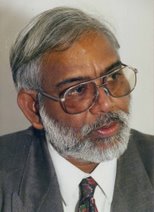
[The following is an abridged version of the points raised by Dr John Dayal, Secretary General, All India Christian Council, at the meeting of the National Integration Council at Vigyan Bhawan, New Delhi on Saturday, 10th September 2011. The Prime Minister of India, Dr Manmohan Singh, chaired the meeting moderated by Union Home Minister Mr. P Chidambaram. Mr. L K Advani, BJP leaders Sushma Swaraj and Arun Jaitely, Defence minister A K Anthony, chief ministers of Orissa and other States, leaders of the Congress and other parties, leading industrialists were among the Members of the NIC present.]
“Mr. Prime Minister, Honourable Union Ministers, Honourable Chief Ministers, distinguished Members
I bring you greetings from the Christian community in India, proud to be Indians, and proud of the fact that our country has rule of law under a Constitution that guarantees us Freedom of Faith as a vital component of our Secular, Socialist Democracy.
At the outset, may I express our community’s strong condemnation of the recent bomb blast outside the Delhi High court, and express our solidarity with the victims and our fellow citizens. Terror has no place in Indian society. There is no cause big enough to merit mindless violence that targets innocent men, women and children. As people of Peace, we pray for the dead as we also pray for the speedy recovery of the injured. Above all, we pray eternal peace and prosperity for India, our motherland.
We ourselves are victims of a different sort of socio-political terror, the terror of communalism. Our data shows we are targetted across the country with at least one incident a day of hate-motivated violence at some town or village, in one state or the other. Some states are worse than others. Among the worst are Karnataka and Madhya Pradesh, and districts such as Udaipur in Rajasthan. In many states, the local police and administration are complicit. Often their actions and impunity blatantly encourage local violent elements. In Karnataka and Madhya Pradesh for instance, local police and administrative coercion and threatening of prayer services in homes, or house churches as they are called, almost immediately leads to acts of physical violence. Not every church has to be a large Cathedral. Jesus said “Wherever two or three are gathered in my name, I will be there”. That is the basis of house churches, small Christian communities and Basic Christian Communities as they are called in the Evangelical, Episcopal and Catholic denominations respectively.
Such targetting, intolerance and officially conducted so-called “surveys” and demands for “registration” of churches must end forthwith. It does not happen with believers of other faiths, and it must Not happen with Christians.
Hate campaigns must also end. We have identified, as I am sure the governmetns' intelligence agencies must also have identified, the origin of such hate from the headquarters of certain political groups who want India to be rid of its religious minorities, or wants them to live as second rate citizens. We are first class citizens, much as everyone else, and seek our rights, the first of which is security so that we can enjoy that other right – freedom of faith and worship. Government must take urgent steps to train its police and administrative personnel in the principles of secularism, and sensitize them on the needs of all minorities, and the Christian minority in particular.
The Targetted and Communal violence [prevention, reparation and justice] Bill 2011 drafted by the National Advisory Council seeks to ensure this. We still feel the Bill needs some fine-tuning on issues of protecting India’s federalism and the autonomy of States.. We also specifically seek Christian representation in the structures it envisages. We commend its early adoption by government and its enactment as law after checking the Constitutionality of every clause and sub clause.
It may come as a surprise to some, but our community also has its share and more of the poor and the deprived. The Dalit Christians are one such group. They must be restored their constitutional rights at the earliest as recommended by the Justice Rangnath Misra Commission. Other poor, specially among the tribals and the rural landless and fishermen, must be identified and receive the assistance of the Government’s many schemes. For this it is important they first be identified. We have repeatedly demanded a Prime Minister’s Committee, on the pattern of the Justice Sachchar Committee set up for the Muslims, to look into the socio economic and developmental status of the Christian community across the country. Such a survey will help the Church generate its own development strategies. And it will help the government implement its secular agenda of development.
There must also not be any confrontation and conflict between the educational rights guarantees for minorities in the Constitution, and the new Right to Education Act. Across the country, our educational sector is facing harassment in recent months with local authorities trying to intimidate school managements.
In the drafting of the 12th plan, we have suggested several measures for the uplift of those of my brothers and sisters who are deprived, in education, hostel facilities, employment and self employment. I commend those recommendations made to the Ministry of Minority Affairs and the Planning Commission. They must form part of government policy and must be implemented.
I close with reflecting on the many lapses that have taken place in ensuring justice, rehabilitation and reparation to the Christians of Kandhamal district in Orissa. Kandhamal saw an anti Christian pogrom in August, September and October 2008 and it seemed that the Connotation of India was not operative in that distant plateau in the centre of Odisha. Over 56,000 people were rendered homeless, over 5,600 housed destroyed, almost 300 churches torched, nuns raped. There was other and significant gender violence. According to our count, and the government differs, more than 90 persons lost their lives. Men and women lost livelihood and homes, jobs and fields. Children lost opportunities of education. Many villages banned the entry of Christians if they did not convert to Hinduism. Three years on, justice in the real terms remains a dream despite two Fast Track Courts which are known for witnessing the terrorizing of witnesses. Government aid for reconstruction was timid and small. The church helped out. But even then more than 2,000 houses remain unbuilt. It is shocking but many people have not been able to return home. Education, jobs, agriculture opportunities are missing. Even in the cases of murder, there has been no punishment in over 20 cases because the witnesses were scared or paid off. Sometimes their terrorizing took place in court, as I have witnessed personally.
Justice must be done, Dear Prime Minister and Dear Chief minister of Odisha. We look to you for justice.
I thank you for this opportunity to address the National Integration Council.”
Showing posts with label Misra Commission. Show all posts
Showing posts with label Misra Commission. Show all posts
Saturday, September 10, 2011

Friday, March 26, 2010
RSS and its favourite piques
Kurukshetra, Haryana, 26 Marh 2010
Courtesy India Today
The Rashtriya Swayamsevak Sangh on Friday evinced concern at the fluctuation in its work and sought more quality in its endeavours.
In the Sangh's annual report tabled at its Akhil Bharatiya Pratinidhi Sabha which was inaugurated by Sarsanghchalak Mohan Bhagwat in Kurukshetra, the RSS opposed religion-based reservation saying it was unnecessary. "While we are in favour of reservation to various deprived sections of Hindus considering their condition like untouchability, we are against the religion based reservation," said the report tabled by Sarkaryawah Suresh Bhaiyaji Joshi.
The report says that the RSS held 39,823 daily shakhas in 27,089 locations. Apart from that, the weekly shakhas are being held at 7,356 places while 6,949 places are witnessing other Sangh gatherings. The report says, "What is genuinely immediate is to concentrate on qualitative improvement" and says that "determined and committed workers can achieve results in any situation".
The two-day sabha started on Friday morning and there were sessions on Vidya Bharati and some other organisations of the Sangh Parivar like the Bharatiya Kisan Sangh and the Bharatiya Mazdoor Sangh.
The BJP's affairs are to be taken up tomorrow for which party organising general secretary Ramlal and senior leader Bal Apte have already arrived here. Along with the annual report, the resolutions on Jammu and Kashmir and complete development of villages were tabled and will be discussed.
This pratinidhi sabha is being attended by over 1,000 delegates from all over the country and is being held for the first time in Haryana. It is also the first pratinidhi sabha since Mohan Bhagwat took over as RSS chief.
The key points raised in the annual report:
Jammu and Kashmir: "Anti-national and separatist forces are becoming increasingly active. It is unfortunate that the policies of the Central government as well as those of the state government appears to be indirectly strengthening these forces."
Naxalism: "The initiative of home minister to seek talks with the Naxalites is most inappropriate when he is creditably pursuing strong anti-Naxal action."
Dialogue with Pakistan: "The government has taken the decision to restart dialogue with Pakistan only under influence of some pressure from external forces."
Ranganath Misra Committee report: "This is nothing but a mockery of reservations awarded to the Scheduled Castes."
Subscribe to:
Posts (Atom)