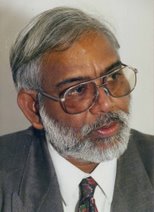
John Dayal
It was the Nineteenth time since 2004 that the Public Interest Litigation on the issue of Dalit Christians did not come up for a real hearing in the Supreme Court of India though it was listed on the judicial agenda. But the Bench headed by the Chief Justice of India was not really to blame. They were busy the entire day, 24th February 2011, and would remain so for many other days, hearing a challenge by minority and private schools to the Government’s new law of Right to Education. The private and minority sector is arguing that its member schools are not obliged to give a quarter of their new admissions to children of the poor.
The poor and marginalised Dalit Christians will have to wait for another time, and so will the Dalit Muslims who have joined them in recent years challenging through several Writ petitions -- now being heard together -- Constitution’s Article 341’s Clause [iii], which was inserted surreptitiously through a Presidential Order in 1950 to restrict just to Hindus all the affirmative action, including reservations in jobs, education and legislatures, that the new Government of a new India wanted to give to an entire population described as “untouchables” and kept in subjugation since the law giver Manu wrote his infamous Code.
The issue may come back in the Supreme Court next month or perhaps after the summer vacations – it is not clear at the moment of writing this article.
But there are ominous developments which portend that Dalits of the so called “non-Indic” or Semitic origin religions may never wrest their rights from the Government and its institutions. The latest has come from the learned Mr. G. E. Vahanvati, Advocate General of India, the Government’s highest Law officer who has told the Union Cabinet, in effect, that they just need to play cool and do not have to respond to the otherwise heart-rending cries of the Dalits as the issue is “too complicated. About Mr. Vahanvati, later.
The issue of course is very complicated, and very embarrassing for India’s secularism, if truth be told.
The British, like the Romans way back before them in Biblical Times, liked to count populations, if only to assess how many people they were ruling over, and just which group was in their fiefdom. In their Nineteenth century Census of India, they counted what Manu had just thrown out of his mind – the lower castes, the untouchables. In due time after the Munity of 1857, they sought to win over the poor who already thought of the Empress Victoria Government as Mai-Baap, or mother and father. The result was not just some plums for their “own” people, the Anglo-Indians with a White paternal ancestry, who got jobs in the Armed Forces, the Railways and the Postal Services, and to the “native Christians”, but also to the Depressed classes, the untouchables. Thus was born the affirmative action reservations for the Scheduled castes, so named because they figure in a list appended to the Constitution. The untouchables after abolishment of untouchability, rejected the term Mohandas Karamchand Gandhi coined for them-- Harijan, Children of God – sarcastically asking if the rest were children of the Devil. It would some decades before they coined for themselves the name they go under now, Dalits, or the Broken People.
Officially, the Dalits are about 15 per cent or so of the entire Indian population. The fact is that many of them converted first to Islam, from the 13th to the 19th centuries, and then to Christianity in the Nineteenth and Twentieth Centuries. The Dalit Muslims may number perhaps as many as 50 to 70 million, or at least a third of the Islamic population in India, the rest coming mainly from the Other Backward Classes and a minority from the upper castes and migrants from West and Central Asia.
The Christian Dalits consist of perhaps up to two thirds – or at least 60 per cent -- of the entire Christian population in India, with most of them concentrated in Andhra Pradesh, Tamil Nadu, Karnataka, Kerala, Punjab, Gujarat, Maharashtra and Uttar Pradesh. Most Christians in Andhra, Punjab and Gujarat are of Dalit origin, whether they accept it today or not. The Christians among the tribals of the North East and the tribal-Adivasis of the Chhota-Nagpur region and contiguous areas of central India constitute between 15 to 20 per cent of the community, and are exclusive in that they enjoy all rights and privileges given to their brothers and sisters professing Hinduism or their own particular faiths such as Sarna, Shamaic, nature or ancestor worship.
The transfer of power and the rise of Independent India saw an India-British covenant which gave Anglo Indians two seats in the Lok Sabha, and also reserved seats in the legislatures of Bengal, Andhra, Madhya Pradesh, Tamil Nadu and many other states despite their ever decreasing numbers because of migration to the UK, Australia, Canada and New Zealand in succeeding decades.
The issue of separate quotas for Dalit Christians did not arise at the time of the birth of the new Republic because the Constitution, imagined by Jawaharlal Nehru and written by a committee headed by the great Dalit leader Babasaheb Bhim Rao Ambedkar, correctly understood that the caste system impacted all of India, irrespective of region, ethnicity and religion. The affirmative action contained in the slew of guarantees for the Scheduled castes, including reservations in legislatures, in Government jobs and educational institutions, were meant for all Dalits irrespective of religion. Religions such as Sikhism, Buddhism and course Islam and Christianity do not have caste in their theological construct, but the people professing these religions live together, even as they do to this date, and suffer the same infirmities as their Hindu counterparts.
This law did continue for some months. There is very little documentation, but knowing the caste structure of the Congress and other parties even in the Opposition at the time the Constitution was promulgated – 26th January 1950 – it was clear that this treatment of all Dalits in a single basket – would grossly displease the upper crust and the upper caste among all parties. We know how the landed gentry flummoxed land reforms and the right wing parties sought to dictate to Nehru. [I need hardly say the upper class former Rajas and Maharajas, the landlords, and the Mahants, have made reappearance in Parliament and on Page-3 of newspapers in recent years]. Their fears were obvious. A large group of people, their de facto slaves and bonded labour, were not only being let free and emancipated, they were being educated and would pose a challenge in time. Dalit Christians and Muslims also had the added advantage of claiming spiritual uplift despite their poverty.
Presidential Order of 1950, later forming part three of the Constitution’s Article 341 was the result. The order said in no uncertain terms that privileges such as reservations would be given to just Hindus. Anyone converting to Christianity and Islam, Sikhism or Buddhism, would lose them. And later orders from administration and courts said Dalits who converted to Hinduism from Islam or Christianity would regain the reservations and other advantages. In effect, Dalits had no freedom of faith enjoyed by other citizens of India unless they converted to Hinduism. In one stroke of the pen, their fundamental human rights were taken away from them.
The All India Catholic Union was among the first to protest and challenge this order. Sikhs Dalits – called Mazbhis – and Neo Buddhists joined the movement later. The most recent entrants to the now massive movement are the Pasmanda Muslims.
The Sikhs were powerful. They had regiments in the army, and Punjab is close to Delhi, the national Capital, in more ways than one. Their agitation led to the restoration of their rights by 1956. The Buddhists were really Ambedkarites and the so called neo-Buddhists of Maharashtra. They too had the Mahar regiment in the Army, but it was sheer numbers and the support in Parliament that prompted the then Union Welfare Minister Ram Vilas Paswan, himself a Dalit, to grant them the Scheduled Caste rights. The Christians despite a massive rally in Delhi were denied the privileges, Mr. Paswan and others telling them they would bring forth a law soon thereafter. It as many years later, in the Government of P V Narsimha Rao, a Brahmin, that his Welfare minister Sitaram Kesari persuaded the crafting of a Cabinet resolution on granting the SC rights to Christians. The Cabinet paper was not without loopholes. It mentioned all the pros and cons, carrying the day for the Christians by a thin margin. The Government drafted a Bill, but inadvertently or by design, the Bill was not admitted by the Speaker, Mr. Shivraj Patil who would later earn further notoriety for his silence while Christians in Orissa were massacred in 2008.
The agitation and advocacy has continued unabatedly since them. Rallies have been held all over India, and religiously when Parliament is in session, Dalit Christians come in numbers large and small to Jantar Mantar on Parliament Street in New Delhi to register their protest, to make their cry. Christian organizers give dinners in honour of Christian MPs and went in delegations to party presidents and Government ministers pleading the cause. All of it has been in vain so far.
Things have started moving since a Public Interest Litigation was filed in 2004 by the PIL Centre headed by former Union Law Minister Shanti Bhushan and his son Prashant, the human rights lawyer. The PIL asked the Government whether the fact that Dalit Christians and Dalit Muslims are deprived of the benefits of reservation did not amount to hostile discrimination under Article 14.
The Government now has to either justify upholding the 1950 Presidential Order or accept the Rangnath Misra Commission recommendation of reservation for Dalit Christians and Dalit Muslims. Many other writs have been filed since then, some my Pasmanda Muslims and even a few by the Hindutva groups opposing the Christian and Muslim demands. All the writs have been clubbed together for hearing in Courtroom Number One, presided over by the Chief Justice of India. One positive result has been the support that has finally come from Government’s own statutory and other commissions and organisations.
I recall in the ‘Nineties, the then Deputy Speaker of the Lok Sabha Suraj Bhan, telling me and CBCI secretary Father John Vallamattam, who later founded Indian Currents, how it was in the Fifties when he was member of a Parliamentary team which was assessing this issue. They travelled to many states and cities, including Mumbai, Goa and Kerala. In each halt, they asked the Church hierarchy to explain to them the existence of Dalit Christians. As I recall Mr. Bhan telling the story, “despite the existence of walls dividing upper and lower castes in life in the Church and in death in the cemetery, all of them said they had no Dalits in the Church.”
Many a Church maintains this position, perhaps out of a wrong understanding of faith, sociology, history and Constitutional rights.
Once the matter came to the Supreme Court, it asked the Government to respond. For the first time in fifty years, it could not hide, nor ignore the issue hoping it would vanish like a bad dream. Typically, the first response of the Government was to buy time. It was to repeat this trick more than once. It told the Supreme Court it had set up a commission to examine the issue – the National Commission for religious and Linguistic Minorities headed by former Supreme Court judge and then Congress Member of Parliament, Mr. Rangnath Misra. Even as the Advocate General of the day, the late Mr. Milon Bannerjee was telling the Supreme Court this, some of us who were in the court drove over to Justice Misra who said he had no knowledge of this. It would be many days before he would be finally asked to examine the issue. Dalit Christians and Muslims gave him kilograms of data, scores of historical records including some dating back to the Nineteenth century law courts of Madras presidency.
Justice Misra’s commission, which had the redoubtable jurist Tahir Mahmood on it together with St. Stephen’s College Principal, the late Dr. Anil Wilson, wrote a monumental report. The commission held that the stigma of being a Dalit, that caste itself, crossed the boundaries of religion. It ruled that Christian and Muslim Dalit deserved all the privileges of being Scheduled castes. However the ruling was not without some baggage. The member secretary, Indian Administrative Service officer Asha Das, wrote a vitriolic dissent note, repeating every argument given by every Brahminical officer and minister since 1950. Also refusing the Dalit Christian request was the Department of Welfare, and then headed by the Dalit leader and former Foreign Service officer Meira Kumar. In several signed notes, her department said the Christians did not qualify.
But the sustained pressure – the issue was taken to the United Nations conference on race and racial discrimination held in Durban, South Africa, by office bearers of the All India Christian Council and the All India Catholic Union – and the many rallies of the Christians in New Delhi, Madurai and Chennai, among other places, did have an impact. Political parties including the DMK allied to their support. In time, several State legislatures, including Tamil Naidu and Andhra Pradesh, passed resolutions in support. Chief ministers such as Nitish Kumar, Mayawati and M K Karunanidhi, all from non-Congress spectrum, wrote to the Union Government saying that Dalit Christians, and Muslims, must be given their nights. The BJP was the dissenter. The Congress has remained mum.
The Government, however, has been active in a negative way. After Justice Misra said “Yes”, the Government sent his report to the national Commission for Scheduled castes, headed by former Union Home Minister and once Governor Buta Singh. Many delegations met Buta, who told them he agreed with their demand. He said so in his written report, but added a mischievous footnote, saying that Christians and Muslims be given their reservations without touching the 15 per cent reservations given to Hindu, Buddhist and Sikh Scheduled castes . He did not explain why the commission had not put this rider when the SC status was bestowed on Dalit Sikhs, the community to which he himself belonged, and then to Buddhists.
This is a critical issue. Other than in Tamil Naidu, the maximum reservations which can be made under a Supreme Court ruling is a total of 50 per cent. Government can, possibly justly, say that even if it were to agree to such reservations, it would violate the Supreme Court orders, or say advocates against the Dalit Christians. They also, of course, maintain that there cannot be a Dalit amongst Christianity and Islam, both Semitic religions as there is no untoucbability amongst them. True. But they of course forget that untoucbability has been banned in Hinduism by law, and that Dalits get the privileges of SC Status because of the infirmity of suppression three thousand year old.
The Government was sleeping well till the Supreme Court disturbed its siesta last year, asking it to make up its mind soon, and respond in the hearings scheduled for 24th February 2011.
The Political Affairs Committee of the Union Cabinet, charged with formulating the Government position, asked Advocate General Vahanvati to brief it. It was in this briefing that Vahanvati dropped his bombshell. Vahanvati said “many complicated legal issues are involved” but currently “no decision was called for.” The complication from the Buta Singh suggestion -- if reservation is given to these two groups, it should not be from the 15 per cent meant for Dalits. It should be a separate quota. The existing position on reservation at the national level is: 27 per cent for the Other Backward Classes (OBCs), 15 per cent for the SC (or Dalits) and 7.5 per cent for the Scheduled Tribes. The three categories together account for 49.5 per cent, and till now, the Supreme Court has ruled that reservation should not exceed 50 per cent.” Clearly, therefore, a decision one way or the other will open a can of worms, “a newspaper said. The Cabinet Committee on Political Affairs is headed by Prime Minister Manmohan Singh, and includes Finance Minister Pranab Mukherjee, Home Minister P. Chidambaram and Defence Minister A.K. Antony. A special invitee at the meeting was Minorities Affairs Minister Salman Khursheed.
Newspapers are pointing that elections in Tamil Naidu, Bengal and Kerala put pressure on the Government on act, as these three states have Christians and Muslims in sizable numbers. The CPM recently organised a major convention at Kottayam, a major Christian centre in Kerala, to woo the Dalit Christians. Christians form 19% of the state's 31.8 million people while Dalit Christians are around 4%. DMK boss and chief minister M Karunanidhi has maintained that the demand for granting Scheduled Caste status to Dalit Christians "is not only just but also indisputable" and if necessary the party would even lead an agitation, the Hindustan Times said. The Congress however fears what Hindustan Times described as a “political backlash which would cost dearly for the party.”
The Vahanvati briefing and the adjournment of the case has not gone down well with Christian organisations. The All India Christian Council termed the statement of Attorney-General Vahanvati as “ominous”.
“In the many years the case has been in the Apex court, proceedings have been delayed because of the Government’s inability to make up its mind on the matter despite repeated prodding by the court. This speaks of a debilitating indecisiveness which is born of political perfidy and bureaucratic obduracy. Sections of the officialdom, belonging to the upper castes, and sections of the same power groups in the ruling and the major opposition party are opposing the assertion of the religious minority groups to regain their constitutional rights, the aicc feels. We do not see why these groups feel so threatened. Our brothers and sisters in the Hindu, Sikh and Buddhist Dalits know that most Government jobs go unfilled, and there is enough for everyone to share without restricting each others’ privileges and rights, “the council said
“It is a mystery why the Government yet demurs.” When the Constitution was signed, the affirmative action of reservations in jobs, legislatures, schools, and on such issues as rural development was given to all Dalits who were struggling to regain human dignity after 3,000 years of oppression at the hands of the ruling upper caste-led social system, the Christian council added. “This era of prevarication and political indecisiveness must now end, Dalit Christians and Muslims must be given their rights now,” it said
Showing posts with label indian supreme court. Show all posts
Showing posts with label indian supreme court. Show all posts
Monday, February 28, 2011

Thursday, October 30, 2008
AIDWA meeting Chief Justice of India for Central Bureau of Investigation probe into Nun's gang rape in Orissa
PRESS RELEASE
31 OCTOBER 2008
AIDWA TO MEET CHIEF JUSTICE OF INDIA SEEKING CBI PROBE INTO NUN’S GANG RAPE
The All India Democratic Women’s Association [AIDWA], the women’s wing of the Communist Party of India Marxist has in a compassionate letter to the Catholic Nun who was gang raped in Kandhamal, Orissa, said it would ask the Chief Justice of India to order a CBI enquiry into the assault on her.
AIDWA is the most major of a large number of national women’s organisations who have expressed deep concern at the plight of the Nun who was tortured in the anti Christian violence in Orissa which continues since it started on 24 August 20-07.
Left parties are perhaps the only political groups to have held protest demonstrations in the Kandhamal district capital Phulbani and the state capital Bhubaneswar against the anti Christian orgy of violence by Hindutva elements.
The Nun was gang raped by a Hindutva nun while police watched. She was taken away from the police and tortured again. A third time, the police abandoned her while they were coming to hospital in Bhubaneswar by bus.
The Nun said she had no faith in the Orissa police and beseeched the Supreme Court of India through her counsel for an enquiry by the federal agency, Central Bureau of Investigation. This was opposed by the state government which wants its own police to carry on the investigation. The Supreme Court rejected the appeal of the Nun. The Nun later addressed the media with the story of her ordeal.
The following is the text of the letter by Subhashini Ali, President , and Sudha Sunderaraman, General Secretary, of WIDWA sent to Dr John Dayal, secretary general, All India Christian Council, for sending to the Nun:
“Dear Sister
On behalf of all the more than one crore members of our orgnisation, the All India Democratic Women’s Association (AIDWA), we extend our heartfelt support and solidarity in this extremely difficult and traumatic time. We appreciate your courage and your brave struggle for justice and would like to assure you that you are not alone. We and many, many others are with you.
After December, 2007, when the attacks on Christians, their churches, their shops and their homes started in Kandhamal, AIDWA has been protesting against these and demanding stringent action against the perpetrators. Many of our units in different parts of the country have also organized strong protests. After your recent press conference at which you spoke so movingly and with such dignity about the horrors you had not only witnessed but also been subjected to, we have sent telegrams from every state in the country to the Chief Minister of Orissa demanding that the investigation into your complaint be transferred to the CBI. We are also planning to meet the Chief Justice of India after he returns to the country to make the same request to him
We know that you are going through an extremely difficult time. Whenever it is convenient for you, we would be privileged to meet with you personally. If there is anything you would like us to do, please do not hesitate to let us know.
An AIDWA delegation, of which both of us will be part, will be visiting Kandhamal on the 1st and 2nd of November.
We are also extremely saddened by the tragic death of Father Digal. Our sincere condolences to all of you in this moment of great loss.
We are yours in solidarity,
Subhashini Ali, President and Sudha Sunderaraman, General Secretary, AIDWA”
31 OCTOBER 2008
AIDWA TO MEET CHIEF JUSTICE OF INDIA SEEKING CBI PROBE INTO NUN’S GANG RAPE
The All India Democratic Women’s Association [AIDWA], the women’s wing of the Communist Party of India Marxist has in a compassionate letter to the Catholic Nun who was gang raped in Kandhamal, Orissa, said it would ask the Chief Justice of India to order a CBI enquiry into the assault on her.
AIDWA is the most major of a large number of national women’s organisations who have expressed deep concern at the plight of the Nun who was tortured in the anti Christian violence in Orissa which continues since it started on 24 August 20-07.
Left parties are perhaps the only political groups to have held protest demonstrations in the Kandhamal district capital Phulbani and the state capital Bhubaneswar against the anti Christian orgy of violence by Hindutva elements.
The Nun was gang raped by a Hindutva nun while police watched. She was taken away from the police and tortured again. A third time, the police abandoned her while they were coming to hospital in Bhubaneswar by bus.
The Nun said she had no faith in the Orissa police and beseeched the Supreme Court of India through her counsel for an enquiry by the federal agency, Central Bureau of Investigation. This was opposed by the state government which wants its own police to carry on the investigation. The Supreme Court rejected the appeal of the Nun. The Nun later addressed the media with the story of her ordeal.
The following is the text of the letter by Subhashini Ali, President , and Sudha Sunderaraman, General Secretary, of WIDWA sent to Dr John Dayal, secretary general, All India Christian Council, for sending to the Nun:
“Dear Sister
On behalf of all the more than one crore members of our orgnisation, the All India Democratic Women’s Association (AIDWA), we extend our heartfelt support and solidarity in this extremely difficult and traumatic time. We appreciate your courage and your brave struggle for justice and would like to assure you that you are not alone. We and many, many others are with you.
After December, 2007, when the attacks on Christians, their churches, their shops and their homes started in Kandhamal, AIDWA has been protesting against these and demanding stringent action against the perpetrators. Many of our units in different parts of the country have also organized strong protests. After your recent press conference at which you spoke so movingly and with such dignity about the horrors you had not only witnessed but also been subjected to, we have sent telegrams from every state in the country to the Chief Minister of Orissa demanding that the investigation into your complaint be transferred to the CBI. We are also planning to meet the Chief Justice of India after he returns to the country to make the same request to him
We know that you are going through an extremely difficult time. Whenever it is convenient for you, we would be privileged to meet with you personally. If there is anything you would like us to do, please do not hesitate to let us know.
An AIDWA delegation, of which both of us will be part, will be visiting Kandhamal on the 1st and 2nd of November.
We are also extremely saddened by the tragic death of Father Digal. Our sincere condolences to all of you in this moment of great loss.
We are yours in solidarity,
Subhashini Ali, President and Sudha Sunderaraman, General Secretary, AIDWA”
Monday, October 22, 2007
Are Senior Advocates as powewrful in Supreme Court of India?
New Study Suggests Veteran Advocates Sway United States Supreme Court
By Tony Mauro
Legal Times
10-22-2007
For the elite of the Supreme Court Bar, this is the Gilded Age. Or call it the Age of the Guild.
The Court's docket continues to shrink. Yet dramatic new research by Georgetown University Law Center professor Richard Lazarus shows that more and more of the Court's cases are brought and argued by the seasoned veterans who have honed Supreme Court practice into a fine, and exclusive, art form. Last term, fully 44 percent of the nongovernment petitions that were granted review by the Court were filed by such veteran advocates. In 1980, that number was less than 6 percent.
The justices and their law clerks, it seems clear, pay special attention to the briefs and arguments of these virtuosos of the bar. Chief Justice John Roberts Jr., after all, was once one of them, arguing 39 cases to the Court in his days as an appellate lawyer in the private and public sector. And Lazarus cites a 2004 survey published in the Journal of Law & Politics indicating that 88 percent of law clerks openly acknowledged giving extra consideration to briefs filed by what one called the "inner circle" of the Supreme Court Bar. The clerks, who play a crucial role in screening incoming cases for their justices, often then go to work for these same firms, garnering hiring bonuses that this year have reached $250,000.
But this is not just a "rich get richer" tale about lawyers. Lazarus, founder of the university's Supreme Court Institute, goes a step further to make the claim that the increasing dominance of the veteran Supreme Court Bar is beginning to have an impact on the Court's doctrine.
The study, set for publication soon in the Georgetown University Law Journal, draws a direct and controversial connection between the growth of the Supreme Court Bar and the Court's widely noted new pro-business tilt.
Clients willing to plunk down $100,000 or more for a veteran advocate to petition the Court are elbowing aside the civil rights, civil liberties and labor groups that once helped set the Court's agenda, the study suggests. Recent breakthrough victories for business in tort, antitrust and other areas of the law can't be explained totally by the Court's overall conservative majority, Lazarus says. The elite Supreme Court Bar has played a pivotal role, he asserts.
"The re-emergence of a Supreme Court Bar of elite attorneys ... is quietly transforming the Court and the nation's laws," says Lazarus, recalling the early 1800s, when Daniel Webster, Francis Scott Key and a handful of other lawyers dominated arguments at the Court in landmark cases. Increasingly, Lazarus says, the modern-day Court is ruling in favor of "monied interests more able to pay for such expertise."
Lazarus calls on the Supreme Court Bar -- and the Court itself -- to take steps to reduce the imbalance in advocacy between the well-paid pro-business veterans and those representing other parties, such as criminal defendants and employment discrimination, tort and environmental plaintiffs. "The advocacy gap in the Court between those who can pay and those who cannot," says Lazarus, is "bad for the legal profession, the Court, and its rulings."
LEVELING THE FIELD
But some of the very lawyers Lazarus pinpoints say the problem, if there is one, is already being addressed by increased pro bono work by the veterans and by the recent proliferation of law school Supreme Court clinics that spread their expertise more broadly among parties that need help. Increased competition for fewer cases also means that virtually every private party has multiple offers of help from Supreme Court specialists.
Success Rate for Expert Counsel in Obtaining Supreme Court Review October Term Number of
Petitions Granted Successful Petitions Filed by Expert Counsel Percentage of Successful Petitions Filed by Expert Counsel
1980 102 6 6%
2000 68 17 25%
2005 67 24 36%
2006 64 28 44%
Source: Richard Lazarus, Georgetown University Law Center
Note: Expert counsel is defined as a lawyer who has argued five or more Supreme Court cases, or is affiliated with a firm or organization with at least 10 prior arguments before the Court.
The veterans also dispute the notion that the bar is steering the Court in any direction, pro-business or otherwise. "Effective advocacy can impact the Court, but the heightened success of business has been in the works for 25 years," says Latham & Watkins' Maureen Mahoney, who argued four cases last term. "And you've got seven Republican appointees on this Court who have a high interest in these cases."
Akin Gump Strauss Hauer & Feld's Thomas Goldstein makes a similar point. "We advocates tend to think it's all about the lawyering. But the most important trend by far is the increasing conservatism and pro-business orientation of the justices themselves."
All the highly polished pro-business petitions in the world, he adds, "wouldn't get anywhere on a Court with nine Bill Brennans," a reference to the late liberal lion, Justice William Brennan Jr.
Adds O'Melveny & Myers' Walter Dellinger, "The Supreme Court has such capacity to do its own work. It's increasingly sensitive to the economic consequences of litigation and regulation. I don't think I'd attribute that to the bar."
Robert Long of Covington & Burling also points out, "We all file a lot of cases that are denied." But he agrees with Lazarus that these are salad days for the Supreme Court Bar, in part because of "the reflected luster" of having one of its own, Roberts, occupying the Court's center chair.
In response, Lazarus acknowledges that "the bar alone does not determine the docket." But he asserts the modern Supreme Court Bar is having dramatically more impact than in the past. "If we had essentially the same Court but not this kind of bar, we would not have the same number of business cases."
As for leveling the playing field, Dellinger's own portfolio of cases this term indicates that the high priests of the high court bar can mix business with pro bono clients. Dellinger represents ExxonMobil in its challenge to the multibillion-dollar damage verdict in the Exxon Valdez oil spill case. But his name is also on a petition filed for Humberto Cuellar, a drug smuggler who is challenging the federal money-laundering statute. The Court granted review in the case Oct. 15. Dellinger won't argue the case himself, deferring to a federal defender in Texas, but he says it represents an effort by his firm -- and the Harvard Law School clinic he helps run -- to assist first-time advocates even before the Court grants review.
Lazarus acknowledges the role of the clinics and law firms such as O'Melveny, Sidley Austin, WilmerHale, Jenner & Block, and Mayer Brown, among others, which have worked for years -- mostly unheralded -- to improve advocacy before the high court for criminal defendants and death row inmates. But more needs to be done, he says, including the Court itself granting argument time to established groups such as the National Association of Criminal Defense Lawyers when a defendant's advocate is a first-timer or needs help.
Lazarus' concern has been growing in recent years. Last term, his institute ran moot courts for more than 90 percent of the cases argued before the high court. And in his own field of environmental law, Lazarus has researched the record of near-total defeat for environmental plaintiffs challenging government action or inaction.
From both experiences, Lazarus concludes, "Good advocacy really matters." To a degree that surprised him, Lazarus found that the quality of the briefing and of the oral advocacy -- the way that cases are framed, the arguments that are stressed, and the ones that are omitted -- have a powerful impact on the justices, as independent as they may be.
As an example, Lazarus charts the history of the business community's efforts to convince the Supreme Court that there is a constitutional limit to punitive damages in tort cases. By placing seven of the eight cases in the hands of veterans such as Mayer Brown's Andrew Frey, Theodore Olson of Gibson, Dunn & Crutcher, and Sidley Austin's Carter Phillips, business groups were able to make slow but steady progress -- culminating in last term's Philip Morris v. Williams. In some ways, Lazarus says, the long march toward a favorable outcome on punitive damages mirrored the late Thurgood Marshall's strategic litigation campaign before he became a justice, leading to a civil rights victory in Brown v. Board of Education.
Percentage of Expert Advocates Arguing Before Supreme Court
October Term Percentage of first-time advocates arguing before Court Percentage of advocates with 10 or more prior arguments
1980 76% 3%
2000 62% 9%
2006 52% 26%
Source: Richard Lazarus, Georgetown University Law Center
Note: Chart excludes lawyers from Solicitor General's Office.
The Court's renewed interest in antitrust issues also illustrates the elite bar's power to achieve success, says Lazarus, "not simply by discerning the priorities and interests of the justices but by changing them." The Court heard only two antitrust cases between 1992 and 2002, but since then it has decided 10. All 10 were brought by antitrust defendants appealing unfavorable decisions below, and all 10 were represented by seasoned veterans.
But the dominance of the Supreme Court Bar begins at the petition stage. The Court accepts fewer than 100 of the nearly 10,000 petitions it receives yearly. Yet the veterans, who know how to make a petition attractive to the justices and their clerks, sometimes achieve a 20 percent success rate or higher, Lazarus says -- something that would have been unheard of 20 years ago. In its first year of existence, for example, Goldstein's Stanford Law School clinic worked on four petitions -- and all four were granted.
Given the Court's shrunken docket, the veteran advocates are also busy writing amicus briefs, which, Lazarus documents, have grown in importance at both the petition stage and the merits stage. The number of amicus briefs supporting a petition for review have increased 40 percent in the last 25 years, and petitions that are accompanied by these briefs have a significantly higher chance of being accepted. Once the case is granted, Lazarus calculates, an average of nine amicus briefs are filed in advance of oral argument, triple the number 20 years earlier.
TAKING NO PRISONERS
The apex of amicus brief influence came in the arguments in Grutter v. Bollinger, the landmark 2003 affirmative action case. Justices posed 19 questions about the brief filed by retired military officials supporting affirmative action. Several referred to it as the "Carter Phillips brief," even though the counsel of record was his Sidley Austin partner Virginia Seitz, herself a veteran of the Supreme Court Bar.
The dominance of the specialists is especially visible at oral argument, Lazarus' study indicates. Last term, 26 percent of the advocates who argued before the Court were veterans -- defined as having argued five cases themselves or coming from an organization that has argued 10 cases.
But it is also at oral argument where the veterans say they earn their fees. The intense barrage of high-level questions from justices is not for the faint of heart, Dellinger says. "You can't evade answering their questions," he says. "If you do, they will hunt you down. They take no prisoners."
David Frederick of Kellogg, Huber, Hansen, Todd, Evans & Figel says, "The specialization has arisen at least in part in response to the Court's uniquely vigorous questioning style, which makes a Supreme Court argument quite unlike an argument in any other court."
Lazarus' article recalls oral arguments on April 25, when Frederick and five other advocates stood before the Court to argue in three cases. Two of the lawyers had argued more than 45 cases each before the justices, and all but one had argued more than 20. The "rookie" had five under his belt. Frederick, arguing his 21st case, had also appeared the week before. Lazarus writes of that day, "The modern Supreme Court Bar had arrived."
By Tony Mauro
Legal Times
10-22-2007
For the elite of the Supreme Court Bar, this is the Gilded Age. Or call it the Age of the Guild.
The Court's docket continues to shrink. Yet dramatic new research by Georgetown University Law Center professor Richard Lazarus shows that more and more of the Court's cases are brought and argued by the seasoned veterans who have honed Supreme Court practice into a fine, and exclusive, art form. Last term, fully 44 percent of the nongovernment petitions that were granted review by the Court were filed by such veteran advocates. In 1980, that number was less than 6 percent.
The justices and their law clerks, it seems clear, pay special attention to the briefs and arguments of these virtuosos of the bar. Chief Justice John Roberts Jr., after all, was once one of them, arguing 39 cases to the Court in his days as an appellate lawyer in the private and public sector. And Lazarus cites a 2004 survey published in the Journal of Law & Politics indicating that 88 percent of law clerks openly acknowledged giving extra consideration to briefs filed by what one called the "inner circle" of the Supreme Court Bar. The clerks, who play a crucial role in screening incoming cases for their justices, often then go to work for these same firms, garnering hiring bonuses that this year have reached $250,000.
But this is not just a "rich get richer" tale about lawyers. Lazarus, founder of the university's Supreme Court Institute, goes a step further to make the claim that the increasing dominance of the veteran Supreme Court Bar is beginning to have an impact on the Court's doctrine.
The study, set for publication soon in the Georgetown University Law Journal, draws a direct and controversial connection between the growth of the Supreme Court Bar and the Court's widely noted new pro-business tilt.
Clients willing to plunk down $100,000 or more for a veteran advocate to petition the Court are elbowing aside the civil rights, civil liberties and labor groups that once helped set the Court's agenda, the study suggests. Recent breakthrough victories for business in tort, antitrust and other areas of the law can't be explained totally by the Court's overall conservative majority, Lazarus says. The elite Supreme Court Bar has played a pivotal role, he asserts.
"The re-emergence of a Supreme Court Bar of elite attorneys ... is quietly transforming the Court and the nation's laws," says Lazarus, recalling the early 1800s, when Daniel Webster, Francis Scott Key and a handful of other lawyers dominated arguments at the Court in landmark cases. Increasingly, Lazarus says, the modern-day Court is ruling in favor of "monied interests more able to pay for such expertise."
Lazarus calls on the Supreme Court Bar -- and the Court itself -- to take steps to reduce the imbalance in advocacy between the well-paid pro-business veterans and those representing other parties, such as criminal defendants and employment discrimination, tort and environmental plaintiffs. "The advocacy gap in the Court between those who can pay and those who cannot," says Lazarus, is "bad for the legal profession, the Court, and its rulings."
LEVELING THE FIELD
But some of the very lawyers Lazarus pinpoints say the problem, if there is one, is already being addressed by increased pro bono work by the veterans and by the recent proliferation of law school Supreme Court clinics that spread their expertise more broadly among parties that need help. Increased competition for fewer cases also means that virtually every private party has multiple offers of help from Supreme Court specialists.
Success Rate for Expert Counsel in Obtaining Supreme Court Review October Term Number of
Petitions Granted Successful Petitions Filed by Expert Counsel Percentage of Successful Petitions Filed by Expert Counsel
1980 102 6 6%
2000 68 17 25%
2005 67 24 36%
2006 64 28 44%
Source: Richard Lazarus, Georgetown University Law Center
Note: Expert counsel is defined as a lawyer who has argued five or more Supreme Court cases, or is affiliated with a firm or organization with at least 10 prior arguments before the Court.
The veterans also dispute the notion that the bar is steering the Court in any direction, pro-business or otherwise. "Effective advocacy can impact the Court, but the heightened success of business has been in the works for 25 years," says Latham & Watkins' Maureen Mahoney, who argued four cases last term. "And you've got seven Republican appointees on this Court who have a high interest in these cases."
Akin Gump Strauss Hauer & Feld's Thomas Goldstein makes a similar point. "We advocates tend to think it's all about the lawyering. But the most important trend by far is the increasing conservatism and pro-business orientation of the justices themselves."
All the highly polished pro-business petitions in the world, he adds, "wouldn't get anywhere on a Court with nine Bill Brennans," a reference to the late liberal lion, Justice William Brennan Jr.
Adds O'Melveny & Myers' Walter Dellinger, "The Supreme Court has such capacity to do its own work. It's increasingly sensitive to the economic consequences of litigation and regulation. I don't think I'd attribute that to the bar."
Robert Long of Covington & Burling also points out, "We all file a lot of cases that are denied." But he agrees with Lazarus that these are salad days for the Supreme Court Bar, in part because of "the reflected luster" of having one of its own, Roberts, occupying the Court's center chair.
In response, Lazarus acknowledges that "the bar alone does not determine the docket." But he asserts the modern Supreme Court Bar is having dramatically more impact than in the past. "If we had essentially the same Court but not this kind of bar, we would not have the same number of business cases."
As for leveling the playing field, Dellinger's own portfolio of cases this term indicates that the high priests of the high court bar can mix business with pro bono clients. Dellinger represents ExxonMobil in its challenge to the multibillion-dollar damage verdict in the Exxon Valdez oil spill case. But his name is also on a petition filed for Humberto Cuellar, a drug smuggler who is challenging the federal money-laundering statute. The Court granted review in the case Oct. 15. Dellinger won't argue the case himself, deferring to a federal defender in Texas, but he says it represents an effort by his firm -- and the Harvard Law School clinic he helps run -- to assist first-time advocates even before the Court grants review.
Lazarus acknowledges the role of the clinics and law firms such as O'Melveny, Sidley Austin, WilmerHale, Jenner & Block, and Mayer Brown, among others, which have worked for years -- mostly unheralded -- to improve advocacy before the high court for criminal defendants and death row inmates. But more needs to be done, he says, including the Court itself granting argument time to established groups such as the National Association of Criminal Defense Lawyers when a defendant's advocate is a first-timer or needs help.
Lazarus' concern has been growing in recent years. Last term, his institute ran moot courts for more than 90 percent of the cases argued before the high court. And in his own field of environmental law, Lazarus has researched the record of near-total defeat for environmental plaintiffs challenging government action or inaction.
From both experiences, Lazarus concludes, "Good advocacy really matters." To a degree that surprised him, Lazarus found that the quality of the briefing and of the oral advocacy -- the way that cases are framed, the arguments that are stressed, and the ones that are omitted -- have a powerful impact on the justices, as independent as they may be.
As an example, Lazarus charts the history of the business community's efforts to convince the Supreme Court that there is a constitutional limit to punitive damages in tort cases. By placing seven of the eight cases in the hands of veterans such as Mayer Brown's Andrew Frey, Theodore Olson of Gibson, Dunn & Crutcher, and Sidley Austin's Carter Phillips, business groups were able to make slow but steady progress -- culminating in last term's Philip Morris v. Williams. In some ways, Lazarus says, the long march toward a favorable outcome on punitive damages mirrored the late Thurgood Marshall's strategic litigation campaign before he became a justice, leading to a civil rights victory in Brown v. Board of Education.
Percentage of Expert Advocates Arguing Before Supreme Court
October Term Percentage of first-time advocates arguing before Court Percentage of advocates with 10 or more prior arguments
1980 76% 3%
2000 62% 9%
2006 52% 26%
Source: Richard Lazarus, Georgetown University Law Center
Note: Chart excludes lawyers from Solicitor General's Office.
The Court's renewed interest in antitrust issues also illustrates the elite bar's power to achieve success, says Lazarus, "not simply by discerning the priorities and interests of the justices but by changing them." The Court heard only two antitrust cases between 1992 and 2002, but since then it has decided 10. All 10 were brought by antitrust defendants appealing unfavorable decisions below, and all 10 were represented by seasoned veterans.
But the dominance of the Supreme Court Bar begins at the petition stage. The Court accepts fewer than 100 of the nearly 10,000 petitions it receives yearly. Yet the veterans, who know how to make a petition attractive to the justices and their clerks, sometimes achieve a 20 percent success rate or higher, Lazarus says -- something that would have been unheard of 20 years ago. In its first year of existence, for example, Goldstein's Stanford Law School clinic worked on four petitions -- and all four were granted.
Given the Court's shrunken docket, the veteran advocates are also busy writing amicus briefs, which, Lazarus documents, have grown in importance at both the petition stage and the merits stage. The number of amicus briefs supporting a petition for review have increased 40 percent in the last 25 years, and petitions that are accompanied by these briefs have a significantly higher chance of being accepted. Once the case is granted, Lazarus calculates, an average of nine amicus briefs are filed in advance of oral argument, triple the number 20 years earlier.
TAKING NO PRISONERS
The apex of amicus brief influence came in the arguments in Grutter v. Bollinger, the landmark 2003 affirmative action case. Justices posed 19 questions about the brief filed by retired military officials supporting affirmative action. Several referred to it as the "Carter Phillips brief," even though the counsel of record was his Sidley Austin partner Virginia Seitz, herself a veteran of the Supreme Court Bar.
The dominance of the specialists is especially visible at oral argument, Lazarus' study indicates. Last term, 26 percent of the advocates who argued before the Court were veterans -- defined as having argued five cases themselves or coming from an organization that has argued 10 cases.
But it is also at oral argument where the veterans say they earn their fees. The intense barrage of high-level questions from justices is not for the faint of heart, Dellinger says. "You can't evade answering their questions," he says. "If you do, they will hunt you down. They take no prisoners."
David Frederick of Kellogg, Huber, Hansen, Todd, Evans & Figel says, "The specialization has arisen at least in part in response to the Court's uniquely vigorous questioning style, which makes a Supreme Court argument quite unlike an argument in any other court."
Lazarus' article recalls oral arguments on April 25, when Frederick and five other advocates stood before the Court to argue in three cases. Two of the lawyers had argued more than 45 cases each before the justices, and all but one had argued more than 20. The "rookie" had five under his belt. Frederick, arguing his 21st case, had also appeared the week before. Lazarus writes of that day, "The modern Supreme Court Bar had arrived."
Subscribe to:
Posts (Atom)