Showing posts with label manmohan singh. Show all posts

Wednesday, September 12, 2012

Birthday measure of India at 65


The State of the nation -- Stocktaking on Independence Day
Is being best among the brothers good enough for India at  65?

John Dayal

[Member, national Integration Council, and  National Monitoring Committee on Minority Education]

India is a miracle.

Born in a veritable bloodbath of Partition after a peaceful freedom struggle, it has survived as a strong democracy. It survived the Cold War without having to take sides, and therefore with having either Soviet troops or those of NATO or the US agencies stationed on its soil, or even the US Indian Ocean fleets such as the 8th Fleet really every brining their nuclear weapons into its deep waters. It has survived four  wars with its neighbor, one of which decisively partitioned Pakistan and gave birth to Bangladesh, without allowing it to escalate beyond a limit, showing magnanimity with its adversaries and charity of a rare order in taking care of  the ten million refugees from Bangladesh which would have broken the back of any other social, political and economic dispensation.

It has developed nuclear weaponry in the teeth of opposition from the nuclear powers, but also announced a “no first strike” policy, ensuring that a nuclear South Asian subcontinent does not sit on the brink of an immediate nuclear holocaust. Civil society would maintain, arguably, that India ought never have gone on the nuclear path at all. And above all, it has survived the economic meltdown of the west, though not without some grievous wounds in its rate of growth and its balance of payments account. Perhaps the  lows and highs of the monsoon have been the one thing the country has not been able to control, its agriculture economy and the  life of much of its population remains at the mercy of the rainfall, a shortfall spelling abject misery, an access perhaps even more.

The credit for much of this goes to some basic  foundation work and ideological intervention done by Jawaharlal Nehru and then by Indira Gandhi, India’s first and third prime minister – not counting the two very short interim terms of Gulzarilal Nanda. Nehru’s commitment to secularism, codified together with Dalit rights by Constitution committee chairman Dr Bhimrao Ambedkar --  ensured a cohesive and forward looking country. Nehru's focus on scientific temper and industrialization resulted in the massive engineering powerhouses of the Public sector, and the institutions of higher science and technology which today see India on the verge of manned space flights and self sufficiency in nuclear technology.

Nehru’s, and then Indira Gandhi’s land reforms in abolishing landlordism and the old ruling order, laid the foundations of an egalitarian society. India’s nationalization of  bank and insurance ensured an end to fly by night operators and assured a certain stability which even the post liberalization financial sector has not been able to match. These ensured that the fruits of democracy reached the grassroots, and made  this participatory system the established norm, despite hiccups, corruption, caste politics and other issues that finally ended with the electoral reforms of  the last quarter of a century.  Rajiv Gandhi years later added the Panchayati raj institutions as a logical extension of those reforms, giving sa voice  and local power to rural communities.

Above all, Nehru ensured an apolitical and secular Armed Forces overcoming the inherent disabilities arising from the fact that these services too were partitioned on religious lines and essentially what remained in India was a Hindu-Sikh Army with just a sprinkling of other communities.

India is therefore so different from Pakistan where the massive presence of a landlord community,  and its nexus with a radicalized Army led by scions of the same classes, have ensured a continuous alternating of military and civilian rule which both look alike in their basic policies and preferences. This fatal alliance spells the death or at least incapacitation of genuine democracy. Pakistan has seen more than 40,000 deaths in various forms of violence rooted in communal and class distinctions and in the last decade, in terrorism. The regimes are at the mercy of fundamentalist armed groups within its borders whose pressures on the regime make it incapable of encouraging human rights, for one, and freedom of faith. The Christian and Hindu communities in Pakistan are in a life and death struggle with no  light showing an end to their continuing nightmare.

Another neighbor Bangladesh is less militarist perhaps than Pakistan, though its major party is founded by a  general. The brittleness of democracy in Bangladesh too remains a lesson. The rise of Islamic fundamentalism has kept apace with Pakistan. Sri Lanka perhaps is the worst of the neighbors which has seen a full fled civil war ending in the vanquishing of the Tamil minority which can now see only a second class citizenship in a  country government by a racist regime which is also susceptible to the influence of a militant Buddhism led by a  supremist monastic order. In many ways, all these are failed states. And rogues.

India shines in contrast.

And yet there are raging  contractions in India’s social indices impacting on the life of its religious and social minorities who remain victims of communalism, caste, marginalization,  displacement and State violence. The intricate combination of failed monsoons, usurious money lenders which include banking agencies and seed merchants, have seen unimaginable desperation in the countryside, leading to perhaps as many as 250,000 –a  quarter of a million – farmers committing suicide in 17 years such states as Maharashtra, Andhra Pradesh and Madhya Pradesh.

Recent times have seen the State often at near war with its own people, specially the Tribals, who constitute about ten percent of the population, but live on perhaps twenty percent of forest land under which  lies valuable iron and aluminum ore, and rare earths which the corporate sector in the country and major multinationals from Japan, Koreas, the UK, Europe such as Vedanta and Posco and our own home grown India Incorporated, covet with a vicious licentiousness . This greed ends in the deaths of many innocent men, women and children deep in the forests of Orissa, Andhra, Madhya Pradesh, Chhattisgarh, Jharkhand, which are euphemistically called the Red Corridor, or the centres of Maoists activity over the last ten years.

No less critical has been the virus of communalism. Hindutva elements seeking inspiration from a Hitler-Mussolini Europe of the 20th Century have sought to wreak havoc on Muslims, Sikhs, and finally Christians. The communal criminality is mostly rooted in the wounds of Partition, special in a deep divide between Hindus, specially the upper and middle classes and those who migrated from West Punjab, Multan, and Sindh and the Muslims, now perhaps a full 15 per cent of the population, who chose not to migrate to Pakistan.  As many as 50,000 communal riots against these religious minorities over the last 65 years have seen an officially admitted 17,000 dead, and several tens of thousands wounded.  [This does not include the bleeding in Jammu and Kashmir, victim of mal-governance and ill thought out policies which result in over 500,000 military and paramilitary forces being deployed to keep the piece in what is vigorously asserted as an Indian state and a people our own citizens. These two factors also result in that huge aberration in the northeast which like Kashmir sees the Army and security forces ruling the people under the protection of the Armed Forces Special Powers Act which gives them powers to shoot at sight, and legalizes impunity.]

Muslims will perhaps never forget the violence against them in Gujarat 1969 and 2002 in which gender violence and trial by fire were key components. 1984 saw perhaps more than 5,000 Sikhs burnt alive, most of them in the national Capital of New Delhi, and for Christians, Kandhamal in Orissa in 2007 and 2008 will become part of community memory as the worst violence since Tipu Sultan took the Catholics of the Konkan belt into captivity and a force marched that killed so many.

The wounds may have healed, but  the scars have been kept fresh by an utter miscarriage of justice, rampant impunity and an often bigoted, often corrupt and almost always inefficient criminal justice delivery system.  Reforms in the judicial and police systems  have progressed at snail’s pace despite several commissions of enquiry, the most significant of them the Dharam  Vira commission on Police Reforms and the Justice Sri Krishna Commission on the riots against Muslims in Mumbai in 2002-3, a report whose seminal findings and recommendations  could go far in inducing reforms in the police structure.

A growing middle class has not been able to generate a viable, acceptable and strong civil society that could intervene with the government and which could be bulwark against excesses of the State as seen during the Emergency of  1975-76 in which human rights and civil liberties were suspended. It was, indeed, an attack on the very Constitution of the country and its parliamentary democracy which remained suspended for much of 18 months. In fact, it sometimes seems that the middle class, now as large as 200 million in a population of 1.20 billion, often sides with the state and sometimes goads it into turning against the poor and the angry who perceives it as a threat to its own security and cosy existence. The media, now vastly expanded into corporate owned national satellite television channels and chain newspapers, also sees itself as the voice of this middle class. The result is paid news, imbedded journalism, an utter lack of investigation and no effort to voice the trauma and travails of the poor. This is why there has been no

More severe, social indices remain among the worst in the world – in terms of juvenile mortality, gender rights, untouchability and even manual scavenging, possibly the only incident of this practice in the entire world, an infamy it shares with Pakistan. Hunger and rural poverty coexist with repeated bumper crops and food reserves  which are so huge that there is no place to keep them, and a tenth or more is lost to rats and other pests every year. Food delivery systems remain faulty, specially in deep urban and forest areas, as soon in the data generated by the Planning Commission. Malnutrition is rampant, especially among the very young of rural and marginalized communities. The Right to Food Act remains a matter of protracted debate and political positioning. Despite perhaps the biggest scheme in the world to transfer cash to increase the purchasing power of the most poor, now called the Mahatma Gandhi National Rural Employment  Guarantee programme, a real dent has not been made in rural poverty.

India need not fear an army coup, or indeed an armed rebellion by the rural poor and hungry. Despite the occasional political skirmish, and the current Maoist phenomenon, democratically elected regimes remain safe. This should give them the strength to negotiate with the people directly, without having to take recourse to armed might. The Maoist problem is not without a solution, if there is a political will. Instead of using the Maoist violence as an excuse to deny development while using armed  police to displace Tribals before handing over their sacred groves to developers and mining companies, there is need for a comprehensive policy of resettlement and compensation. Tribal rights have to be protected as any other Constitutional right of the rest of the countrymen.

Hunger, thirst, health, housing ,  and education are to be addressed. The Right to Food Bill has to be passed. It is now clear that Operation Blackboard has not been the success if was designed to be. The RSS has infiltrated areas where government schools did not work, setting up more than 60,000 "Ekal vidyalayas" or forest and village primary schools  where young minds are being poisoned in a highly systemized way. The green revolution too has failed to reach where it should have. Rural disparities have increased. While food grain rots, millions go hungry. Food prices soar, and yet farmers do not get a fair price for their labour. The production-supply-retail line has to be looked at keeping both farmer and consumer as the focus of the policy. Is Foreign Direct Investment the answer? Many think not. Wallmart mega-stores and malls  can hardly bring grains to areas of want. Credit policies for agriculture need urgent reforms to end the sinful deaths in suicides by farmers. The government needs to take a fresh look at village development, integrating all systems in a comprehensive policy which is monitored dispassionately at the block, district, state and central levels on a  real-time basis.

Financial reforms and an industrial policy in the liberalization that was launched by the Narasimha Rao government back in the early 1990s patently needs updating. No one is harking back to the days of licence raj, nor does anyone really wants to cripple the private sector, specially the national and global multinationals. But barring a few, there also would be no one urging a system which spells death of the small scale sector, the weavers, the  village  store and the kirana shops in the neighbourhood. BT Cotton tomato and brinjal cannot be at the cost of the health of the farmers and the consumers. While government designs mechanism to end corruption in the allocation, or auction, of 3 and $ G Spectrums in the communications sector, it must show political will to enunciate policies in business and trade that do not cause misery to large sections of the population.

India also needs a safety net for the vulnerable sections of the population – workers in the private section who do not get a pension like government servants do, for the destitute, the unemployed, and the elderly. Even the capitalist west has such safety nets. President Obama’s Insurance policy is controversial not because the poorer segments will benefit, but because the rich feel they may ah veto pay a bit more. Many feel the government does not show the same concern for the poor as thirty years ago where the slogan “Garibi hatao” though not implemented even in half, still articulated a certain political will and conveyed this message to the villages of the poor.

A safety net of a different sort is needed for India’s many minorities, specially its religious minorities. The 12th Five year plan and the Prime Minister’s Revised 15 Point Programme offer a ray of hope in the distant future. But till they are implemented on the ground, they will be of little solace. The worst case is in terms of law and order, the violence against religious minorities. The government has all but aborted the  anti communal violence bill devised by the National Advisory Council headed by Mrs. Sonia Gandhi. The massive campaign mounted by the BJP and the political right ensured its instant death. It was not a perfect Bill. But it had seeds of reform which gave hope to religious minorities that the regime of impunity would end,. And that the government would be able to curb hate campaigns, profiling, non judicial deaths and torture, and finally communal riots. That would have brought peace to the land. It is not too late. The government must reach into the reservoirs of the goodwill it has with large sections of people and in political courage, enact such a  law

The people of India will thank the government for this.
Published in New Leader, CVhannei in the 15th August 2012 special issue as cover story]

Sunday, August 14, 2011

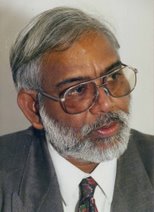
Just a moment, Mr Narayan Murthy

Not suggesting a coup, Infosys Murthy?

Billionaire Narayana Murthy owes an explanation for his slur against Sonia

JOHN DAYAL

Mohandas Karamchand Gandhi, of course had the backing of the billionaires of his time, the Ghanshyamdas Birlas and the Jamnalal Bajaj families, if not of the Tatas who could be presumed to be leaning just a trifle towards the British with whom their community identified so strongly. Jawaharlal Nehru, with his perceived socialist political ideology, was all but an anathema to India’s industrial, corporate and business classes, and the landlords, who inevitably drifted towards the Swatantra party and eventually found a safe haven in the bosom of the Jana Sangh which is now the Bharatiya Janata party. So was Nehru’s daughter, Indira whose sweeping nationalisations of vital sectors such as banking and finance left the rich seething with suppressed anger.

Analysts understand this angst. This is a global phenomenon, as much as corruption and nepotism. Money bags in India or in the US want governments under their control. Historically, in India from the times perhaps of Dhhana Seth and Jagat Seths, Marwari money princes who financed caravans and armies going past their strategic locations in the Rajputana, money has also meant political clout. In the recent corporate history of India since Rajiv Gandhi, India’s corporate sector has sought liberation from the “Permit Raj” or stifling government regulations made in the public interest to prevent profiteering. But the same industrialists, including such giants as the Ambanis, have sought protection from western monopoly capital. That would seem strange to anyone with reason, but such is the logic of high competition.
While the middle and small traders continued with the BJP, it was being presumed that big industry had developed a soft corner for Rajiv Gandhi with his modernistic views and futuristic vision, and because of the thrust to technology that he gave during his short five year term in government.

The drift towards the Congress became a flood, again in perception, when Prime Minister Narsimha Rao brought in as Union Finance Minister the International Monetary Fund former economist Dr Manmohan Singh [and with him such luminaries as Planning Commission deputy chairman Dr Montek Singh Ahluwalia] and launched the liberalisation of the Indian economy. Despite a BJP interlude in power as the National Democratic Alliance for six years or so, with Dr Manmohan Singh’s advent into power as Prime Minister in United Progressive Alliance One and Two, one would have thought the Corporate sector, better known by its euphemism “India Inc.” were now firmly fixed in the Congress corner.

This of course did not happen.

Dr Manmohan Singh’s coalition regime’s fast-paced liberation in UPA-I has understandably sought time to consolidate in UPA-II. The rise in poverty, the land acquisition tension are all signs that the government is working for big business and not for the poor man in the parched fields. But this so called delay has created suspicion among India Inc.

It is not surprising that the biggest boys in industry support the BJP, and go as far on the limb as to support Narendra Modi, that icon of Hindutva and that persecutor of those who oppose him, specially Muslims. His role in the mass murder of Muslims in Gujarat in 2002 is well documented, and is now before the courts at various levels of investigation by a multitude of central and state agencies.
Two years ago, in an infamous statement, Ratan Tata, Sunil Mittal and Mukesh Ambani endorsed Narendra Modi as the “Next Prime Minister”

Fortunately, there was a popular uproar, and the troika was condemned in no uncertain terms. Political elements also took on big business and questioned its morality and short-sightedness, as much as its collective amnesia in forgetting what bloodletting had taken place in Gujarat. Ratan Tata got his small car project in Gujarat, but stopped carrying his love for Modi on his sleeve. His involvement in the Radia Tapes, which he has challenged in court, further silenced him as far as political indiscretions were concerned. The 2- G Scam has also made the Ambanis and the Mittals beat a hasty retreat from the public microscope.

It seems to have, however, taught no lessons to Infosys founder and chairman N R Narayan Murthy. Unless of course one were to argue that Murthy’s recent statement is part of an elaborate strategy to sow seeds of dissent and de-stabilisation in the UPA and the Congress with a much deeper conspiracy or agenda which could include a split in the Congress, the formulation of a new ruling alliance which marginalises the Nehru-Gandhi family. These have been tried before, the most recently during the Narsimha Rao era.

In an interview with the New Delhi Television channel 24x7, Murthy said UPA-II had failed to move ahead with reforms despite being in office for over two years. He put a part of the blame on the dual leadership structure with Prime Minister Manmohan Singh heading the government while Sonia Gandhi controlled the party. "You know, I mean, I understand that he (Singh) leads a coalition. I understand that we have two leaders in the whole set-up. There is a leader of the party (Sonia), there is a leader of the government. So, all these things do slow down the decision-making; but I think that's precisely why the reason that the prime minister must, in fact, take acute note of that and perhaps accelerate decisions," Murthy told NDTV.

As news reports said, the Infosys founder, who is due to step down, was highly critical of the slowdown in decision-making. In the past too, he had expressed concern over corruption but his remarks coincide with those made by the Prime Minister's Economic Advisory Council, which is headed by C Rangarajan, a close aide of Singh. The panel of economists had blamed the government's preoccupation with corruption-related controversies for going slow on decision-making. "Well, you know we have a culture of taking slow decisions, we have a culture of dithering. This is not just at Delhi, it happens in every state. It happens in corporations, it happens in educational institutions. Therefore, the need of the day is for all of us to realise that nothing is gained by dithering. Nothing is gained by postponing decisions. You have to take decisions quickly, no matter that they appear unpalatable in the short term. Well, if I look at the facts and data, then it is true that we haven't had, or you know, taken any decisions ever since this government came back to power in 2009. Which means it is already two years and about three months old. So, to that extent, I think we should all be concerned," Murthy said.

Incidentally, Murthy also spoke out against corruption saying economists have argued that graft shaved off 0.5 to 1.5 percentage points from economic growth. By controlling inflation, India could have growth at double-digit rates. And he had some advice for politicians too. "It's a good idea to have politicians retire at 60."

He did not speak against business dynasties, though his own son has not succeeded him at Infosys but will, of course, inherit much of his wealth regardless.
It is not that Murthy alone is concerned at the slowdown in the economy which robs them of some profit taking, specially for service sector tycoons who do not have much stakes in the long term vision of brick and mortar companies. Newspapers have carried warnings by various corporate leaders on the “policy paralysis” . One such outburst was at a meeting tycoons had with Union Finance Minister and trouble shooter Pranab Mukherjee . The minster brushed aside suggestions of policy paralysis, saying it was perception,

Those who keep a keen eye on India Inc have said they are not surprised at all that Murthy said what he said, and how he said it.” With success comes hubris. This seems to have hit Narayana Murthy too. One tends to believe that I am successful, so I must be right. Whatever I think, say and do must be right. Because if I was wrong, I couldn't be successful, my company couldn't be successful. So I am right. Since I am right, I have a right to lecture the world on what is right,” blogged one critic.
He was commenting on Narayana Murthy's writing in a recent issue of Smart Manager, reproduced by Rediff.com on its website. The article starts off with describing and defining leadership, mostly quoted from Robert F Kennedy and Mahatma Gandhi. “Sadly, Murthy has started off on a wrong note. Many of the quotes in his article apply equally well to leaders of the wrong sort, which Narayana Murthy has in mind. "Leadership is about raising the aspirations of followers and enthusing people with a desire to reach for the stars. For instance, Mahatma Gandhi created a vision for Independence in India and raised the aspirations of our people." So did Hitler, said the blogger. Or Chairman Mao. “It is good to use Mahatma's name to justify your statement. Only, when you take Mahatma's name, be careful that what is attributed to Mahatma or Martin Luther King does not apply equally well to Adolf Hitler and Vladimir Lenin. But it does. Good leaders need not always be impeccable men. While trying to describe leadership, Narayana Murthy unknowingly puts leaders of all kinds into the same box. He fails to distinguish the ideal leadership strain that he has in mind, thereby putting great names to disrepute.”

There is nothing theoretical when Murthy talks so directly of Sonia Gandhi and Manmohan Singh.
There is no doubt that Murthy is critical of Sonia Gandhi’s leadership, and of her place as the chairman of the UPA, a position to which she wad democratically elected. Murthy also tends to forget that Sonia could well have been UPA chairman as also Prime minister if she so desired, but chose deliberately to enounce that option and chose a more democratic form of governance with a distinction between party and governance. The RSS would never understand this difference, for whenever the BJP was in power, so too was the RSS.

It is this duality in governance that has provided the correctives and kept a check on runaway liberalisation. The economic meltdown in the west is evidence that unchecked liberalisation is a recipe for disaster. The number of poor has grown in the USA in the last decade. In India, some tribals at least have been spared their land because the Congress party and its leadership cried a halt to the government’s plans. Ministers rooted in the party showed a human and political instinct. Rahul Gandhi’s recent sojourns in rural and Dalit and Tribal India could not have been done by mere economists of UPA-II. If the Congress returns to power next time, it will be in spite of India Inc, and because of the political will displayed by Rahul Gandhi, and by Pranab Mukherjee, come to think of it.

Murthy’s is, unfortunately, a direct call for a coup within the Congress. More so when it comes at a time that Sonia Gandhi is in a hospital, un-named, in an undisclosed country, presumably the US, where she has been operated upon for an unknown abdominal condition. In any other country including the US and the UK, this would be a reason for much political gossip and considerable political uncertainty. It speaks for the maturity of Indian politics that the country has taken this in its stride, respecting the Gandhi family’s privacy and allowing Sonia to convalesce without politics chasing her.

It also speaks for the dual system of political governance she has put in place. The party’s day to day affairs have been left to a small committee consisting of family and senior untainted advisers who have no agenda other than the welfare of the party. A K Anthony, the Defence Minister, loyal political trouble shooter Ahmad Patel, and Congress general secretary Janardhan Dwivedi have been appointed together with Rahul Gandhi. This is a core group that cannot be denied. Government has been left to Dr Manmohan Singh, with Pranab Mukherjee standing by with him. Manmohan Singh’s health itself is cause for concern, but there is no threat to the government.

The opposition seems to feel this is an opportune time to mount the most vicious attack it has done in the past seven years. The criss in Parliament on the 2-G scam and Commonwealth Games scams and the crisis on the roads on the Lok Pal Bill are signs of the BJP and the RSS flexing their collective muscles.

It is, therefore, a pity that there has been no major denunciation of Murthy’s statement by the party official spokesmen. Mukherjee has dismissed such talk. Even Manmohan Singh ahs chosen not to give it any credence. They must point out that the twin leadership is the best course for the country for the present times, when the UK burns and the US melts down in fires of their own making, fires fuelled by the greed of their own corporate sectors.

Wednesday, March 17, 2010

Christian Council suggests major overhaul of bill against communal violence


The following is the text of the letter


Dr. Manmohan Singh
The Prime Minister of India

Your Excellency Dr. Manmohan Singh:

Greetings from the All India Christian Council.

We applaud your government for its desire to protect the idea of India – a secular government with equality for all. We welcome the intention to pass a Bill on

communal violence which will add to India’s strong body of laws.

However, the Christian community has deep concerns about the Communal Violence (Prevention, Control and Rehabilitation of Victims) Bill, 2009, from the drafts we’ve

read. We humbly request a serious re-write of this legislation. Our main concerns:

1. The Bill doesn’t adequately address the question of hate campaigns and the “communalisation process” (i.e. hate speech published in local language media) that

precede communal violence. This well-studied phenomenon of activities, some already illegal but not often prosecuted, is a root issue.

2. The Bill doesn’t take into account the demography and pattern of living of various communities. Specifically, anti-Christian violence is normally dismissed by

public officials as “sporadic” (although there may be a serious incident daily in some areas). Because other minorities live in concentrated or contiguous areas, those

“communally disturbed areas” are more easily identified. In Orissa, Kandhamal would likely not fit the Bill’s definition but we know what happened there in 2007-2008.

3. The Bill doesn’t give States guidelines on reparations and compensation. We need a uniform national policy as well standards on the assessment of damages after

riots in order to prevent ghettoisation.

4. The Bill doesn’t fully address police and administrative impunity properly or adequately. The “good faith” clause, which exempts police and public servants from

prosecution unless there is permission from the executive branch, is a major concern.

We share concerns, especially voiced by Muslim groups, that the Bill doesn’t fully acknowledge the individual victim, treats communal violence as spontaneous rioters

versus rioters (instead of acknowledging the possibility of premeditated or state-sponsored violence), and gives much power to state
governments which, historically, have occasionally acted in a biased manner. We need to see stronger checks and balances.

Also, we acknowledge that some shortcomings are systemic legal issues better addressed by your government in separate legislation or orders. The most important, in our

humble opinion, include:
Establishing witness protection programs and guidelines
Strengthening of National Commission for Minorities and state minority commissions
Action against police who refuse to register FIRs
Permanently debarring government officials guilty of involvement in communal violence – or any crime – from government jobs and from contesting any office
The rights of “internally displaced persons” in relief camps should mirror UN Guiding Principles on Internal Displacement e.g. including immediate education

for displaced children

Many provisions of the current version of the Bill are acceptable. But we request you to consider the input above so that a weak Bill is not passed which requires the

almost impossible process of securing future amendments.

Our community has learned from recent waves of communal attacks in Orissa and Karnataka as well as ongoing onslaught on house churches, individual pastors/priests and

nuns, and the terrible hate campaigns in newspapers which are officially sponsored by several state governments. Our suggestions are rooted in the reality of rural

India where the vast majority of our members – thousands of Protestant, Catholic, and independent Christian organisations – live and work to improve our beloved

society.

Yours Sincerely and Most Respectfully,


Dr. Joseph D’souza, President, aicc, Hyderabad, dsouza@aiccindia.org
John Dayal, Secretary General, aicc, New Delhi, john.dayal@gmail.com

C.C.:
Shri M. Veerappa Moily, Union Cabinet Minister for Law & Justice

Shri P. Chidambaram, Union Minister of Home Affairs

Shri Salman Khurshid, Union Minister of State (Independent Charge) for Minority Affairs

Smt. Sonia Gandhi, Chairperson, Indian National Congress Party


-------------------
Hindustan Times report today:

Amended law to let Centre take charge in riot-hit states
Aloke Tikku, Hindustan Time
r
New Delhi, March 17, 2010

The government’s final version of the communal violence law empowers the Centre to take charge of an area where riots have broken out once it sends in central forces,

if it finds the state government concerned reluctant to act against the rioters.
The new law still does not allow the Centre to send armed forces on its own to a riot-hit spot. But once a state has asked for central forces to quell violence, the

Centre will have the right — under certain circumstances — of setting up a unified command, comprising these forces and the local police.

The amendment was cleared by the Cabinet last December and is expected to come for parliamentary approval next month.

The Communal Violence (Prevention, Control and Rehabilitation of Victims) Bill, however, says the Centre can declare an area “communally disturbed” and take direct

charge only if the state concerned refuses to act against the violence being perpetrated to such an extent that the secular fabric of the country, or internal

security, is endangered.
To guard against political misuse, the law stipulates that the Centre must
draw the attention of the state government to the deteriorating state of affairs, and set a deadline for it to take necessary steps to suppress the violence.

Until now, central forces deployed in a state worked under the control of the local district administration. But henceforth, in special circumstances, it will work

under the unified command, which will report to the Centre.

The amendment was conceived of in the backdrop of the 2002 Gujarat riots, when it was widely believed the state government had done little to discourage the rioters.
Even so, it is bound to anger state governments who will see it as an encroachment on their powers. Eight of 12 states that responded to a survey by a parliamentary

panel had even opposed an earlier, milder version.