Would they count you if you said you were a Dalit Christian?
Pitfalls and questions on the Caste-religion-poverty census
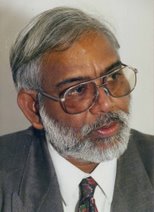
John Dayal
When St. Stephen’s college this year did away with the “”Dalit Christian Quota” they had announced some years ago with such fanfare, it was not the college management, much maligned though it is, but the country’s legal dispensation which made the retrograde step inevitable. How does a Dalit Christian really prove his identity? The Bishop or pastor will give him a baptism certificate attesting to his membership to a church. But who will give him the “Dalit” certificate. Civil authorities will routinely deny the student a Scheduled Caste certificate because under existing law – the “black law” of Para Three of Article 341 of the Constitution of India – will recognise him worthy of affirmative action only if he is a Hindu, or at least a Buddhist or a Sikh. Christians, and Muslims, are just outside the law, much as their ancestors were outside Manu’s legal perimeter of caste.
It may be interest to note that the National Sample Survey Organisation, which conducts regular qualitative surveys in the country, in its report on the 61st round data for 2004-05 says only about 26 per cent of all Hindus are considered as the High Castes or socio-economically better offs; whereas, about 60 per cent of Muslims fall into the non-OBC and thus socio-economically better off category. This is because none from the Muslims, and Christians, are classified under the Scheduled Caste category. Many of them may well be listed as Hindus, as happens in Andhra all the time.
So what are the chances that the Caste census, controversial for a hundred other reasons, will count Dalit Christians? The chances seem Zero at the moment of writing, because the government has quite deliberately woven a cloud of confusion on just what is its intention.
And while the Muslims, and a section of civil society, have spoken out, the combined Church has kept quiet, possibly because it remains preoccupied with issues spiritual or in protecting institutions and text books from the vagaries of the State,. But also because historically, the church has sought not to be the first to intervene, or to cry foul, when civil and constitutional issues are being discussed. Little wonder that while the Muslim community is going into the preparation of the 12th Five Year Plan armed with thousands of pages of data and analysis, the best the Christian community journals and institutions have been able to do is to congratulate the handful of Christians nominated to various committees or commissions.
We should really have been the first to be awakened to the ramifications of a Census! Jesus was born in a manger in Bethlehem because Mary and Joseph were trudging to their hometown to be counted in a census ordered by Caesar.
But perhaps it is still not too late to stand up and be counted as others pose serious questions to the government on the caste census. The first question of course, should be whether this is within the laws which govern the work of the Registrar General of India, or the Census Commissioner as the office is popularly known, in preparing the. National Population Register (NPR).
This is an important issue because the laws specify that a citizen is free to spell out his identity as he sees it. The second is that the information that an individual gives to the enumerator is kept a secret. It is not the individual but the totals that are published in the final picture.
In fact the government goes much beyond the law when it comes to the Census. It releases the religious composition of the population of the country, and of individual states, much after it has released the general figures. And then, it refuses to announce the religious composition in units smaller than the district. There is no chance of anyone, including government departments, of ever finding out the religious composition of a “Block”, and there are eight to sixteen blocks in a district. The religious composition of any particular village within the block is of course never published. Even if every local politician and caste leader may know it by wrote, micro level religious (and caste,) breakdowns are deemed far too “sensitive” as data. Asked why is such data deemed to be sensitive, senior government officers told this writer that it may lead to religious profiling, and possibly violence if groups come to fear an unexpected growth in the number of a community they deem to be hostile, or at least estranged.
It was because of a political reluctance to face facts – the exact number and size of various caste groups in India – that the government never bothered to include Caste identity while enumerating censuses after the 1931 one, which was done at the height of the British Raj. After Independence in 1947, the only statutory enumeration was of the Scheduled caste (excluding those converted to Christianity and Islam) and Scheduled Tribes which was needed to fulfil Constitutional obligations by way of reservations in government jobs and educational institutions, and other affirmative action benefits and sops.
Even after the so called Mandal revolution which politically empowered the backward communities – catapulting into power such people as Mulayam Singh Yadav in Uttar Pradesh and Lalloo Yadav in Bihar -- the Union government fought off all demands to count the castes. The issue figured repeatedly in Parliament eve decade, with the government refusing to budge.
It was only as a consequence of the reservation of up to 27 per cent for Other Backward Communities (OBCs) ordered last decade that the government at last said it would consider making a head count of caste populations specific to each state. This was because castes defined as OBCs in one state may not be so defined in another case. An example was that of Jats (Hindu Jats, not Jat Sikhs of Punjab) who are a powerful landowning group in Uttar Pradesh and Haryana but are a weaker OBC group in Rajasthan. A political consensus was reached in parliament on such a census last year.
There was a bit of a national shock, however, when government changed its mind in October 2010, when preparatory work had almost been completed for the 2011 household survey and the Census. It was official: Caste was not being counted in the formal Census.
In the face of an almighty howl of protest from across the country, government reluctantly announced it would have a separate counting of OBCs, even if cost the national exchequer another couple of thousands of cores of rupees.
But this is not a government that let things be as promised. Even as agitated OBC groups were coming to terms with a separate Caste count, not a formal census as understood in law, came the news that the government planned to “dovetail” caste census with a survey of the BPL, or below the poverty line, families. As the Hindu newspaper reported, the entire exercise should be completed by the end of this year. Governmnt officials who briefed the newspaper off the record said dovetailing the two exercises would ensure that the castes enumerated can be correlated with the socio-economic data, and facilitate a more focussed targeting of the government's welfare measures. “Correlating people's caste identities with their educational and economic status would help map the population better, thus ensuring a more accurate targeting of welfare schemes.”
As currently envisaged, the caste census cum BPL survey will be conducted by the Registrar-General and Census Commissioner India, and the Union Ministries of Housing and Urban Poverty Alleviation (HUPA) and Rural Development (RD), sources added. While the HUPA Ministry will focus on the urban areas, the RD Ministry will survey the rural areas. Those surveyed will be asked to name their caste, but this caste data will not be cross-checked. People will be free to say “no caste” as well. Dalit Christians and Pasmanda Muslims unfortunately, cannot get thimbles listed. But in Tamil Nadu for instance, and in some other states, Christians in certain traditional professions such as boatmen and fishermen can articulate their OBC or Most backward Community status.
The spotlight focussed on the Below Poverty Line families after a World Bank review – done at the behest of the Planning commission now drafting the 12th Five year Plan – which analysed centrally-sponsored social security schemes, including the Mahatma Gandhi National Rural Employment Guarantee Scheme, the Public Distribution System, the Rashtriya Swasthya Bima Yojana, Indira Awas Yojana and Indira Gandhi Old Age Pension Scheme.
The World Bank is of course against programmes that are focussed on BPL groups. It finds serious problems with the scheme. According to its survey, a third of the poorest ten per cent of the people have been incorrectly identified as non-poor in the 2002 BPL census. The data becomes worse for slightly better off – but still BPL -- families.
The World Bank has a good word for “general” schemes such as the Mahatma Gandhi National Rural Employment scheme which covers the rural poor irrespective of caste, religion or other factors.
But we digress.
Dr Abu Sahel Sharief, the economist who actually wrote the celebrated Justice Rajindar Sachhar report on the socio-economic situation of Muslims in India, told this writer there are many controversies in terms of a methodology and variables which will be used to identify the poor.
“What is underplayed and not adequately highlighted is the fact that the Caste Census will be undertaken for the first time since the Independence. Such data are likely to be used in determining and revising the cast and class linked quotas in national and state government jobs, admissions in educational institutions such as in colleges and universities and access to targeted social services. The caste census is being conducted without adequate methodological and analytical preparedness and since caste, class and religious identities have complex inter-relationships there will be ramifications which will be difficult to resolve in future” he added in a written statement.
The Muslim community has done a detailed analysis of the situation.
They note that the collection of caste data is politically motivated and is expected to provide structured information so as to allocate or enhance respective shares in reservations for the SCs, the STs and the OBCs.
They feel the Indian Caste Census (ICC-2011) is likely to trigger a drive for Indian citizens of all castes and communities to get enrolled into deprived categorizations in what Abu Saleh Sharief calls Competitive Backwardness. Muslims converted from the former untouchable Hindu castes (now called Pasmanda Muslims as those who converted to Christianity from the same caste group are called Dalit Christians) will face census enumerators who will not recognize them because the ‘Census filtering procedures’ which only list officially recognised caste-religious groups. This entire issue is before the Supreme Court of India in a Public Interest Litigation writ filed by various Islamic and Christian groups.
The Census will also collect data on select economic and education indicators and asset ownership so as to categorize households into the ‘below poverty line’ or ‘above poverty line’ status. Such data long with religion and caste are expected to be used to compute the relative backwardness or forwardness of a caste group; which, the economist says, will have ramifications in determining the eligibility to jobs and higher level educational admissions under the quota system. In future, this may hinder efforts of the poorer sections of religious minorities from raising their economic and social status.
The government has not yet clarified if the caste-BPL census will be generally based on the Mandal Commission list of OBCs. The government at present does not really have any alternate lists to be used in the 30 States of the Union.
Muslim intelligentsia have suggested, a point I entirely endorse, that the caste Census should be undertaken only after the pending Supreme Court judgment in the matter of the recognition of the presence of ‘dalit’ identities amongst the Muslims and Christens in India is decided.
It is also suggested that enumerators be instructed to collect this information as reported, and not to filter out caste reporting linked to religion.
A civil society memorandum to the government, which this writer also signed, also demands that the caste-related data collected from June-December, 2011 reliably capture the castes’ educational status and their share in various job categories. This should show which castes have been left behind in education and employment in six decades of independence.
Secondly, the census should enumerate numeration socio-economic, educational, living standards, economic and employment profile, land holding and if the family has derived any benefits from Union and state development schemes.
The memorandum ahs again stressed the point raised by Dr Sharief, that data should be collected for all the castes and caste equivalents in non caste practicing communities or religious populations. No particular caste or caste group should be excluded from this. Any non-Hindu religious group that volunteers its caste identity -- Dalit Christians, for instance -- should be identified as such. But all this makes for data not legally sound, unless government bring it under the Census Act, 1948.
Christian Dalits will have to await the Supreme Court decision. And no one can say when that judgement will be delivered.
Sunday, June 5, 2011

Thursday, June 2, 2011
Battle over a Bill
JD For Mainstream June 2011
Sangh strikes to pre-empt effective Prevent Communal Violence Prevention Bill
But civil society and minorities too have issues with components of the draft law
- - -
John Dayal
---- ----
Victims have not forgotten these brutal tragedies in the life of Independent India, even if the State and political parties may pretend to have.
1984 Delhi: On October 31, Prime Minister Indira Gandhi was assassinated by her two Sikh bodyguards in revenge for Operation Blue Star. For the next three days, as Doordarshan telecast the lying in state of her body, over 3,000 Sikhs men and boys were burnt alive while policemen, politicians and the world watched. A very few have been prosecuted for India’s biggest communal violence since the Partition riots of 1947. And twenty-five years later, the Government is still to tell the people if there was a mastermind. A small group of Sikh activists and lawyers have kept alive the pursuit of Justice for the widows of 1984. Needless to say, the aggressors were mainly from the majority community, allegedly owing allegiance to the Congress party though quite a few of them from radical right wing groups, including the Sangh Parivar who had done their share of the work in polarising Punjab in those traumatic years of the 1970s.
2002 Gujarat: On 27 February 2002, the Sabarmati Express stopped at the Godhra station, and its Coach Number six was set afire allegedly by a group of Muslims presumably as a continuing response to the demolition of the Babri Masjid by the Sangh Parivar almost ten years earlier on 6th December 1992. The bodies of the 59 Hindu pilgrims from Ajodhya who died in the fire were brought to Ahmedabad in a deliberate political decision. And for the next several days, the city and several other towns burned. In what the President and Prime minister called “a blot on the cultural traditions of India”, the Union government told Parliament that 790 Muslims were killed, 223 more people reported missing and another 2,500 injured. More than 100,000 people fled their homes. Human rights groups feared the toll to be as high as 2,000 Muslims killed. The National Human Rights Commission found evidence of premeditation in the killings by members the Rashtriya Swayamsevak Sangh, Vanvasi Kalyan Ashram, Vishwa Hindu Parishad and Bajrang Dal with a large doze of complicity by the State political and administrative apparatus headed by chief minister Narendra Modi. Many Police officers were named in subsequent enquiry commissions for their role in the violence which spread to 151 towns and 993 villages in fifteen of the state's 25 districts between February 28 and March 3. And after a drop, violence restarted on March 15, continuing sporadically till mid June. Once again, not many have been prosecuted and sentenced for the violence even as Muslims have been sentenced in the train fire. The Supreme Court and special teams are still investigating allegations of mass rape of women, including genital mutilation, and the tearing out of foetus from pregnant women’s bellies.
2008: Kandhamal district, Orissa: The violence in Orissa between 23 August and 1 October 2008 was comparatively on a much smaller scale, but was historically unique in being targeted against the micro-minority Christian community by communal mobs out to avenge the assassination of VHP vice president Lakshmanananda Saraswati in his ashram by self confessed Maoists on 23 August. For almost a month, the district of Kandhamal, on a plateau in the midst of the state of Orissa, was out of bounds even the government’s troops while the killer gangs roamed the countryside, killing perhaps as many as a 100 people – the government acknowledges 37 deaths – burning down 5,600 houses in 300 villages, destroying 257 big and small Churches and forcing as many as 55,000 people to flee their houses. By May 2011, several thousand are still living in make shift huts. They have been barred from their villages by the Hindutva gangs who say quite openly that they will allow the Christians to return only if they convert to Hinduism. Orissa chief minister Naveen Pattnaik, who was in a coalition with the Bharatiya Janata party during the violence, and returned to power after severing relations with that party, told the state legislature that the attacks were mainly led by right-wing outfits such as the Vishwa Hindu Parishad and its youth wing Bajrang Dal.
--- ---
The then Union Minister of State for Home Affairs, Ajay Maken, told Parliament there were at least 3,800 communal clashes reported in India between 2004 and 2008, marking a steady rise over the years. The highest incidence of such violence in 2008 was the one in Orissa, of course, followed by Madhya Pradesh with 131, Uttar Pradesh with 114 and Maharashtra with 109 and Karnataka in the south with 108, half of them against Christians and the rest against Muslims. As per the total number of communal incidents in each state during the last five years, Maharashtra is on the top with 681 clashes, followed by Madhya Pradesh with 654 and Uttar Pradesh with 613.
Data shows that barring the occasional incident of retaliation, the Muslims were the overwhelming target in the violence, and yet in the arrests, while 27,901 Hindus were arrested, so were as many as 7,651 Muslims. In firing by the police, again, 93 Muslims were killed as also about 75 Hindus.
Human Rights Watch criticized the administrations for engaging in a cover-up of the state's role in the massacres. .
The Union government finally brought forward a Bill to anticipate and prevent communal violence. The 2005 Bill, which was introduced in the Rajya Sabha – where it still lies – left civil society and specially the Human rights groups aghast. Human rights groups and Muslim intelligentsia – the Church was woefully absent in the exercise – pointed out two major flaws in the Bill. It empowered the state without empowering the victims and their communities. And it left unaddressed the entire question of impunity, how to hold politicians, police and bureaucrats responsible for their acts of commission and inaction before, during and after acts of communal violence. In passing, the Bill was also grossly inadequate in assuring reparations, compensation and rehabilitation of the victims of mass violence. For the Christian community, the 2005 Bill offered nothing. The community is subject to individual and sporadic violence almost every day of the year in some state or the other, and its smaller churches, house-churches and independent pastors, specially those working in small towns or villages in tribal and forest areas are particular targets. But this violence was not even acknowledged or accepted as being communally motivated.
The Bill was rejected out of hand. Though the government has not withdrawn the 2005 Bill, the National Advisory Council headed by United Progressive Alliance chairperson Mrs Sonia Gandhi set up a working group coordinated by two NAC members, journalist-activist Farah Naqvi and former bureaucrat and NGO activist Harsh Mander – with members from the various religious communities. Major activist-members included Shabnam Hashmi of Anhad, Teesta Setalvad of Mumbai, Vrinda Grover and Usha Ramanathan, and both jurists, from Delhi, and this writer. Advocate Sister Mary Scaria and Delhi lawyer P I Jose, senior advocate Muchhala, and leaders of the Jamiat-e-Ulema-i-Hind and the Jamiat-e-Islami-e-Hind were represented. For some time, Solicitor General Subramaniam was also involved. The committee was also noted for several eminent jurists including Prof Upendra Buxi who could not attend a single meeting for personal or health reasons.
After sittings lasting more than a year, the working group came up with a draft. This was sent to Additional Solicitor General Indira Jaisingh for re-formatting. The resultant draft, called the Prevention of Communal and Targeted Violence (Access to Justice and Reparations) Bill, 2011 has been put on the NAC website and people’s reactions have been sought with a deadline of 10th June 2011. The draft is not the Bill which will be presented in either House of Parliament, presumably later this year in the Monsoon or winter sessions. It still has to be whetted by the Union Home Ministry, which has its own draft ready for which it has been canvassing, and by the Union Law Ministry, the final arbiter of its readiness for Parliament. Even if it clears these two major hurdles and becomes a Bill, chances are it will be subject to a minute examination in a select committee. One does not have to be a parliamentary expert to predict the Bill will have really very difficult passage indeed in the two houses of Parliament, even if the government seems willing to stake its political future in backing the bill.
But long before the processes take place for a sane debate, the Sangh Parivar has launched a pre-emptive offensive. The Bharatiya Janata Party, the political wing of the Rashtriya Swayamsevak Sangh, has held formal press conferences, and its spokespersons have dominated the TV channels in tailor-made debates. Sangh think tanks have called for consultations on the issue, and their most articulate champion, leader of the Opposition in the Rajya Sabha, advocate Arun Jaitely has gone to town saying, as a newspaper headlines screamed, that the “Draft Bill on communal violence [is] more draconian than TADA”. Arun Jaitely wrote an extraordinary public note clearly indicating that not only would the BJP not support it in Parliament but that it would “fall foul of the Constitution as the Centre would have usurped the jurisdiction of the States on law and order, a subject clearly and entirely within their domain.”
Understandably, as the leader of a party repeatedly indicted for spreading hate, Jaitely would be critical of any law that made hate propaganda as an offence and an outbreak of communal violence attracting President's rule in a state, presumably where the party was in power. Jaitely also said the draft Bill was discriminatory as it exclusively dealt with violence targeted against a minority and did not deal with the possibility of minority violence against a majority community. The proposed law was to “fix senior leaders,” the BJP felt. Other aspects he faulted were the presence of four members of the minorities on the proposed 7-member national authority for communal harmony - and similar state authorities.
The Union government fielded HRD minister Kapil Sibal, more eminent a lawyer than perhaps even Jaitely, to counter the BJP. Sibal said the Centre was determined to make State governments and individuals responsible for law and order “accountable” in cases of communal violence. “A polity which is just, fair and equitable needs to protect the weaker sections, minorities, SCs and STs,” Sibal said. The Congress, he said agreed the State governments would have to be on board if the draft Bill was ever to become law. Sibal’s party colleague Manu Singhvi said a special law was needed because the normal provisions were tardy, there were no special courts, and the offense was not described and defined clearly.
National Commission for Minorities chairman Wajahat Habibullah, who had taken over just this year said the existing laws are sufficient because of the fact that they don't deal with prevention. “The Bill is not an Act only to handle communal violence but it is also to prevent it and then to rehabilitate those who are victims.” Habibullah made a critical observation, noting that the important elements, repatriation and rehabilitation, have so far met with a mental block in society. “In our country, it is something that we can be ashamed of, the anti-Sikh riots that took place, what happened in Kandhamal, what happened in 2002. We do need to address these with a sense of urgency and also with an essence of importance,” he said.
Outside of the political posturing of the BJP leadership, many in the NAC and most in civil society the draft is not a perfect one. Its formulation has not been without acrimony and controversy.
Ms Shabnam Hashmi, jurists Vrinda Grover and Usha Ramanathan and this writer issued a press statement resigning from the working group, expressing their own reservations to several aspects of the Bill, especially in areas of Centre-State relations, impunity, and trigger mechanisms to make operative central intervention. We had reservations also about the powers and structures of the Central and State authorities sought to be created to oversee the control of violence and issues of reparation and so on and finally to ensure the empowerment of the victims and ending impunity. There was a sense of shock that the draft as it was finally put on the internet introduced `internal disturbance' as one of the entry points, a matter which in previous consultations had been firmly rejected. “It has a constitutional history, and does things to the nature of state power that we ought never to be endorsing.” The second part of Article 355, which reads "and to ensure that the government of every state is carried on in accordance with the provisions of this Constitution", was to be the entry point for the law.
Several Muslim members have also wanted the draft law to be tweaked in several areas to meet the challenge of hate campaigns, violence, rehabilitation and reparations.
Understandably, again, the NAC is defensive about criticism of the Bill, emanating from within or from political opponents. For one, Mrs Sonia Gandhi ahs identified this issue as one of the major ones the NAC must get the government to act upon, together with issues such as food guarantee, and a life of dignity for domestic workers.
NAC members say the Bill made provision for all minorities — not just religious, but linguistic and regional as well. Seven States — Jammu and Kashmir, Punjab, Mizoram, Manipur, Meghalaya, Nagaland, Arunachal Pradesh and the Union Territory of Lakshadweep Island –have Hindus as a religious minority. The NAC has also made a specific recommendation that the Bill should be extended to Jammu and Kashmir, so that Kashmiri Pandits would also be covered; it also points out that migrants from east Uttar Pradesh and Bihar in Maharashtra — most of who are Hindus — would also be covered by the Bill. I must add that several of us have issues with extending the law to Jammu and Kashmir valley which is beset with so many other issues, including terrorism, the heavy military presence, massive human rights violations, to name the maor ones.
The focus of the Bill is those particularly vulnerable groups of citizens, who are routinely subjected to violence or threats of violence in different forms because of ‘who they are’. The existing provisions of law fail because of a similar systemic bias in the administrative and criminal justice machinery against these most disadvantaged groups. Their vulnerability stands twice enhanced.
An important clause is the Accountability of Public Officials. This is being secured through reiterating the duties of public officials, and defining offences by public officials as the failure to perform those duties. Offences by public officials shall attract penal consequences under this Bill as often the greatest cause for communal and targeted violence is that police and bureaucrats simply do not act. The Bill recognizes the offences of both commission and omission.
Similarly, hate campaigns are sought to be checked in recognizing the creation of a ‘hostile environment against a group’ and the Bill specifically defines a series of acts that amount to creating a intimidating or hostile environment against members of groups, including economic boycott, denial of public services, and forced migration. It defines as the duty of public servants to identify the creation of such a ‘hostile environment’ and to prevent any communal and targeted violence against such members of groups.
Perhaps the one of the most controversial issue is of Command Responsibility. The NAC feels that given the hierarchical nature of administrative systems, the reality is that too often it is those higher up in a chain of administrative or political command that are responsible for failure to perform their duties. Yet, it is only the officer on the ground whose dereliction is visible. This Bill identifies culpability for those who are ‘effectively in-charge,’ through the doctrine of command responsibility. In cases of widespread, mass violence, the command responsibility shall reasonably be presumed to extend to the immediate superior officer who shall be held guilty of such offence. However, the chain of command responsibility may extend to any level where effective decisions to act or not act are taken. This also extends to Non State Actors and any association.
But absolutely the most controversial is the attempt to create a: National Authority for Communal Harmony, Justice & Reparation and State Authorities for Communal Harmony, Justice & Reparation more powerful than any other institution created after the Constitution was promulgated in 1950. NAC defends itself saying the principle behind this Bill is not to supersede the existing law enforcement machinery, nor to disempower or paralyze the existing administrative and justice mechanisms, but rather to strengthen them and make them work by making them more accountable.
The primary monitoring and grievance redressal mechanism laid out in this Bill in the form of the National Authority and State Authorities (NA/SA) do not, in any instance, take over any existing powers of any public official or institution. NAC says their only mandate is to ensure that public functionaries act to prevent and control communal and targeted violence, and to ensure justice and reparation when violence occurs. The National and State authorities will monitor, inquire into complaints, receive or suo moto seek information, and issue advisories and recommendations only when there is alleged inaction or malafide action by public officials and governments.: NAC says through the NA/SA this Bill is seeking to create a mechanism that can make the administrative and criminal justice system work as it should, free from favour or bias or malafide intent. The monitoring mechanism of the National and State Authorities will also provide the ‘paper trail’ to ensure robust accountability of public officials in a court of law. The panels are to be chosen by a Selection Committee for members consisting of the Prime Minister, Chairperson, Leader of the Opposition in the House of the People, Union Minister for Home Affairs, Leader of each recognized national political party in the House of the People. The Selection Committee for members (including Chairperson). In the States, the Chief Minister shall be the Chairperson.
The new Offences of communal and targeted violence, including ‘organized’ communal and targeted violence and mass violence that is widespread or systematic in nature is also defined specifically as ‘organized’ communal and targeted violence.
This Bill recognizes that for rights to relief, reparation, restitution and compensation, there are no statutory norms and provisions for any Indian citizen under present law. Thus, all affected persons (whether or not they belong to a religious or linguistic minority or are SCs or STs) have been given justiciable rights to comprehensive reparations and compensation if they suffer any harm as a result of an incident of communal and targeted violence. So far, governments have been both arbitrary and selective in awarding compensation to different groups of citizens with different standards of generosity. Compensation must not be a matter of charity or largesse, but a justiciable right with a single uniform standard for every Indian citizen. This Bill provides that compensation shall be paid within 30 days from the date of the incident, and in accordance with a schedule, which shall be revised every 3 years. No compensation for death shall be less than Rs. 15 lakhs. No compensation for rape shall be less than 5 lakhs.
Addressing the Arun Jaitely charge of violating the sacred nature of federalism, NAC says the advisories and recommendations of the National Authority are not binding on any State Government, nor does the Bill create any new powers as they are already extant in law.
On our part, working group members have repeatedly reminder the NAC that Communal violence is not inevitable; it is not the norm in a maturing democracy, an economic and political superpower, and a caring multi-cultural society such as India wants to be in the 21st Century. Communal violence can be prevented if pre-emptive action by a non-partisan administration [Intelligence, magistracy and police, as also political leadership from Panchayat head to the Chief Minister of the State] is taken at any stage before it explodes as a full-blown mass murder and arson.
Most of us are sure a democracy needs be vigilant against virulent political processes and entities, penetration of educational systems and politicisation of civil, police and military structures and must take pre-emptive measures. In Europe, Country Laws show they are aware of the menace of Neo Nazism and Anti Semitism and have taken precautions. The CV Bill must articulate this awareness.
Demonising and constructing images of the “Other”, specially of the Christian and Muslim communities, in gossip and political activity in the public domain, in general and political Media including the electronic media and Internet are now routine. Care has to be taken that it is not the victim-survivor who is punished anew by police and administrative action in imposition of curfew, search and arrest operations. Peace with Justice remains the core issue.
Sangh strikes to pre-empt effective Prevent Communal Violence Prevention Bill
But civil society and minorities too have issues with components of the draft law
- - -
John Dayal
---- ----
Victims have not forgotten these brutal tragedies in the life of Independent India, even if the State and political parties may pretend to have.
1984 Delhi: On October 31, Prime Minister Indira Gandhi was assassinated by her two Sikh bodyguards in revenge for Operation Blue Star. For the next three days, as Doordarshan telecast the lying in state of her body, over 3,000 Sikhs men and boys were burnt alive while policemen, politicians and the world watched. A very few have been prosecuted for India’s biggest communal violence since the Partition riots of 1947. And twenty-five years later, the Government is still to tell the people if there was a mastermind. A small group of Sikh activists and lawyers have kept alive the pursuit of Justice for the widows of 1984. Needless to say, the aggressors were mainly from the majority community, allegedly owing allegiance to the Congress party though quite a few of them from radical right wing groups, including the Sangh Parivar who had done their share of the work in polarising Punjab in those traumatic years of the 1970s.
2002 Gujarat: On 27 February 2002, the Sabarmati Express stopped at the Godhra station, and its Coach Number six was set afire allegedly by a group of Muslims presumably as a continuing response to the demolition of the Babri Masjid by the Sangh Parivar almost ten years earlier on 6th December 1992. The bodies of the 59 Hindu pilgrims from Ajodhya who died in the fire were brought to Ahmedabad in a deliberate political decision. And for the next several days, the city and several other towns burned. In what the President and Prime minister called “a blot on the cultural traditions of India”, the Union government told Parliament that 790 Muslims were killed, 223 more people reported missing and another 2,500 injured. More than 100,000 people fled their homes. Human rights groups feared the toll to be as high as 2,000 Muslims killed. The National Human Rights Commission found evidence of premeditation in the killings by members the Rashtriya Swayamsevak Sangh, Vanvasi Kalyan Ashram, Vishwa Hindu Parishad and Bajrang Dal with a large doze of complicity by the State political and administrative apparatus headed by chief minister Narendra Modi. Many Police officers were named in subsequent enquiry commissions for their role in the violence which spread to 151 towns and 993 villages in fifteen of the state's 25 districts between February 28 and March 3. And after a drop, violence restarted on March 15, continuing sporadically till mid June. Once again, not many have been prosecuted and sentenced for the violence even as Muslims have been sentenced in the train fire. The Supreme Court and special teams are still investigating allegations of mass rape of women, including genital mutilation, and the tearing out of foetus from pregnant women’s bellies.
2008: Kandhamal district, Orissa: The violence in Orissa between 23 August and 1 October 2008 was comparatively on a much smaller scale, but was historically unique in being targeted against the micro-minority Christian community by communal mobs out to avenge the assassination of VHP vice president Lakshmanananda Saraswati in his ashram by self confessed Maoists on 23 August. For almost a month, the district of Kandhamal, on a plateau in the midst of the state of Orissa, was out of bounds even the government’s troops while the killer gangs roamed the countryside, killing perhaps as many as a 100 people – the government acknowledges 37 deaths – burning down 5,600 houses in 300 villages, destroying 257 big and small Churches and forcing as many as 55,000 people to flee their houses. By May 2011, several thousand are still living in make shift huts. They have been barred from their villages by the Hindutva gangs who say quite openly that they will allow the Christians to return only if they convert to Hinduism. Orissa chief minister Naveen Pattnaik, who was in a coalition with the Bharatiya Janata party during the violence, and returned to power after severing relations with that party, told the state legislature that the attacks were mainly led by right-wing outfits such as the Vishwa Hindu Parishad and its youth wing Bajrang Dal.
--- ---
The then Union Minister of State for Home Affairs, Ajay Maken, told Parliament there were at least 3,800 communal clashes reported in India between 2004 and 2008, marking a steady rise over the years. The highest incidence of such violence in 2008 was the one in Orissa, of course, followed by Madhya Pradesh with 131, Uttar Pradesh with 114 and Maharashtra with 109 and Karnataka in the south with 108, half of them against Christians and the rest against Muslims. As per the total number of communal incidents in each state during the last five years, Maharashtra is on the top with 681 clashes, followed by Madhya Pradesh with 654 and Uttar Pradesh with 613.
Data shows that barring the occasional incident of retaliation, the Muslims were the overwhelming target in the violence, and yet in the arrests, while 27,901 Hindus were arrested, so were as many as 7,651 Muslims. In firing by the police, again, 93 Muslims were killed as also about 75 Hindus.
Human Rights Watch criticized the administrations for engaging in a cover-up of the state's role in the massacres. .
The Union government finally brought forward a Bill to anticipate and prevent communal violence. The 2005 Bill, which was introduced in the Rajya Sabha – where it still lies – left civil society and specially the Human rights groups aghast. Human rights groups and Muslim intelligentsia – the Church was woefully absent in the exercise – pointed out two major flaws in the Bill. It empowered the state without empowering the victims and their communities. And it left unaddressed the entire question of impunity, how to hold politicians, police and bureaucrats responsible for their acts of commission and inaction before, during and after acts of communal violence. In passing, the Bill was also grossly inadequate in assuring reparations, compensation and rehabilitation of the victims of mass violence. For the Christian community, the 2005 Bill offered nothing. The community is subject to individual and sporadic violence almost every day of the year in some state or the other, and its smaller churches, house-churches and independent pastors, specially those working in small towns or villages in tribal and forest areas are particular targets. But this violence was not even acknowledged or accepted as being communally motivated.
The Bill was rejected out of hand. Though the government has not withdrawn the 2005 Bill, the National Advisory Council headed by United Progressive Alliance chairperson Mrs Sonia Gandhi set up a working group coordinated by two NAC members, journalist-activist Farah Naqvi and former bureaucrat and NGO activist Harsh Mander – with members from the various religious communities. Major activist-members included Shabnam Hashmi of Anhad, Teesta Setalvad of Mumbai, Vrinda Grover and Usha Ramanathan, and both jurists, from Delhi, and this writer. Advocate Sister Mary Scaria and Delhi lawyer P I Jose, senior advocate Muchhala, and leaders of the Jamiat-e-Ulema-i-Hind and the Jamiat-e-Islami-e-Hind were represented. For some time, Solicitor General Subramaniam was also involved. The committee was also noted for several eminent jurists including Prof Upendra Buxi who could not attend a single meeting for personal or health reasons.
After sittings lasting more than a year, the working group came up with a draft. This was sent to Additional Solicitor General Indira Jaisingh for re-formatting. The resultant draft, called the Prevention of Communal and Targeted Violence (Access to Justice and Reparations) Bill, 2011 has been put on the NAC website and people’s reactions have been sought with a deadline of 10th June 2011. The draft is not the Bill which will be presented in either House of Parliament, presumably later this year in the Monsoon or winter sessions. It still has to be whetted by the Union Home Ministry, which has its own draft ready for which it has been canvassing, and by the Union Law Ministry, the final arbiter of its readiness for Parliament. Even if it clears these two major hurdles and becomes a Bill, chances are it will be subject to a minute examination in a select committee. One does not have to be a parliamentary expert to predict the Bill will have really very difficult passage indeed in the two houses of Parliament, even if the government seems willing to stake its political future in backing the bill.
But long before the processes take place for a sane debate, the Sangh Parivar has launched a pre-emptive offensive. The Bharatiya Janata Party, the political wing of the Rashtriya Swayamsevak Sangh, has held formal press conferences, and its spokespersons have dominated the TV channels in tailor-made debates. Sangh think tanks have called for consultations on the issue, and their most articulate champion, leader of the Opposition in the Rajya Sabha, advocate Arun Jaitely has gone to town saying, as a newspaper headlines screamed, that the “Draft Bill on communal violence [is] more draconian than TADA”. Arun Jaitely wrote an extraordinary public note clearly indicating that not only would the BJP not support it in Parliament but that it would “fall foul of the Constitution as the Centre would have usurped the jurisdiction of the States on law and order, a subject clearly and entirely within their domain.”
Understandably, as the leader of a party repeatedly indicted for spreading hate, Jaitely would be critical of any law that made hate propaganda as an offence and an outbreak of communal violence attracting President's rule in a state, presumably where the party was in power. Jaitely also said the draft Bill was discriminatory as it exclusively dealt with violence targeted against a minority and did not deal with the possibility of minority violence against a majority community. The proposed law was to “fix senior leaders,” the BJP felt. Other aspects he faulted were the presence of four members of the minorities on the proposed 7-member national authority for communal harmony - and similar state authorities.
The Union government fielded HRD minister Kapil Sibal, more eminent a lawyer than perhaps even Jaitely, to counter the BJP. Sibal said the Centre was determined to make State governments and individuals responsible for law and order “accountable” in cases of communal violence. “A polity which is just, fair and equitable needs to protect the weaker sections, minorities, SCs and STs,” Sibal said. The Congress, he said agreed the State governments would have to be on board if the draft Bill was ever to become law. Sibal’s party colleague Manu Singhvi said a special law was needed because the normal provisions were tardy, there were no special courts, and the offense was not described and defined clearly.
National Commission for Minorities chairman Wajahat Habibullah, who had taken over just this year said the existing laws are sufficient because of the fact that they don't deal with prevention. “The Bill is not an Act only to handle communal violence but it is also to prevent it and then to rehabilitate those who are victims.” Habibullah made a critical observation, noting that the important elements, repatriation and rehabilitation, have so far met with a mental block in society. “In our country, it is something that we can be ashamed of, the anti-Sikh riots that took place, what happened in Kandhamal, what happened in 2002. We do need to address these with a sense of urgency and also with an essence of importance,” he said.
Outside of the political posturing of the BJP leadership, many in the NAC and most in civil society the draft is not a perfect one. Its formulation has not been without acrimony and controversy.
Ms Shabnam Hashmi, jurists Vrinda Grover and Usha Ramanathan and this writer issued a press statement resigning from the working group, expressing their own reservations to several aspects of the Bill, especially in areas of Centre-State relations, impunity, and trigger mechanisms to make operative central intervention. We had reservations also about the powers and structures of the Central and State authorities sought to be created to oversee the control of violence and issues of reparation and so on and finally to ensure the empowerment of the victims and ending impunity. There was a sense of shock that the draft as it was finally put on the internet introduced `internal disturbance' as one of the entry points, a matter which in previous consultations had been firmly rejected. “It has a constitutional history, and does things to the nature of state power that we ought never to be endorsing.” The second part of Article 355, which reads "and to ensure that the government of every state is carried on in accordance with the provisions of this Constitution", was to be the entry point for the law.
Several Muslim members have also wanted the draft law to be tweaked in several areas to meet the challenge of hate campaigns, violence, rehabilitation and reparations.
Understandably, again, the NAC is defensive about criticism of the Bill, emanating from within or from political opponents. For one, Mrs Sonia Gandhi ahs identified this issue as one of the major ones the NAC must get the government to act upon, together with issues such as food guarantee, and a life of dignity for domestic workers.
NAC members say the Bill made provision for all minorities — not just religious, but linguistic and regional as well. Seven States — Jammu and Kashmir, Punjab, Mizoram, Manipur, Meghalaya, Nagaland, Arunachal Pradesh and the Union Territory of Lakshadweep Island –have Hindus as a religious minority. The NAC has also made a specific recommendation that the Bill should be extended to Jammu and Kashmir, so that Kashmiri Pandits would also be covered; it also points out that migrants from east Uttar Pradesh and Bihar in Maharashtra — most of who are Hindus — would also be covered by the Bill. I must add that several of us have issues with extending the law to Jammu and Kashmir valley which is beset with so many other issues, including terrorism, the heavy military presence, massive human rights violations, to name the maor ones.
The focus of the Bill is those particularly vulnerable groups of citizens, who are routinely subjected to violence or threats of violence in different forms because of ‘who they are’. The existing provisions of law fail because of a similar systemic bias in the administrative and criminal justice machinery against these most disadvantaged groups. Their vulnerability stands twice enhanced.
An important clause is the Accountability of Public Officials. This is being secured through reiterating the duties of public officials, and defining offences by public officials as the failure to perform those duties. Offences by public officials shall attract penal consequences under this Bill as often the greatest cause for communal and targeted violence is that police and bureaucrats simply do not act. The Bill recognizes the offences of both commission and omission.
Similarly, hate campaigns are sought to be checked in recognizing the creation of a ‘hostile environment against a group’ and the Bill specifically defines a series of acts that amount to creating a intimidating or hostile environment against members of groups, including economic boycott, denial of public services, and forced migration. It defines as the duty of public servants to identify the creation of such a ‘hostile environment’ and to prevent any communal and targeted violence against such members of groups.
Perhaps the one of the most controversial issue is of Command Responsibility. The NAC feels that given the hierarchical nature of administrative systems, the reality is that too often it is those higher up in a chain of administrative or political command that are responsible for failure to perform their duties. Yet, it is only the officer on the ground whose dereliction is visible. This Bill identifies culpability for those who are ‘effectively in-charge,’ through the doctrine of command responsibility. In cases of widespread, mass violence, the command responsibility shall reasonably be presumed to extend to the immediate superior officer who shall be held guilty of such offence. However, the chain of command responsibility may extend to any level where effective decisions to act or not act are taken. This also extends to Non State Actors and any association.
But absolutely the most controversial is the attempt to create a: National Authority for Communal Harmony, Justice & Reparation and State Authorities for Communal Harmony, Justice & Reparation more powerful than any other institution created after the Constitution was promulgated in 1950. NAC defends itself saying the principle behind this Bill is not to supersede the existing law enforcement machinery, nor to disempower or paralyze the existing administrative and justice mechanisms, but rather to strengthen them and make them work by making them more accountable.
The primary monitoring and grievance redressal mechanism laid out in this Bill in the form of the National Authority and State Authorities (NA/SA) do not, in any instance, take over any existing powers of any public official or institution. NAC says their only mandate is to ensure that public functionaries act to prevent and control communal and targeted violence, and to ensure justice and reparation when violence occurs. The National and State authorities will monitor, inquire into complaints, receive or suo moto seek information, and issue advisories and recommendations only when there is alleged inaction or malafide action by public officials and governments.: NAC says through the NA/SA this Bill is seeking to create a mechanism that can make the administrative and criminal justice system work as it should, free from favour or bias or malafide intent. The monitoring mechanism of the National and State Authorities will also provide the ‘paper trail’ to ensure robust accountability of public officials in a court of law. The panels are to be chosen by a Selection Committee for members consisting of the Prime Minister, Chairperson, Leader of the Opposition in the House of the People, Union Minister for Home Affairs, Leader of each recognized national political party in the House of the People. The Selection Committee for members (including Chairperson). In the States, the Chief Minister shall be the Chairperson.
The new Offences of communal and targeted violence, including ‘organized’ communal and targeted violence and mass violence that is widespread or systematic in nature is also defined specifically as ‘organized’ communal and targeted violence.
This Bill recognizes that for rights to relief, reparation, restitution and compensation, there are no statutory norms and provisions for any Indian citizen under present law. Thus, all affected persons (whether or not they belong to a religious or linguistic minority or are SCs or STs) have been given justiciable rights to comprehensive reparations and compensation if they suffer any harm as a result of an incident of communal and targeted violence. So far, governments have been both arbitrary and selective in awarding compensation to different groups of citizens with different standards of generosity. Compensation must not be a matter of charity or largesse, but a justiciable right with a single uniform standard for every Indian citizen. This Bill provides that compensation shall be paid within 30 days from the date of the incident, and in accordance with a schedule, which shall be revised every 3 years. No compensation for death shall be less than Rs. 15 lakhs. No compensation for rape shall be less than 5 lakhs.
Addressing the Arun Jaitely charge of violating the sacred nature of federalism, NAC says the advisories and recommendations of the National Authority are not binding on any State Government, nor does the Bill create any new powers as they are already extant in law.
On our part, working group members have repeatedly reminder the NAC that Communal violence is not inevitable; it is not the norm in a maturing democracy, an economic and political superpower, and a caring multi-cultural society such as India wants to be in the 21st Century. Communal violence can be prevented if pre-emptive action by a non-partisan administration [Intelligence, magistracy and police, as also political leadership from Panchayat head to the Chief Minister of the State] is taken at any stage before it explodes as a full-blown mass murder and arson.
Most of us are sure a democracy needs be vigilant against virulent political processes and entities, penetration of educational systems and politicisation of civil, police and military structures and must take pre-emptive measures. In Europe, Country Laws show they are aware of the menace of Neo Nazism and Anti Semitism and have taken precautions. The CV Bill must articulate this awareness.
Demonising and constructing images of the “Other”, specially of the Christian and Muslim communities, in gossip and political activity in the public domain, in general and political Media including the electronic media and Internet are now routine. Care has to be taken that it is not the victim-survivor who is punished anew by police and administrative action in imposition of curfew, search and arrest operations. Peace with Justice remains the core issue.
Sunday, May 8, 2011
JUSTICE STILL ELUDES THE CHRISTIAN VICTIMS, AND MANY ARE TO BLAME FOR IT
KANDHAMAL UPDATE 1 MAY 20 2011
JOHN DAYAL
There has been just one conviction for murder in 20 cases of the brutal killing of Christians of Kandhamal, Orissa, at the hands of Hindutva fanatics, and mobs led by them, during August--October 2008. More than two years and 9 months later the course of justice in the two special Fast Track Courts continues to be a travesty – with aberrations at all stages, from the presentation of the production case and examination of witnesses, to the coercive presence of Rashtriya Swayamsevak Sangh goons in the court premises, often in the court room, and the role of both judges and defence lawyers.
Lawyers for the victims have no role in court other than occasionally feebly protesting to the judges – in vain – those relatives and other eye witnesses who deposed they saw the men and women being killed are being threatened blatantly. The response of the judges has been, “we have sent the orders to the police.” The police have no response at all. The single biggest beneficiary of the miscarriage of justice has been Mr. Manoj Pradhan, the local Member of the State Legislature and a leader of the Bharatiya Janata party which was then a coalition partner in the government of Chief Minister Mr. Naveen Pattnaik. Mr. Pradhan is accused in over half a dozen cases, and is currently free on bail.
Investigation no doubt has been tardy and superficial – one junior gazetted officer and two inspectors head the small team trying to probe the vast number of cases with primitive forensic equipment and almost no training in probing cases of mass violence. No attempt was made to use video and mobile phone camera images that are widely available both with the victims and with the accused. In some cases, the two Fast Track Court judges have indeed passed strictures against the police investigation, and in most cases, they have found the testimony of witnesses --- victims and their relatives – either not trustworthy or insufficient to prove the offence against the accused, a review of the judgments shows.
There has been no attempt by the Directorate of Prosecutions or by the police to upgrade cases where victims died of their injuries not on the spot, but in hospital, refugee camps or other places. Under Indian legal practice, cases of attempted murder or murderous assault would automatically be upgraded to murder if the victim died of his injuries. This has prevented a large number of cases from being recorded as murder.
It may be recalled that the violence which began 24th August 2008 took a heavy toll. Over 14 of the 30 districts in the state were impacted. 6,000 houses were burnt in 400 villages, including 296 churches and smaller places of Christian worship. Over 56,000 became internally displaced persons, about 30,000 living from three months to a year in government refugee camps. Over 20,000 men, women and children spent days hiding in forests. Over 10,000 are yet to return home. About 1,000 have been warned or threatened by their neighbours they can return home if they become Hindus. Some are living in what can be called “Christian ghettos”, one of which is on land provide by the district authorities who find themselves impotent in rehabilitating the Christians in their villages. The rest have left Kandhamal in fear, or in search of jobs, as they do not have any livelihood now in Kandhamal where they also face an economic blockade.]
Cutting through the fog created around the legal data, the following is the current situation of the criminal investigation of cases of arson and murder, abduction and violence. Complaints were made at the local police posts, at the regional police stations, and often directly to the offices of the Superintendent of Police in the district capital of Phulbani by registered post. In some cases, complaints were sent to the Director General of Police in Bhubaneswar when the Police stations returned complaints sent by registered post.
3,232 criminal complaints were filed when the dust settled on the Second Phase violence that began on 24th August 2008 and after peaking by about 30 August, continued sporadically through most of September and October that year.
1541 complaints are acknowledged by the Kandhamal district police, but they did not file them as the First Information Reports required under Indian Criminal law.
828 complaints were actually converted to First Information Reports [FIRs} which mark the beginning of further investigation and the case being brought before a court for trial after a charge-sheet is filed.
327 Cases have actually seen a completion of the investigation process with the cases committed to the two Fast Track Courts headed by two ad hoc Additional District Judges for day to day hearings.
169 Cases have seen the acquittal of all accused,
86 cases have ended up in convictions -- not for the heinous crimes mentioned in the FIRs as the main ones, but for comparatively minor offenses meriting only prison terms of two or three years.
90 cases still are in the process of being tried.
1597 suspects have been acquitted. This does not include the thousands who could not be arrested in the cases, and therefore could not be brought to trial.
[The Orissa State government acknowledges and admits to 52 deaths in Kandhamal in the violence of 2007 and 2008. Of them 38 are of Christians, four deaths of Hindus include those of Vishwa Hindu Parishad Vice president Lakshmananda Saraswati and three inmates of his Ashram attacked by Maoists on 23 August 2008, 4 were killed in police firing in Kotagarh of Tumlibanda Police station and G Udayagiri police station, three were policemen killed by mobs, and 3 are said to be other deaths in other Maoist attacks. Data collected by church activists lists 91 murder cases. Of them, murders with death on the spot number 38, another 41 died of injuries sustained in the violence, but at places other than the place of violence and at various times after the attacks, and 12 died in police action. These figures do not include suicides and deaths that could be medically labelled as due to post trauma syndrome among the young and aged who saw the violence at close quarters and then spent much time in refugee camps or slums.]
[Larger issues of criminal law and justice have been recorded – till mid 2010 – by Supreme Court of India Advocate Vrinda Grover in her research book “The Law must change its course’, published by MARG, a Delhi-based NGO. Orissa Chief Minister Naveen Pattnaik has admitted in a written answer in the State Legislative Assembly that of the arrested persons, over 600 were members of the Rashtriya Swayamsevak Sangh, the Vishwa Hindu Parishad, the Vanvasi Kalyan Ashram, and the Bajrang Dal, the militant wings of the Bharatiya Janata party, a national political party which was his coalition partner at the time of the anti Christian pogrom.]
[Jurists who have seen the records have said “There have been grave lapses on the part of each of the three, viz., the Investigating Officer, the Public Prosecutor (PP) and the Trial Judge. The Investigating Officer has failed to get the Statements of the Eye Witnesses, especially the injured witnesses recorded u/s 164 Criminal Procedure Code (CrPC). The PP has failed to properly cross-examine the Eye witnesses who were turning hostile in the court. The PP also failed to get exhibited the confronted portions of the statements of the Hostile Eye Witnesses recorded prior in time u/s 161 CrPC. The Trial Judge has failed in his duty u/s 280 CrPC inasmuch as the Trial Judge has failed to record remarks regarding the demeanour of each of those eye Witnesses who were resiling from their previous statement recorded u/s 161 CrPC and who were become hostile to the prosecution. The Trial Judge has also failed to play his role to discover the truth and the Trial Judge has failed to put any court question to the hostile eye witnesses in order to discover the truth. Finally, the Trial Judge has wholly misapplied his mind and has failed to appreciate the evidence in terms of the guidelines laid down by this Hon’ble Court in several judgements. The Trial Judge has sufficient material available before him to hold that the persons facing trial were part of an unlawful assembly, the object of which was to cause inter alia homicidal death of the victims. There was also sufficient material to show participation of the accused persons in such an unlawful assembly. There was also sufficient material available to the Trial Judge to discover that the accused persons had acted in furtherance of the common object. The Trial Judge had sufficient available material before him to examine that the accused persons had been properly identified in the court and that specific roles had been ascribed to the accused persons and the Post mortem Report was corroborating the role ascribed to such accused persons in their assault with the weapons described by the witnesses.”]
JOHN DAYAL
There has been just one conviction for murder in 20 cases of the brutal killing of Christians of Kandhamal, Orissa, at the hands of Hindutva fanatics, and mobs led by them, during August--October 2008. More than two years and 9 months later the course of justice in the two special Fast Track Courts continues to be a travesty – with aberrations at all stages, from the presentation of the production case and examination of witnesses, to the coercive presence of Rashtriya Swayamsevak Sangh goons in the court premises, often in the court room, and the role of both judges and defence lawyers.
Lawyers for the victims have no role in court other than occasionally feebly protesting to the judges – in vain – those relatives and other eye witnesses who deposed they saw the men and women being killed are being threatened blatantly. The response of the judges has been, “we have sent the orders to the police.” The police have no response at all. The single biggest beneficiary of the miscarriage of justice has been Mr. Manoj Pradhan, the local Member of the State Legislature and a leader of the Bharatiya Janata party which was then a coalition partner in the government of Chief Minister Mr. Naveen Pattnaik. Mr. Pradhan is accused in over half a dozen cases, and is currently free on bail.
Investigation no doubt has been tardy and superficial – one junior gazetted officer and two inspectors head the small team trying to probe the vast number of cases with primitive forensic equipment and almost no training in probing cases of mass violence. No attempt was made to use video and mobile phone camera images that are widely available both with the victims and with the accused. In some cases, the two Fast Track Court judges have indeed passed strictures against the police investigation, and in most cases, they have found the testimony of witnesses --- victims and their relatives – either not trustworthy or insufficient to prove the offence against the accused, a review of the judgments shows.
There has been no attempt by the Directorate of Prosecutions or by the police to upgrade cases where victims died of their injuries not on the spot, but in hospital, refugee camps or other places. Under Indian legal practice, cases of attempted murder or murderous assault would automatically be upgraded to murder if the victim died of his injuries. This has prevented a large number of cases from being recorded as murder.
It may be recalled that the violence which began 24th August 2008 took a heavy toll. Over 14 of the 30 districts in the state were impacted. 6,000 houses were burnt in 400 villages, including 296 churches and smaller places of Christian worship. Over 56,000 became internally displaced persons, about 30,000 living from three months to a year in government refugee camps. Over 20,000 men, women and children spent days hiding in forests. Over 10,000 are yet to return home. About 1,000 have been warned or threatened by their neighbours they can return home if they become Hindus. Some are living in what can be called “Christian ghettos”, one of which is on land provide by the district authorities who find themselves impotent in rehabilitating the Christians in their villages. The rest have left Kandhamal in fear, or in search of jobs, as they do not have any livelihood now in Kandhamal where they also face an economic blockade.]
Cutting through the fog created around the legal data, the following is the current situation of the criminal investigation of cases of arson and murder, abduction and violence. Complaints were made at the local police posts, at the regional police stations, and often directly to the offices of the Superintendent of Police in the district capital of Phulbani by registered post. In some cases, complaints were sent to the Director General of Police in Bhubaneswar when the Police stations returned complaints sent by registered post.
3,232 criminal complaints were filed when the dust settled on the Second Phase violence that began on 24th August 2008 and after peaking by about 30 August, continued sporadically through most of September and October that year.
1541 complaints are acknowledged by the Kandhamal district police, but they did not file them as the First Information Reports required under Indian Criminal law.
828 complaints were actually converted to First Information Reports [FIRs} which mark the beginning of further investigation and the case being brought before a court for trial after a charge-sheet is filed.
327 Cases have actually seen a completion of the investigation process with the cases committed to the two Fast Track Courts headed by two ad hoc Additional District Judges for day to day hearings.
169 Cases have seen the acquittal of all accused,
86 cases have ended up in convictions -- not for the heinous crimes mentioned in the FIRs as the main ones, but for comparatively minor offenses meriting only prison terms of two or three years.
90 cases still are in the process of being tried.
1597 suspects have been acquitted. This does not include the thousands who could not be arrested in the cases, and therefore could not be brought to trial.
[The Orissa State government acknowledges and admits to 52 deaths in Kandhamal in the violence of 2007 and 2008. Of them 38 are of Christians, four deaths of Hindus include those of Vishwa Hindu Parishad Vice president Lakshmananda Saraswati and three inmates of his Ashram attacked by Maoists on 23 August 2008, 4 were killed in police firing in Kotagarh of Tumlibanda Police station and G Udayagiri police station, three were policemen killed by mobs, and 3 are said to be other deaths in other Maoist attacks. Data collected by church activists lists 91 murder cases. Of them, murders with death on the spot number 38, another 41 died of injuries sustained in the violence, but at places other than the place of violence and at various times after the attacks, and 12 died in police action. These figures do not include suicides and deaths that could be medically labelled as due to post trauma syndrome among the young and aged who saw the violence at close quarters and then spent much time in refugee camps or slums.]
[Larger issues of criminal law and justice have been recorded – till mid 2010 – by Supreme Court of India Advocate Vrinda Grover in her research book “The Law must change its course’, published by MARG, a Delhi-based NGO. Orissa Chief Minister Naveen Pattnaik has admitted in a written answer in the State Legislative Assembly that of the arrested persons, over 600 were members of the Rashtriya Swayamsevak Sangh, the Vishwa Hindu Parishad, the Vanvasi Kalyan Ashram, and the Bajrang Dal, the militant wings of the Bharatiya Janata party, a national political party which was his coalition partner at the time of the anti Christian pogrom.]
[Jurists who have seen the records have said “There have been grave lapses on the part of each of the three, viz., the Investigating Officer, the Public Prosecutor (PP) and the Trial Judge. The Investigating Officer has failed to get the Statements of the Eye Witnesses, especially the injured witnesses recorded u/s 164 Criminal Procedure Code (CrPC). The PP has failed to properly cross-examine the Eye witnesses who were turning hostile in the court. The PP also failed to get exhibited the confronted portions of the statements of the Hostile Eye Witnesses recorded prior in time u/s 161 CrPC. The Trial Judge has failed in his duty u/s 280 CrPC inasmuch as the Trial Judge has failed to record remarks regarding the demeanour of each of those eye Witnesses who were resiling from their previous statement recorded u/s 161 CrPC and who were become hostile to the prosecution. The Trial Judge has also failed to play his role to discover the truth and the Trial Judge has failed to put any court question to the hostile eye witnesses in order to discover the truth. Finally, the Trial Judge has wholly misapplied his mind and has failed to appreciate the evidence in terms of the guidelines laid down by this Hon’ble Court in several judgements. The Trial Judge has sufficient material available before him to hold that the persons facing trial were part of an unlawful assembly, the object of which was to cause inter alia homicidal death of the victims. There was also sufficient material to show participation of the accused persons in such an unlawful assembly. There was also sufficient material available to the Trial Judge to discover that the accused persons had acted in furtherance of the common object. The Trial Judge had sufficient available material before him to examine that the accused persons had been properly identified in the court and that specific roles had been ascribed to the accused persons and the Post mortem Report was corroborating the role ascribed to such accused persons in their assault with the weapons described by the witnesses.”]
Thursday, April 14, 2011
Indian State of Madhya Pradesh pofiling histian community
Madhya Pradesh Madhya Pradesh cops pull back Christian profiling plan
Naveen and Firoz Mirza , Hindustan Times
Bhopal, April 15, 2011
A police circular in BJP-ruled Madhya Pradesh seeking detailed profiles of Christians and churches in the state has been withdrawn after protests from members of the minority community.
State chief minister Shivraj Singh Chouhan on Thursday sought a report on the circular issued on March 23. This is the first time such a circular was issued in Madhya Pradesh.
The controversy caused by the circular surfaced at Ashtra town in Sehore district when a police official allegedly threatened a Christian priest who declined to give information sought through the circular. “The officer threatened to take me to the police station when I refused to provide details,” said Father Francis Scaria of the Ashtra parish.
The police top brass claimed ignorance about the circular even though the state police headquarters issued it to all police stations, seeking information on the financial status, political leanings and sources of funding of churches and their staff.
Director general of police SK Rout reportedly did not know about the circular till Wednesday when a delegation of Christians brought it to his notice.
Rout told HT, “All district police units have been directed not to collect any such information.” The circular had triggered alarm and anger among Christians, who viewed the order as a prelude to unleashing organised violence on the community.
Bhopal’s Archbishop Leo Cornelio, who heads the Catholic Church in the state, said, “It is a conspiracy against Christians in Madhya Pradesh.” He said similar profiling was done in Gujarat, where Christians were targeted in religious violence in some districts between 1999-2000.
Father Anand Muttungal, spokesperson of Catholic Church, Madhya Pradesh, said the circular violated the community’s fundamental rights. It betrayed the anti-Christian bias of the state government, he said.
Naveen and Firoz Mirza , Hindustan Times
Bhopal, April 15, 2011
A police circular in BJP-ruled Madhya Pradesh seeking detailed profiles of Christians and churches in the state has been withdrawn after protests from members of the minority community.
State chief minister Shivraj Singh Chouhan on Thursday sought a report on the circular issued on March 23. This is the first time such a circular was issued in Madhya Pradesh.
The controversy caused by the circular surfaced at Ashtra town in Sehore district when a police official allegedly threatened a Christian priest who declined to give information sought through the circular. “The officer threatened to take me to the police station when I refused to provide details,” said Father Francis Scaria of the Ashtra parish.
The police top brass claimed ignorance about the circular even though the state police headquarters issued it to all police stations, seeking information on the financial status, political leanings and sources of funding of churches and their staff.
Director general of police SK Rout reportedly did not know about the circular till Wednesday when a delegation of Christians brought it to his notice.
Rout told HT, “All district police units have been directed not to collect any such information.” The circular had triggered alarm and anger among Christians, who viewed the order as a prelude to unleashing organised violence on the community.
Bhopal’s Archbishop Leo Cornelio, who heads the Catholic Church in the state, said, “It is a conspiracy against Christians in Madhya Pradesh.” He said similar profiling was done in Gujarat, where Christians were targeted in religious violence in some districts between 1999-2000.
Father Anand Muttungal, spokesperson of Catholic Church, Madhya Pradesh, said the circular violated the community’s fundamental rights. It betrayed the anti-Christian bias of the state government, he said.
Sunday, March 6, 2011
LEST WE FORGET
TOGADIA WANTS VOTING RIGHTS IN INDIA ONLY FOR HINDUS
Bharat has seen how viciously many governments are going after Hindus, creating NIA and giving simple cases to NIA so that they get Muslim votes…
Solution? There should be voting rights only to the Hindus. Those whose forefathers opted out for Pakistan and those who do not follow 2 kids norm have no right to vote in Bharat. The political parties who loot national coffer on Muslims in the name of minority should be banned from elections. There must be a common civil code - if it is not now then there will sure be a common civil code but that will be Sharia in Bharat. [Dr Pravin Togadia, International Secretary General of VHP. Contact: drtogadia@gmail.com] [From the column TogadiaSpeak, the Organiser, published from New Delhi, edition dated 13 March 2011. http://www.organiser.org/dynamic/modules.php?name=Content&pa=showpage&pid=388&page=34 ]
Bharat has seen how viciously many governments are going after Hindus, creating NIA and giving simple cases to NIA so that they get Muslim votes…
Solution? There should be voting rights only to the Hindus. Those whose forefathers opted out for Pakistan and those who do not follow 2 kids norm have no right to vote in Bharat. The political parties who loot national coffer on Muslims in the name of minority should be banned from elections. There must be a common civil code - if it is not now then there will sure be a common civil code but that will be Sharia in Bharat. [Dr Pravin Togadia, International Secretary General of VHP. Contact: drtogadia@gmail.com] [From the column TogadiaSpeak, the Organiser, published from New Delhi, edition dated 13 March 2011. http://www.organiser.org/dynamic/modules.php?name=Content&pa=showpage&pid=388&page=34 ]
Monday, February 28, 2011
OMINOUS PORTENDS IN ADMINISTRATION’S RESPONSE TO DALIT CHRISTIAN PLAINT
John Dayal
It was the Nineteenth time since 2004 that the Public Interest Litigation on the issue of Dalit Christians did not come up for a real hearing in the Supreme Court of India though it was listed on the judicial agenda. But the Bench headed by the Chief Justice of India was not really to blame. They were busy the entire day, 24th February 2011, and would remain so for many other days, hearing a challenge by minority and private schools to the Government’s new law of Right to Education. The private and minority sector is arguing that its member schools are not obliged to give a quarter of their new admissions to children of the poor.
The poor and marginalised Dalit Christians will have to wait for another time, and so will the Dalit Muslims who have joined them in recent years challenging through several Writ petitions -- now being heard together -- Constitution’s Article 341’s Clause [iii], which was inserted surreptitiously through a Presidential Order in 1950 to restrict just to Hindus all the affirmative action, including reservations in jobs, education and legislatures, that the new Government of a new India wanted to give to an entire population described as “untouchables” and kept in subjugation since the law giver Manu wrote his infamous Code.
The issue may come back in the Supreme Court next month or perhaps after the summer vacations – it is not clear at the moment of writing this article.
But there are ominous developments which portend that Dalits of the so called “non-Indic” or Semitic origin religions may never wrest their rights from the Government and its institutions. The latest has come from the learned Mr. G. E. Vahanvati, Advocate General of India, the Government’s highest Law officer who has told the Union Cabinet, in effect, that they just need to play cool and do not have to respond to the otherwise heart-rending cries of the Dalits as the issue is “too complicated. About Mr. Vahanvati, later.
The issue of course is very complicated, and very embarrassing for India’s secularism, if truth be told.
The British, like the Romans way back before them in Biblical Times, liked to count populations, if only to assess how many people they were ruling over, and just which group was in their fiefdom. In their Nineteenth century Census of India, they counted what Manu had just thrown out of his mind – the lower castes, the untouchables. In due time after the Munity of 1857, they sought to win over the poor who already thought of the Empress Victoria Government as Mai-Baap, or mother and father. The result was not just some plums for their “own” people, the Anglo-Indians with a White paternal ancestry, who got jobs in the Armed Forces, the Railways and the Postal Services, and to the “native Christians”, but also to the Depressed classes, the untouchables. Thus was born the affirmative action reservations for the Scheduled castes, so named because they figure in a list appended to the Constitution. The untouchables after abolishment of untouchability, rejected the term Mohandas Karamchand Gandhi coined for them-- Harijan, Children of God – sarcastically asking if the rest were children of the Devil. It would some decades before they coined for themselves the name they go under now, Dalits, or the Broken People.
Officially, the Dalits are about 15 per cent or so of the entire Indian population. The fact is that many of them converted first to Islam, from the 13th to the 19th centuries, and then to Christianity in the Nineteenth and Twentieth Centuries. The Dalit Muslims may number perhaps as many as 50 to 70 million, or at least a third of the Islamic population in India, the rest coming mainly from the Other Backward Classes and a minority from the upper castes and migrants from West and Central Asia.
The Christian Dalits consist of perhaps up to two thirds – or at least 60 per cent -- of the entire Christian population in India, with most of them concentrated in Andhra Pradesh, Tamil Nadu, Karnataka, Kerala, Punjab, Gujarat, Maharashtra and Uttar Pradesh. Most Christians in Andhra, Punjab and Gujarat are of Dalit origin, whether they accept it today or not. The Christians among the tribals of the North East and the tribal-Adivasis of the Chhota-Nagpur region and contiguous areas of central India constitute between 15 to 20 per cent of the community, and are exclusive in that they enjoy all rights and privileges given to their brothers and sisters professing Hinduism or their own particular faiths such as Sarna, Shamaic, nature or ancestor worship.
The transfer of power and the rise of Independent India saw an India-British covenant which gave Anglo Indians two seats in the Lok Sabha, and also reserved seats in the legislatures of Bengal, Andhra, Madhya Pradesh, Tamil Nadu and many other states despite their ever decreasing numbers because of migration to the UK, Australia, Canada and New Zealand in succeeding decades.
The issue of separate quotas for Dalit Christians did not arise at the time of the birth of the new Republic because the Constitution, imagined by Jawaharlal Nehru and written by a committee headed by the great Dalit leader Babasaheb Bhim Rao Ambedkar, correctly understood that the caste system impacted all of India, irrespective of region, ethnicity and religion. The affirmative action contained in the slew of guarantees for the Scheduled castes, including reservations in legislatures, in Government jobs and educational institutions, were meant for all Dalits irrespective of religion. Religions such as Sikhism, Buddhism and course Islam and Christianity do not have caste in their theological construct, but the people professing these religions live together, even as they do to this date, and suffer the same infirmities as their Hindu counterparts.
This law did continue for some months. There is very little documentation, but knowing the caste structure of the Congress and other parties even in the Opposition at the time the Constitution was promulgated – 26th January 1950 – it was clear that this treatment of all Dalits in a single basket – would grossly displease the upper crust and the upper caste among all parties. We know how the landed gentry flummoxed land reforms and the right wing parties sought to dictate to Nehru. [I need hardly say the upper class former Rajas and Maharajas, the landlords, and the Mahants, have made reappearance in Parliament and on Page-3 of newspapers in recent years]. Their fears were obvious. A large group of people, their de facto slaves and bonded labour, were not only being let free and emancipated, they were being educated and would pose a challenge in time. Dalit Christians and Muslims also had the added advantage of claiming spiritual uplift despite their poverty.
Presidential Order of 1950, later forming part three of the Constitution’s Article 341 was the result. The order said in no uncertain terms that privileges such as reservations would be given to just Hindus. Anyone converting to Christianity and Islam, Sikhism or Buddhism, would lose them. And later orders from administration and courts said Dalits who converted to Hinduism from Islam or Christianity would regain the reservations and other advantages. In effect, Dalits had no freedom of faith enjoyed by other citizens of India unless they converted to Hinduism. In one stroke of the pen, their fundamental human rights were taken away from them.
The All India Catholic Union was among the first to protest and challenge this order. Sikhs Dalits – called Mazbhis – and Neo Buddhists joined the movement later. The most recent entrants to the now massive movement are the Pasmanda Muslims.
The Sikhs were powerful. They had regiments in the army, and Punjab is close to Delhi, the national Capital, in more ways than one. Their agitation led to the restoration of their rights by 1956. The Buddhists were really Ambedkarites and the so called neo-Buddhists of Maharashtra. They too had the Mahar regiment in the Army, but it was sheer numbers and the support in Parliament that prompted the then Union Welfare Minister Ram Vilas Paswan, himself a Dalit, to grant them the Scheduled Caste rights. The Christians despite a massive rally in Delhi were denied the privileges, Mr. Paswan and others telling them they would bring forth a law soon thereafter. It as many years later, in the Government of P V Narsimha Rao, a Brahmin, that his Welfare minister Sitaram Kesari persuaded the crafting of a Cabinet resolution on granting the SC rights to Christians. The Cabinet paper was not without loopholes. It mentioned all the pros and cons, carrying the day for the Christians by a thin margin. The Government drafted a Bill, but inadvertently or by design, the Bill was not admitted by the Speaker, Mr. Shivraj Patil who would later earn further notoriety for his silence while Christians in Orissa were massacred in 2008.
The agitation and advocacy has continued unabatedly since them. Rallies have been held all over India, and religiously when Parliament is in session, Dalit Christians come in numbers large and small to Jantar Mantar on Parliament Street in New Delhi to register their protest, to make their cry. Christian organizers give dinners in honour of Christian MPs and went in delegations to party presidents and Government ministers pleading the cause. All of it has been in vain so far.
Things have started moving since a Public Interest Litigation was filed in 2004 by the PIL Centre headed by former Union Law Minister Shanti Bhushan and his son Prashant, the human rights lawyer. The PIL asked the Government whether the fact that Dalit Christians and Dalit Muslims are deprived of the benefits of reservation did not amount to hostile discrimination under Article 14.
The Government now has to either justify upholding the 1950 Presidential Order or accept the Rangnath Misra Commission recommendation of reservation for Dalit Christians and Dalit Muslims. Many other writs have been filed since then, some my Pasmanda Muslims and even a few by the Hindutva groups opposing the Christian and Muslim demands. All the writs have been clubbed together for hearing in Courtroom Number One, presided over by the Chief Justice of India. One positive result has been the support that has finally come from Government’s own statutory and other commissions and organisations.
I recall in the ‘Nineties, the then Deputy Speaker of the Lok Sabha Suraj Bhan, telling me and CBCI secretary Father John Vallamattam, who later founded Indian Currents, how it was in the Fifties when he was member of a Parliamentary team which was assessing this issue. They travelled to many states and cities, including Mumbai, Goa and Kerala. In each halt, they asked the Church hierarchy to explain to them the existence of Dalit Christians. As I recall Mr. Bhan telling the story, “despite the existence of walls dividing upper and lower castes in life in the Church and in death in the cemetery, all of them said they had no Dalits in the Church.”
Many a Church maintains this position, perhaps out of a wrong understanding of faith, sociology, history and Constitutional rights.
Once the matter came to the Supreme Court, it asked the Government to respond. For the first time in fifty years, it could not hide, nor ignore the issue hoping it would vanish like a bad dream. Typically, the first response of the Government was to buy time. It was to repeat this trick more than once. It told the Supreme Court it had set up a commission to examine the issue – the National Commission for religious and Linguistic Minorities headed by former Supreme Court judge and then Congress Member of Parliament, Mr. Rangnath Misra. Even as the Advocate General of the day, the late Mr. Milon Bannerjee was telling the Supreme Court this, some of us who were in the court drove over to Justice Misra who said he had no knowledge of this. It would be many days before he would be finally asked to examine the issue. Dalit Christians and Muslims gave him kilograms of data, scores of historical records including some dating back to the Nineteenth century law courts of Madras presidency.
Justice Misra’s commission, which had the redoubtable jurist Tahir Mahmood on it together with St. Stephen’s College Principal, the late Dr. Anil Wilson, wrote a monumental report. The commission held that the stigma of being a Dalit, that caste itself, crossed the boundaries of religion. It ruled that Christian and Muslim Dalit deserved all the privileges of being Scheduled castes. However the ruling was not without some baggage. The member secretary, Indian Administrative Service officer Asha Das, wrote a vitriolic dissent note, repeating every argument given by every Brahminical officer and minister since 1950. Also refusing the Dalit Christian request was the Department of Welfare, and then headed by the Dalit leader and former Foreign Service officer Meira Kumar. In several signed notes, her department said the Christians did not qualify.
But the sustained pressure – the issue was taken to the United Nations conference on race and racial discrimination held in Durban, South Africa, by office bearers of the All India Christian Council and the All India Catholic Union – and the many rallies of the Christians in New Delhi, Madurai and Chennai, among other places, did have an impact. Political parties including the DMK allied to their support. In time, several State legislatures, including Tamil Naidu and Andhra Pradesh, passed resolutions in support. Chief ministers such as Nitish Kumar, Mayawati and M K Karunanidhi, all from non-Congress spectrum, wrote to the Union Government saying that Dalit Christians, and Muslims, must be given their nights. The BJP was the dissenter. The Congress has remained mum.
The Government, however, has been active in a negative way. After Justice Misra said “Yes”, the Government sent his report to the national Commission for Scheduled castes, headed by former Union Home Minister and once Governor Buta Singh. Many delegations met Buta, who told them he agreed with their demand. He said so in his written report, but added a mischievous footnote, saying that Christians and Muslims be given their reservations without touching the 15 per cent reservations given to Hindu, Buddhist and Sikh Scheduled castes . He did not explain why the commission had not put this rider when the SC status was bestowed on Dalit Sikhs, the community to which he himself belonged, and then to Buddhists.
This is a critical issue. Other than in Tamil Naidu, the maximum reservations which can be made under a Supreme Court ruling is a total of 50 per cent. Government can, possibly justly, say that even if it were to agree to such reservations, it would violate the Supreme Court orders, or say advocates against the Dalit Christians. They also, of course, maintain that there cannot be a Dalit amongst Christianity and Islam, both Semitic religions as there is no untoucbability amongst them. True. But they of course forget that untoucbability has been banned in Hinduism by law, and that Dalits get the privileges of SC Status because of the infirmity of suppression three thousand year old.
The Government was sleeping well till the Supreme Court disturbed its siesta last year, asking it to make up its mind soon, and respond in the hearings scheduled for 24th February 2011.
The Political Affairs Committee of the Union Cabinet, charged with formulating the Government position, asked Advocate General Vahanvati to brief it. It was in this briefing that Vahanvati dropped his bombshell. Vahanvati said “many complicated legal issues are involved” but currently “no decision was called for.” The complication from the Buta Singh suggestion -- if reservation is given to these two groups, it should not be from the 15 per cent meant for Dalits. It should be a separate quota. The existing position on reservation at the national level is: 27 per cent for the Other Backward Classes (OBCs), 15 per cent for the SC (or Dalits) and 7.5 per cent for the Scheduled Tribes. The three categories together account for 49.5 per cent, and till now, the Supreme Court has ruled that reservation should not exceed 50 per cent.” Clearly, therefore, a decision one way or the other will open a can of worms, “a newspaper said. The Cabinet Committee on Political Affairs is headed by Prime Minister Manmohan Singh, and includes Finance Minister Pranab Mukherjee, Home Minister P. Chidambaram and Defence Minister A.K. Antony. A special invitee at the meeting was Minorities Affairs Minister Salman Khursheed.
Newspapers are pointing that elections in Tamil Naidu, Bengal and Kerala put pressure on the Government on act, as these three states have Christians and Muslims in sizable numbers. The CPM recently organised a major convention at Kottayam, a major Christian centre in Kerala, to woo the Dalit Christians. Christians form 19% of the state's 31.8 million people while Dalit Christians are around 4%. DMK boss and chief minister M Karunanidhi has maintained that the demand for granting Scheduled Caste status to Dalit Christians "is not only just but also indisputable" and if necessary the party would even lead an agitation, the Hindustan Times said. The Congress however fears what Hindustan Times described as a “political backlash which would cost dearly for the party.”
The Vahanvati briefing and the adjournment of the case has not gone down well with Christian organisations. The All India Christian Council termed the statement of Attorney-General Vahanvati as “ominous”.
“In the many years the case has been in the Apex court, proceedings have been delayed because of the Government’s inability to make up its mind on the matter despite repeated prodding by the court. This speaks of a debilitating indecisiveness which is born of political perfidy and bureaucratic obduracy. Sections of the officialdom, belonging to the upper castes, and sections of the same power groups in the ruling and the major opposition party are opposing the assertion of the religious minority groups to regain their constitutional rights, the aicc feels. We do not see why these groups feel so threatened. Our brothers and sisters in the Hindu, Sikh and Buddhist Dalits know that most Government jobs go unfilled, and there is enough for everyone to share without restricting each others’ privileges and rights, “the council said
“It is a mystery why the Government yet demurs.” When the Constitution was signed, the affirmative action of reservations in jobs, legislatures, schools, and on such issues as rural development was given to all Dalits who were struggling to regain human dignity after 3,000 years of oppression at the hands of the ruling upper caste-led social system, the Christian council added. “This era of prevarication and political indecisiveness must now end, Dalit Christians and Muslims must be given their rights now,” it said
It was the Nineteenth time since 2004 that the Public Interest Litigation on the issue of Dalit Christians did not come up for a real hearing in the Supreme Court of India though it was listed on the judicial agenda. But the Bench headed by the Chief Justice of India was not really to blame. They were busy the entire day, 24th February 2011, and would remain so for many other days, hearing a challenge by minority and private schools to the Government’s new law of Right to Education. The private and minority sector is arguing that its member schools are not obliged to give a quarter of their new admissions to children of the poor.
The poor and marginalised Dalit Christians will have to wait for another time, and so will the Dalit Muslims who have joined them in recent years challenging through several Writ petitions -- now being heard together -- Constitution’s Article 341’s Clause [iii], which was inserted surreptitiously through a Presidential Order in 1950 to restrict just to Hindus all the affirmative action, including reservations in jobs, education and legislatures, that the new Government of a new India wanted to give to an entire population described as “untouchables” and kept in subjugation since the law giver Manu wrote his infamous Code.
The issue may come back in the Supreme Court next month or perhaps after the summer vacations – it is not clear at the moment of writing this article.
But there are ominous developments which portend that Dalits of the so called “non-Indic” or Semitic origin religions may never wrest their rights from the Government and its institutions. The latest has come from the learned Mr. G. E. Vahanvati, Advocate General of India, the Government’s highest Law officer who has told the Union Cabinet, in effect, that they just need to play cool and do not have to respond to the otherwise heart-rending cries of the Dalits as the issue is “too complicated. About Mr. Vahanvati, later.
The issue of course is very complicated, and very embarrassing for India’s secularism, if truth be told.
The British, like the Romans way back before them in Biblical Times, liked to count populations, if only to assess how many people they were ruling over, and just which group was in their fiefdom. In their Nineteenth century Census of India, they counted what Manu had just thrown out of his mind – the lower castes, the untouchables. In due time after the Munity of 1857, they sought to win over the poor who already thought of the Empress Victoria Government as Mai-Baap, or mother and father. The result was not just some plums for their “own” people, the Anglo-Indians with a White paternal ancestry, who got jobs in the Armed Forces, the Railways and the Postal Services, and to the “native Christians”, but also to the Depressed classes, the untouchables. Thus was born the affirmative action reservations for the Scheduled castes, so named because they figure in a list appended to the Constitution. The untouchables after abolishment of untouchability, rejected the term Mohandas Karamchand Gandhi coined for them-- Harijan, Children of God – sarcastically asking if the rest were children of the Devil. It would some decades before they coined for themselves the name they go under now, Dalits, or the Broken People.
Officially, the Dalits are about 15 per cent or so of the entire Indian population. The fact is that many of them converted first to Islam, from the 13th to the 19th centuries, and then to Christianity in the Nineteenth and Twentieth Centuries. The Dalit Muslims may number perhaps as many as 50 to 70 million, or at least a third of the Islamic population in India, the rest coming mainly from the Other Backward Classes and a minority from the upper castes and migrants from West and Central Asia.
The Christian Dalits consist of perhaps up to two thirds – or at least 60 per cent -- of the entire Christian population in India, with most of them concentrated in Andhra Pradesh, Tamil Nadu, Karnataka, Kerala, Punjab, Gujarat, Maharashtra and Uttar Pradesh. Most Christians in Andhra, Punjab and Gujarat are of Dalit origin, whether they accept it today or not. The Christians among the tribals of the North East and the tribal-Adivasis of the Chhota-Nagpur region and contiguous areas of central India constitute between 15 to 20 per cent of the community, and are exclusive in that they enjoy all rights and privileges given to their brothers and sisters professing Hinduism or their own particular faiths such as Sarna, Shamaic, nature or ancestor worship.
The transfer of power and the rise of Independent India saw an India-British covenant which gave Anglo Indians two seats in the Lok Sabha, and also reserved seats in the legislatures of Bengal, Andhra, Madhya Pradesh, Tamil Nadu and many other states despite their ever decreasing numbers because of migration to the UK, Australia, Canada and New Zealand in succeeding decades.
The issue of separate quotas for Dalit Christians did not arise at the time of the birth of the new Republic because the Constitution, imagined by Jawaharlal Nehru and written by a committee headed by the great Dalit leader Babasaheb Bhim Rao Ambedkar, correctly understood that the caste system impacted all of India, irrespective of region, ethnicity and religion. The affirmative action contained in the slew of guarantees for the Scheduled castes, including reservations in legislatures, in Government jobs and educational institutions, were meant for all Dalits irrespective of religion. Religions such as Sikhism, Buddhism and course Islam and Christianity do not have caste in their theological construct, but the people professing these religions live together, even as they do to this date, and suffer the same infirmities as their Hindu counterparts.
This law did continue for some months. There is very little documentation, but knowing the caste structure of the Congress and other parties even in the Opposition at the time the Constitution was promulgated – 26th January 1950 – it was clear that this treatment of all Dalits in a single basket – would grossly displease the upper crust and the upper caste among all parties. We know how the landed gentry flummoxed land reforms and the right wing parties sought to dictate to Nehru. [I need hardly say the upper class former Rajas and Maharajas, the landlords, and the Mahants, have made reappearance in Parliament and on Page-3 of newspapers in recent years]. Their fears were obvious. A large group of people, their de facto slaves and bonded labour, were not only being let free and emancipated, they were being educated and would pose a challenge in time. Dalit Christians and Muslims also had the added advantage of claiming spiritual uplift despite their poverty.
Presidential Order of 1950, later forming part three of the Constitution’s Article 341 was the result. The order said in no uncertain terms that privileges such as reservations would be given to just Hindus. Anyone converting to Christianity and Islam, Sikhism or Buddhism, would lose them. And later orders from administration and courts said Dalits who converted to Hinduism from Islam or Christianity would regain the reservations and other advantages. In effect, Dalits had no freedom of faith enjoyed by other citizens of India unless they converted to Hinduism. In one stroke of the pen, their fundamental human rights were taken away from them.
The All India Catholic Union was among the first to protest and challenge this order. Sikhs Dalits – called Mazbhis – and Neo Buddhists joined the movement later. The most recent entrants to the now massive movement are the Pasmanda Muslims.
The Sikhs were powerful. They had regiments in the army, and Punjab is close to Delhi, the national Capital, in more ways than one. Their agitation led to the restoration of their rights by 1956. The Buddhists were really Ambedkarites and the so called neo-Buddhists of Maharashtra. They too had the Mahar regiment in the Army, but it was sheer numbers and the support in Parliament that prompted the then Union Welfare Minister Ram Vilas Paswan, himself a Dalit, to grant them the Scheduled Caste rights. The Christians despite a massive rally in Delhi were denied the privileges, Mr. Paswan and others telling them they would bring forth a law soon thereafter. It as many years later, in the Government of P V Narsimha Rao, a Brahmin, that his Welfare minister Sitaram Kesari persuaded the crafting of a Cabinet resolution on granting the SC rights to Christians. The Cabinet paper was not without loopholes. It mentioned all the pros and cons, carrying the day for the Christians by a thin margin. The Government drafted a Bill, but inadvertently or by design, the Bill was not admitted by the Speaker, Mr. Shivraj Patil who would later earn further notoriety for his silence while Christians in Orissa were massacred in 2008.
The agitation and advocacy has continued unabatedly since them. Rallies have been held all over India, and religiously when Parliament is in session, Dalit Christians come in numbers large and small to Jantar Mantar on Parliament Street in New Delhi to register their protest, to make their cry. Christian organizers give dinners in honour of Christian MPs and went in delegations to party presidents and Government ministers pleading the cause. All of it has been in vain so far.
Things have started moving since a Public Interest Litigation was filed in 2004 by the PIL Centre headed by former Union Law Minister Shanti Bhushan and his son Prashant, the human rights lawyer. The PIL asked the Government whether the fact that Dalit Christians and Dalit Muslims are deprived of the benefits of reservation did not amount to hostile discrimination under Article 14.
The Government now has to either justify upholding the 1950 Presidential Order or accept the Rangnath Misra Commission recommendation of reservation for Dalit Christians and Dalit Muslims. Many other writs have been filed since then, some my Pasmanda Muslims and even a few by the Hindutva groups opposing the Christian and Muslim demands. All the writs have been clubbed together for hearing in Courtroom Number One, presided over by the Chief Justice of India. One positive result has been the support that has finally come from Government’s own statutory and other commissions and organisations.
I recall in the ‘Nineties, the then Deputy Speaker of the Lok Sabha Suraj Bhan, telling me and CBCI secretary Father John Vallamattam, who later founded Indian Currents, how it was in the Fifties when he was member of a Parliamentary team which was assessing this issue. They travelled to many states and cities, including Mumbai, Goa and Kerala. In each halt, they asked the Church hierarchy to explain to them the existence of Dalit Christians. As I recall Mr. Bhan telling the story, “despite the existence of walls dividing upper and lower castes in life in the Church and in death in the cemetery, all of them said they had no Dalits in the Church.”
Many a Church maintains this position, perhaps out of a wrong understanding of faith, sociology, history and Constitutional rights.
Once the matter came to the Supreme Court, it asked the Government to respond. For the first time in fifty years, it could not hide, nor ignore the issue hoping it would vanish like a bad dream. Typically, the first response of the Government was to buy time. It was to repeat this trick more than once. It told the Supreme Court it had set up a commission to examine the issue – the National Commission for religious and Linguistic Minorities headed by former Supreme Court judge and then Congress Member of Parliament, Mr. Rangnath Misra. Even as the Advocate General of the day, the late Mr. Milon Bannerjee was telling the Supreme Court this, some of us who were in the court drove over to Justice Misra who said he had no knowledge of this. It would be many days before he would be finally asked to examine the issue. Dalit Christians and Muslims gave him kilograms of data, scores of historical records including some dating back to the Nineteenth century law courts of Madras presidency.
Justice Misra’s commission, which had the redoubtable jurist Tahir Mahmood on it together with St. Stephen’s College Principal, the late Dr. Anil Wilson, wrote a monumental report. The commission held that the stigma of being a Dalit, that caste itself, crossed the boundaries of religion. It ruled that Christian and Muslim Dalit deserved all the privileges of being Scheduled castes. However the ruling was not without some baggage. The member secretary, Indian Administrative Service officer Asha Das, wrote a vitriolic dissent note, repeating every argument given by every Brahminical officer and minister since 1950. Also refusing the Dalit Christian request was the Department of Welfare, and then headed by the Dalit leader and former Foreign Service officer Meira Kumar. In several signed notes, her department said the Christians did not qualify.
But the sustained pressure – the issue was taken to the United Nations conference on race and racial discrimination held in Durban, South Africa, by office bearers of the All India Christian Council and the All India Catholic Union – and the many rallies of the Christians in New Delhi, Madurai and Chennai, among other places, did have an impact. Political parties including the DMK allied to their support. In time, several State legislatures, including Tamil Naidu and Andhra Pradesh, passed resolutions in support. Chief ministers such as Nitish Kumar, Mayawati and M K Karunanidhi, all from non-Congress spectrum, wrote to the Union Government saying that Dalit Christians, and Muslims, must be given their nights. The BJP was the dissenter. The Congress has remained mum.
The Government, however, has been active in a negative way. After Justice Misra said “Yes”, the Government sent his report to the national Commission for Scheduled castes, headed by former Union Home Minister and once Governor Buta Singh. Many delegations met Buta, who told them he agreed with their demand. He said so in his written report, but added a mischievous footnote, saying that Christians and Muslims be given their reservations without touching the 15 per cent reservations given to Hindu, Buddhist and Sikh Scheduled castes . He did not explain why the commission had not put this rider when the SC status was bestowed on Dalit Sikhs, the community to which he himself belonged, and then to Buddhists.
This is a critical issue. Other than in Tamil Naidu, the maximum reservations which can be made under a Supreme Court ruling is a total of 50 per cent. Government can, possibly justly, say that even if it were to agree to such reservations, it would violate the Supreme Court orders, or say advocates against the Dalit Christians. They also, of course, maintain that there cannot be a Dalit amongst Christianity and Islam, both Semitic religions as there is no untoucbability amongst them. True. But they of course forget that untoucbability has been banned in Hinduism by law, and that Dalits get the privileges of SC Status because of the infirmity of suppression three thousand year old.
The Government was sleeping well till the Supreme Court disturbed its siesta last year, asking it to make up its mind soon, and respond in the hearings scheduled for 24th February 2011.
The Political Affairs Committee of the Union Cabinet, charged with formulating the Government position, asked Advocate General Vahanvati to brief it. It was in this briefing that Vahanvati dropped his bombshell. Vahanvati said “many complicated legal issues are involved” but currently “no decision was called for.” The complication from the Buta Singh suggestion -- if reservation is given to these two groups, it should not be from the 15 per cent meant for Dalits. It should be a separate quota. The existing position on reservation at the national level is: 27 per cent for the Other Backward Classes (OBCs), 15 per cent for the SC (or Dalits) and 7.5 per cent for the Scheduled Tribes. The three categories together account for 49.5 per cent, and till now, the Supreme Court has ruled that reservation should not exceed 50 per cent.” Clearly, therefore, a decision one way or the other will open a can of worms, “a newspaper said. The Cabinet Committee on Political Affairs is headed by Prime Minister Manmohan Singh, and includes Finance Minister Pranab Mukherjee, Home Minister P. Chidambaram and Defence Minister A.K. Antony. A special invitee at the meeting was Minorities Affairs Minister Salman Khursheed.
Newspapers are pointing that elections in Tamil Naidu, Bengal and Kerala put pressure on the Government on act, as these three states have Christians and Muslims in sizable numbers. The CPM recently organised a major convention at Kottayam, a major Christian centre in Kerala, to woo the Dalit Christians. Christians form 19% of the state's 31.8 million people while Dalit Christians are around 4%. DMK boss and chief minister M Karunanidhi has maintained that the demand for granting Scheduled Caste status to Dalit Christians "is not only just but also indisputable" and if necessary the party would even lead an agitation, the Hindustan Times said. The Congress however fears what Hindustan Times described as a “political backlash which would cost dearly for the party.”
The Vahanvati briefing and the adjournment of the case has not gone down well with Christian organisations. The All India Christian Council termed the statement of Attorney-General Vahanvati as “ominous”.
“In the many years the case has been in the Apex court, proceedings have been delayed because of the Government’s inability to make up its mind on the matter despite repeated prodding by the court. This speaks of a debilitating indecisiveness which is born of political perfidy and bureaucratic obduracy. Sections of the officialdom, belonging to the upper castes, and sections of the same power groups in the ruling and the major opposition party are opposing the assertion of the religious minority groups to regain their constitutional rights, the aicc feels. We do not see why these groups feel so threatened. Our brothers and sisters in the Hindu, Sikh and Buddhist Dalits know that most Government jobs go unfilled, and there is enough for everyone to share without restricting each others’ privileges and rights, “the council said
“It is a mystery why the Government yet demurs.” When the Constitution was signed, the affirmative action of reservations in jobs, legislatures, schools, and on such issues as rural development was given to all Dalits who were struggling to regain human dignity after 3,000 years of oppression at the hands of the ruling upper caste-led social system, the Christian council added. “This era of prevarication and political indecisiveness must now end, Dalit Christians and Muslims must be given their rights now,” it said
Saturday, February 5, 2011
Hate poisons the Narmada
FACT FINDING REPORT ON THE EVENTS ON THE EVE OF THE PROPOSED NARMADA SAMAJIK KUMBH AT MANDLA, MADHYA PRADESH
JABALPUR, 1 FEBRUARY 2011
A fact finding team which toured the Narmada Valley areas in Mandla district in Madhya Pradesh on the eve of the so-called Narmada Samajik Kumbh scheduled to be held from 10th to 12th February 2011 has found that the Christian community not just of the district but of the entire region encompassing Madhya Pradesh and neighbouring state of Chhatisgarh, have solid reasons to fear an outbreak of violence against them during or after the event from cadres of the Sangh Parivar.
The Sangh Parivar has left no one in any doubt that the main reason for organising the Kumbh, or holy river bank gathering, at which they expect two million people and the entire leadership of the Rashtriya Swayamsevak Sangh, its daughter organisations and the governments of Madhya Pradesh and Chhattisgarh to attend, is to purge the region of “Christian missionaries” they accuse of carrying on large scale conversions of tribals, mostly Gonds in this part of the country.
The church leadership in turn has sent urgent representations to the Governor and chief minister of Madhya Pradesh apprising them of the sinister developments and calling on the State to ensure that they are not persecuted and that there is no outbreak of violence. “Our sources tell us there will be a major ghar wapsi or conversion to Hinduism of local Christians. We urge the administration to take timely action and appropriate steps to protect the citizens and particularly the minorities, their places of worship and institutions and religious personnel. The administration would be entirely and wholly responsible in case of any undesirable eventuality,” a memorandum signed by priests and representatives of the Christian community to the State Governor, with copies to the Chief Minister and the divisional and district authorities said. The memorandum also listed samples of newspaper clippings and the offensive posters targetting minorities.
The Fact Finding Team: the fact finding team consisted of Dr John Dayal, Member, National Integration Council of the Government of India, and secretary general of the All India Christian Council, and Mr Vijayesh Lal, Human rights activist and Secretary of Religious Liberty Commission - EFI. The team spent three days in the Mandla-Jabalpur region, and met with the Catholic bishop of Jabalpur, Right Reverend Gerald Almeida as well as over 200 Catholic, Protestant and evangelic priests, pastors and church workers of the region in two groups in Jabalpur, where one group had come as they were afraid to meet the team in their village areas, and in the Mandla Catholic parish church hall.
The team visited the banks of the Narmada River, particularly the left bank, where some houses and fields had been levelled to make housing, toilet and other arrangements of the crowds expected to attend. The team spoke with the contractors building the “shamianas” and tents, roads and a new barrage, to local policemen, and others. The team could not, for want of time, go to Bhopal to meet with the Chief Minister, the Home Minister, the State Minorities Commission and the Governor, all of whom have been apprised of the situation by the local church authorities.
The fact finding team also collected, or photographed, pamphlets, posers, hoardings, and were given copies of other printed material.
Background: The district lies in the Mahakoshal region of Madhya Pradesh state. Most of the district lies in the basin of the Narmada River whose origins are in streams perhaps a hundred kilometres upstream from the town. Mandla district is part of the Administrative commissioner’s division of Jabalpur, with an area of 8,771 square kilometres, an official Census population of 779,414, a literacy rate of 59.85. Politically, it sends a member to the Lok Sabha, the lower house of Parliament and as many as 12 members to the State Assembly, making it politically a very important region. Government statistics say much of the population are Adivasis (tribals, who the RSS wants to describe as Vanvasis, or forest-dwellers, a term abhorred by the people). The State government admits that despite 60 years of Independence, 11 Five year Plans and millions of rupees spent in Union and State projects, the Mandla district “consistently” ranks among the 20 most backward districts in India. It is rugged terrain, and barring the state highway, inner roads continue to be in a terrible condition. Even within sight of from the highway, housing ranges from brick and cement houses to mud and thatch huts.
The Church is active in the region in education, health and development projects, many begun in recent years. The Catholic Church runs a hospital, a girl’s school and a boy’s school, apart from work done by the fathers and Sisters. The Church also has a home for its retired clergy in the region. The catholic population is thinly spread over the region, barring two villages which have a sizable number of Gond Catholics. The Church of North India has a century old church in the town, near the offices and residences of the Collector and Police chief. The CNI church has some historical and architectural importance. About 400 protestant and evangelical Pastors
Backgrounder to Kumbh Melas: The Kumbh, as the encyclopaedia says, is a mass Hindu pilgrimage, usually on the banks of a holy river and with a fixed periodicity. The minor Kumbhs are held every 3 years, the Ardh or half Kumbhs every six years at on the Ganges at Haridwar in Uttarakhand and Allahabad in Uttar Pradesh on the junction of the Ganges and Yamuna rivers and the main or 12 yearly Kumbh at river banks at four places --Allahabad, Haridwar, and Ujjain in Madhya Pradesh and Nasik in Maharashtra. The government spends billions of rupees in the periodic preparations, largely on crowd management, sanitation and habitation, but the religious rituals are carried out by well known Akharas, or congregations which have traditional rights of bathing and prayers in a sharply contested hierarchy and priority. The government has little role in it, and political parties even less. Political parties however to register their presence, and it not just Bharatiya Janata party leaders but such Congress top brass as Mrs Sonia Gandhi who make their presence felt at these religious fetes together with the other millions of the faithful. [By the way, the Supreme Court has recently upheld the official expenditure at Kumbhs, the Muslim Haj and the Hindu pilgrimage to Mansarover in Chinese-held Tibet as legitimate.]
What distinguished the “”Narmada Samajik Kumbh” from the others is that is part of a very recent series of religious festivals invented by the Sangh Parivar as part of an ideological campaign to animate tribal populations in western and central India, specially the Chhotanagpur region inhabited by some of the oldest tribes in the world, anthropologically older than the Dravidian and the Aryan groups that now constitute much of the Indian population. While the people call themselves Adivasis, or original people, the Sangh Parivar calls them Vanvasis or forest dwellers as it is loath to admit that they pre-date the Aryans in the subcontinent. This region is also heavily forested, and has vast reserves of rare earths, minerals, coal and much of the country’s bio diversity. While the late Lakshmananda Saraswati was evangelising the Kondh tribals of Kandhamal in Orissa – later scene of much violence against Christians – with similar heavily Sanskritised ritual, his colleague in the Vanvasi Kalyan Ashram Swami Aseemanand, invented the “Shabari Kumbh” in the Dangs district of Gujarat to create a political and ritual campaign against local Christians and church workers. Aseemanand, born in Bengal and with a master’s degree in science, had become a terror in south Gujarat, which first saw serial violence against Christians on Christmas Eve in 1998 in which over three dozen village churches were torched. Aseemanand is currently in police custody and is being investigated for his part in “Hindutva terror” targetting religious minorities and involving the3 bombing of Muslim shrines and mosques as well as the India-Pakistan peace train, called the Samjhauta express, in 2007. In fact the Shabari event launched by Aseemanand was planned in Madhya Pradesh, according to media reports.
The India Abroad News Service in a despatch from Ahmedabad in January 17 reported that Aseemanand, the chief organiser of the 'shabari mahakumbh', first held in February 2006 to reconvert Christian tribals as Hindus in the tribal Dangs district of Gujarat, had earlier announced that the second edition would be held this year at the same venue, but the venue was shifted later. IANS quoted Hindu Jagran Manch and other co-sponsors based in Surat saying the decision to shift the congregation away from Dangs has been taken in view of the heightened surveillance by the Central Bureau of Investigation (CBI). It was first christened 'Maa Narmada Kumbh'. The name was changed to Narmada Samajik Kumbh when some tribal groups objected and threatened to hold their own festivities to challenge the Kumbh. The Fact Finding team was told that the Tribals possibly would go ahead with their alternative celebrations.
The Kumbh venue is spread over 14 square km area to accommodate about 20 lakh people that are expected to attend. The government has allotted Rs 140 crore [Rupees 1,400 million] for the civil works, tentage, roads and other arrangements.
Already, a barrage has been built across the nascent Narmada River to hold back water for the people to bathe in, as normally at this time of the year, there is not much water in the river. The fact finding team could not ascertain if environmental clearances had been got from the Central authorities for this barrage which itself may have repercussions on wildlife and irrigation downstream. Several kilometres of roads have been built on the riverbed and fields, while tens of kilometres of roads leading up to the river from Jabalpur are being hurriedly given a fresh black-top after removing the old asphalt coating. In normal times, a small temple and a natural island host the several ritual bathing ceremonies held every year, and attended only by local people. The fact finding tram witnessed one such bathing festival, which was supervised by a handful of policemen.
We understand that for the coming Kumbh, not only police from the division but other parts of the State is being deployed, as prominent Hindu religious leaders as well as activists of the Rashtriya Swayamsevak Sangh, the Vishwa Hindu Parishad, the Bajrang Dal and other Hindu organisations, besides prominent Bharatiya Janata Party leaders, are expected to attend. We were given to understand that Chief Ministers of BJP-ruled states, including Mr. Narendra Modi of Gujarat, Mr. Shivraj Singh Chauhan of Madhya Pradesh and Mr. Raman Singh of Chhattisgarh, were also expected to attend.
We were told that even before the New year, groups of Sadhus and Sangh activists had been roaming about the villages in Mandla, as well as villages and town in the rest of state, going home to home to tell about the Kumbh and to collect money for food and arrangements for the devotees. We were told that such teams of fund collectors were even active in Jabalpur, the second major town in Madhya Pradesh and seat of its High court.
It was in this context that the Pastors and social leaders in Mandla told us of the threatening nature of the Sangh propaganda. They said much of the treat was oral, and conveyed as the groups moved across the villages briefing the people about the activities of the “missionaries” or Christian pastors. The group leaders were openly saying they would wipe out Christianity from the region and covert the region’s Christians to Hinduism in Ghar wapsi through ritual cleansing.
We came across software used to print various sizes of banners and flex-boards. One such set of slogans on the posters charged the Christian missionaries of fooling the local people through their educational and medical services. The main slogan was that the “Church will do anything for conversions” Some of this software bears the signatures of the “Dharma Jagran Samiti, Maharashtra”.
Interestingly, the State administration is going out of its way to patronise the Kumbh The police superintendent on 6 December 2010 issued orders telling Churches , and others, that they needed to close down their schools and other institutions which would used to house the visiting dignitaries, women police and other officials. The school officials told the police it would be impossible to close down the schools for such a long period. After this, the police superintendent claimed he had not signed such an order. The fact Finding team could procure a copy of the order.
The Mandla police have always kept close tabs on the local Christian leadership. The police issued a notice to Sister Olga Lucas of the Deenbandhudham Convent that they were investigating complaints and wanted the Convent to give a list of the nuns serving in the convent with details, further details of their bank accounts, the details of other inmates, numbers of landline and mobile telephones in the convent and the names of those who owned these instruments. Going to ridiculous lengths, the police also asked for full details of patients undergoing treatment in the hospital and clinics, and the details of the administrative structure of the congregation of the nuns, together growth names, addresses and phone numbers of the office bearers and superiors.
Similar notices were also issued to other catholic priests and protestant pastors. The Fact Finding committee could get hold of copies of many of these handwritten notices and orders
The collective fears of the community and church leaders are evident in the text of the Memorandum submitted to the Governor, which inter alia says [English translation, as the original is in Hindi] “It is a matter of great happiness for the Mahishmati Nagar Mandla that the Narmada Kumbh is organized at Mandla on 10,11 and 12th February 2011. As per the information received about 20 lacs [two million] people are expected to arrive for this program. The Kumbh is supposed to be a time of blessings for all. But many fears too are expressed about the purpose of organizing this Mela.
1. As per one of the Paper reports, one of the aims of the Mela is to save the tribals from the persecution of the Christian missionaries. To persecute somebody is against the principles and teachings of Christianity. Moreover the Christian Community in Mandla District have been giving generous support for the development of this District through its educational, medical and social works. Therefore we request the Govt. take care and stop the black propaganda going on against the Christians so that the religious good will prevailing here may not be lost.
2. It is informed by various sources that during the Kumbh in large number, Christians will be reconverted to Hinduism through “Ghar wapasi” (Home Coming) program. Joining any religion or returning to any religion is a fundamental right of every citizen of this country. But we request the Govt. to see that no one is allured or forced to go back to any religion and thus violate their fundamental rights.
3. Another fear about Kumbh is that large number of people from outside M.P. are involved in the preparations and conducting the Kumbh. Since the work is allotted to people who do not know well the language and culture of this place, it can create unwanted situations and problems. In that situation if anything unwanted like stampede etc happens we wish that any antisocial elements should not put the blame on the minorities and take advantage of the situation. To face such situation we request the Government to insure all the buildings, shops, institutions and other movable and immovable properties of the minorities at the expense of the Govt. itself and save the minorities from any risk.
4. Some of the political groups have expressed their doubt that the Kumbh is organized to lease out terrorism here. If the Govt. has some doubt of such thing, to save the innocent people from such situation, in time Govt. may deploy necessary police and Para military forces.
5. From the information received it is learnt that in order to spoil the religious harmony and social peace, a lot of leaflets and flexes are printed and they are being distributed. In time if the Govt. does not take precautionary measures on it and stops it, there is a possibility of losing religious harmony and cause social unrest.
6. Mandla is a peaceful and healthy area. But the coming of such a large number of people may pollute this area and this may lead to some kind of epidemic.
7. We request the Govt to introspect on the above points and take necessary steps in time. Give total protection for the people, institutions and worshipping places of the minorities. If needed kindly arrange sufficient paramilitary force for the same. If through the negligence of the Govt. if anything unwanted happens the Govt. will be held responsible for the same. We wish a peaceful Kumbh and all the success for it and promise our full support and cooperation.”
The Church leadership has reserved its right to consult legal opinion and, if necessary, move the courts for protection.
After its visit, the Fact Finding team fears that even if there is no violence and no forcible conversions of Christians to Hinduism during the duration of the Kumbh, the Hindutva campaign had vitiated the atmosphere and seriously impacted on human relationships between Christian and other tribals in the hamlets, villages and townships of the region. The penetration of hard core Sangh activists and their cells in this area may have long term repercussions for the freedom of religion in this region and may seriously impact on the continuing social work of the Church, including the running of schools and medical centres.
The Fact finding tram hopes the Madhya Pradesh government will take whatever administrative steps are required to prevent any coercive moves against the Christian minority community, that the government will take cognisance of the massive hate campaign that has been unleashed, that it will monitor the security of the minorities during the Kumbh and that it will take long term measures to see that constitutional guarantees of freedom of faith continue to be implemented in the Mandla region.
A copy of this report is being sent to the Governor of Madhya Pradesh, to the Chief Minister, to the National Commission for Minorities, to the National Commission for Scheduled Tribes and to the office of the Prime Minister of India for their information.
Enclosures:
Soft copies of posters
Photocopies of police notices to Convents and churches
Text of the Church memorandum to the Governor
JABALPUR, 1 FEBRUARY 2011
A fact finding team which toured the Narmada Valley areas in Mandla district in Madhya Pradesh on the eve of the so-called Narmada Samajik Kumbh scheduled to be held from 10th to 12th February 2011 has found that the Christian community not just of the district but of the entire region encompassing Madhya Pradesh and neighbouring state of Chhatisgarh, have solid reasons to fear an outbreak of violence against them during or after the event from cadres of the Sangh Parivar.
The Sangh Parivar has left no one in any doubt that the main reason for organising the Kumbh, or holy river bank gathering, at which they expect two million people and the entire leadership of the Rashtriya Swayamsevak Sangh, its daughter organisations and the governments of Madhya Pradesh and Chhattisgarh to attend, is to purge the region of “Christian missionaries” they accuse of carrying on large scale conversions of tribals, mostly Gonds in this part of the country.
The church leadership in turn has sent urgent representations to the Governor and chief minister of Madhya Pradesh apprising them of the sinister developments and calling on the State to ensure that they are not persecuted and that there is no outbreak of violence. “Our sources tell us there will be a major ghar wapsi or conversion to Hinduism of local Christians. We urge the administration to take timely action and appropriate steps to protect the citizens and particularly the minorities, their places of worship and institutions and religious personnel. The administration would be entirely and wholly responsible in case of any undesirable eventuality,” a memorandum signed by priests and representatives of the Christian community to the State Governor, with copies to the Chief Minister and the divisional and district authorities said. The memorandum also listed samples of newspaper clippings and the offensive posters targetting minorities.
The Fact Finding Team: the fact finding team consisted of Dr John Dayal, Member, National Integration Council of the Government of India, and secretary general of the All India Christian Council, and Mr Vijayesh Lal, Human rights activist and Secretary of Religious Liberty Commission - EFI. The team spent three days in the Mandla-Jabalpur region, and met with the Catholic bishop of Jabalpur, Right Reverend Gerald Almeida as well as over 200 Catholic, Protestant and evangelic priests, pastors and church workers of the region in two groups in Jabalpur, where one group had come as they were afraid to meet the team in their village areas, and in the Mandla Catholic parish church hall.
The team visited the banks of the Narmada River, particularly the left bank, where some houses and fields had been levelled to make housing, toilet and other arrangements of the crowds expected to attend. The team spoke with the contractors building the “shamianas” and tents, roads and a new barrage, to local policemen, and others. The team could not, for want of time, go to Bhopal to meet with the Chief Minister, the Home Minister, the State Minorities Commission and the Governor, all of whom have been apprised of the situation by the local church authorities.
The fact finding team also collected, or photographed, pamphlets, posers, hoardings, and were given copies of other printed material.
Background: The district lies in the Mahakoshal region of Madhya Pradesh state. Most of the district lies in the basin of the Narmada River whose origins are in streams perhaps a hundred kilometres upstream from the town. Mandla district is part of the Administrative commissioner’s division of Jabalpur, with an area of 8,771 square kilometres, an official Census population of 779,414, a literacy rate of 59.85. Politically, it sends a member to the Lok Sabha, the lower house of Parliament and as many as 12 members to the State Assembly, making it politically a very important region. Government statistics say much of the population are Adivasis (tribals, who the RSS wants to describe as Vanvasis, or forest-dwellers, a term abhorred by the people). The State government admits that despite 60 years of Independence, 11 Five year Plans and millions of rupees spent in Union and State projects, the Mandla district “consistently” ranks among the 20 most backward districts in India. It is rugged terrain, and barring the state highway, inner roads continue to be in a terrible condition. Even within sight of from the highway, housing ranges from brick and cement houses to mud and thatch huts.
The Church is active in the region in education, health and development projects, many begun in recent years. The Catholic Church runs a hospital, a girl’s school and a boy’s school, apart from work done by the fathers and Sisters. The Church also has a home for its retired clergy in the region. The catholic population is thinly spread over the region, barring two villages which have a sizable number of Gond Catholics. The Church of North India has a century old church in the town, near the offices and residences of the Collector and Police chief. The CNI church has some historical and architectural importance. About 400 protestant and evangelical Pastors
Backgrounder to Kumbh Melas: The Kumbh, as the encyclopaedia says, is a mass Hindu pilgrimage, usually on the banks of a holy river and with a fixed periodicity. The minor Kumbhs are held every 3 years, the Ardh or half Kumbhs every six years at on the Ganges at Haridwar in Uttarakhand and Allahabad in Uttar Pradesh on the junction of the Ganges and Yamuna rivers and the main or 12 yearly Kumbh at river banks at four places --Allahabad, Haridwar, and Ujjain in Madhya Pradesh and Nasik in Maharashtra. The government spends billions of rupees in the periodic preparations, largely on crowd management, sanitation and habitation, but the religious rituals are carried out by well known Akharas, or congregations which have traditional rights of bathing and prayers in a sharply contested hierarchy and priority. The government has little role in it, and political parties even less. Political parties however to register their presence, and it not just Bharatiya Janata party leaders but such Congress top brass as Mrs Sonia Gandhi who make their presence felt at these religious fetes together with the other millions of the faithful. [By the way, the Supreme Court has recently upheld the official expenditure at Kumbhs, the Muslim Haj and the Hindu pilgrimage to Mansarover in Chinese-held Tibet as legitimate.]
What distinguished the “”Narmada Samajik Kumbh” from the others is that is part of a very recent series of religious festivals invented by the Sangh Parivar as part of an ideological campaign to animate tribal populations in western and central India, specially the Chhotanagpur region inhabited by some of the oldest tribes in the world, anthropologically older than the Dravidian and the Aryan groups that now constitute much of the Indian population. While the people call themselves Adivasis, or original people, the Sangh Parivar calls them Vanvasis or forest dwellers as it is loath to admit that they pre-date the Aryans in the subcontinent. This region is also heavily forested, and has vast reserves of rare earths, minerals, coal and much of the country’s bio diversity. While the late Lakshmananda Saraswati was evangelising the Kondh tribals of Kandhamal in Orissa – later scene of much violence against Christians – with similar heavily Sanskritised ritual, his colleague in the Vanvasi Kalyan Ashram Swami Aseemanand, invented the “Shabari Kumbh” in the Dangs district of Gujarat to create a political and ritual campaign against local Christians and church workers. Aseemanand, born in Bengal and with a master’s degree in science, had become a terror in south Gujarat, which first saw serial violence against Christians on Christmas Eve in 1998 in which over three dozen village churches were torched. Aseemanand is currently in police custody and is being investigated for his part in “Hindutva terror” targetting religious minorities and involving the3 bombing of Muslim shrines and mosques as well as the India-Pakistan peace train, called the Samjhauta express, in 2007. In fact the Shabari event launched by Aseemanand was planned in Madhya Pradesh, according to media reports.
The India Abroad News Service in a despatch from Ahmedabad in January 17 reported that Aseemanand, the chief organiser of the 'shabari mahakumbh', first held in February 2006 to reconvert Christian tribals as Hindus in the tribal Dangs district of Gujarat, had earlier announced that the second edition would be held this year at the same venue, but the venue was shifted later. IANS quoted Hindu Jagran Manch and other co-sponsors based in Surat saying the decision to shift the congregation away from Dangs has been taken in view of the heightened surveillance by the Central Bureau of Investigation (CBI). It was first christened 'Maa Narmada Kumbh'. The name was changed to Narmada Samajik Kumbh when some tribal groups objected and threatened to hold their own festivities to challenge the Kumbh. The Fact Finding team was told that the Tribals possibly would go ahead with their alternative celebrations.
The Kumbh venue is spread over 14 square km area to accommodate about 20 lakh people that are expected to attend. The government has allotted Rs 140 crore [Rupees 1,400 million] for the civil works, tentage, roads and other arrangements.
Already, a barrage has been built across the nascent Narmada River to hold back water for the people to bathe in, as normally at this time of the year, there is not much water in the river. The fact finding team could not ascertain if environmental clearances had been got from the Central authorities for this barrage which itself may have repercussions on wildlife and irrigation downstream. Several kilometres of roads have been built on the riverbed and fields, while tens of kilometres of roads leading up to the river from Jabalpur are being hurriedly given a fresh black-top after removing the old asphalt coating. In normal times, a small temple and a natural island host the several ritual bathing ceremonies held every year, and attended only by local people. The fact finding tram witnessed one such bathing festival, which was supervised by a handful of policemen.
We understand that for the coming Kumbh, not only police from the division but other parts of the State is being deployed, as prominent Hindu religious leaders as well as activists of the Rashtriya Swayamsevak Sangh, the Vishwa Hindu Parishad, the Bajrang Dal and other Hindu organisations, besides prominent Bharatiya Janata Party leaders, are expected to attend. We were given to understand that Chief Ministers of BJP-ruled states, including Mr. Narendra Modi of Gujarat, Mr. Shivraj Singh Chauhan of Madhya Pradesh and Mr. Raman Singh of Chhattisgarh, were also expected to attend.
We were told that even before the New year, groups of Sadhus and Sangh activists had been roaming about the villages in Mandla, as well as villages and town in the rest of state, going home to home to tell about the Kumbh and to collect money for food and arrangements for the devotees. We were told that such teams of fund collectors were even active in Jabalpur, the second major town in Madhya Pradesh and seat of its High court.
It was in this context that the Pastors and social leaders in Mandla told us of the threatening nature of the Sangh propaganda. They said much of the treat was oral, and conveyed as the groups moved across the villages briefing the people about the activities of the “missionaries” or Christian pastors. The group leaders were openly saying they would wipe out Christianity from the region and covert the region’s Christians to Hinduism in Ghar wapsi through ritual cleansing.
We came across software used to print various sizes of banners and flex-boards. One such set of slogans on the posters charged the Christian missionaries of fooling the local people through their educational and medical services. The main slogan was that the “Church will do anything for conversions” Some of this software bears the signatures of the “Dharma Jagran Samiti, Maharashtra”.
Interestingly, the State administration is going out of its way to patronise the Kumbh The police superintendent on 6 December 2010 issued orders telling Churches , and others, that they needed to close down their schools and other institutions which would used to house the visiting dignitaries, women police and other officials. The school officials told the police it would be impossible to close down the schools for such a long period. After this, the police superintendent claimed he had not signed such an order. The fact Finding team could procure a copy of the order.
The Mandla police have always kept close tabs on the local Christian leadership. The police issued a notice to Sister Olga Lucas of the Deenbandhudham Convent that they were investigating complaints and wanted the Convent to give a list of the nuns serving in the convent with details, further details of their bank accounts, the details of other inmates, numbers of landline and mobile telephones in the convent and the names of those who owned these instruments. Going to ridiculous lengths, the police also asked for full details of patients undergoing treatment in the hospital and clinics, and the details of the administrative structure of the congregation of the nuns, together growth names, addresses and phone numbers of the office bearers and superiors.
Similar notices were also issued to other catholic priests and protestant pastors. The Fact Finding committee could get hold of copies of many of these handwritten notices and orders
The collective fears of the community and church leaders are evident in the text of the Memorandum submitted to the Governor, which inter alia says [English translation, as the original is in Hindi] “It is a matter of great happiness for the Mahishmati Nagar Mandla that the Narmada Kumbh is organized at Mandla on 10,11 and 12th February 2011. As per the information received about 20 lacs [two million] people are expected to arrive for this program. The Kumbh is supposed to be a time of blessings for all. But many fears too are expressed about the purpose of organizing this Mela.
1. As per one of the Paper reports, one of the aims of the Mela is to save the tribals from the persecution of the Christian missionaries. To persecute somebody is against the principles and teachings of Christianity. Moreover the Christian Community in Mandla District have been giving generous support for the development of this District through its educational, medical and social works. Therefore we request the Govt. take care and stop the black propaganda going on against the Christians so that the religious good will prevailing here may not be lost.
2. It is informed by various sources that during the Kumbh in large number, Christians will be reconverted to Hinduism through “Ghar wapasi” (Home Coming) program. Joining any religion or returning to any religion is a fundamental right of every citizen of this country. But we request the Govt. to see that no one is allured or forced to go back to any religion and thus violate their fundamental rights.
3. Another fear about Kumbh is that large number of people from outside M.P. are involved in the preparations and conducting the Kumbh. Since the work is allotted to people who do not know well the language and culture of this place, it can create unwanted situations and problems. In that situation if anything unwanted like stampede etc happens we wish that any antisocial elements should not put the blame on the minorities and take advantage of the situation. To face such situation we request the Government to insure all the buildings, shops, institutions and other movable and immovable properties of the minorities at the expense of the Govt. itself and save the minorities from any risk.
4. Some of the political groups have expressed their doubt that the Kumbh is organized to lease out terrorism here. If the Govt. has some doubt of such thing, to save the innocent people from such situation, in time Govt. may deploy necessary police and Para military forces.
5. From the information received it is learnt that in order to spoil the religious harmony and social peace, a lot of leaflets and flexes are printed and they are being distributed. In time if the Govt. does not take precautionary measures on it and stops it, there is a possibility of losing religious harmony and cause social unrest.
6. Mandla is a peaceful and healthy area. But the coming of such a large number of people may pollute this area and this may lead to some kind of epidemic.
7. We request the Govt to introspect on the above points and take necessary steps in time. Give total protection for the people, institutions and worshipping places of the minorities. If needed kindly arrange sufficient paramilitary force for the same. If through the negligence of the Govt. if anything unwanted happens the Govt. will be held responsible for the same. We wish a peaceful Kumbh and all the success for it and promise our full support and cooperation.”
The Church leadership has reserved its right to consult legal opinion and, if necessary, move the courts for protection.
After its visit, the Fact Finding team fears that even if there is no violence and no forcible conversions of Christians to Hinduism during the duration of the Kumbh, the Hindutva campaign had vitiated the atmosphere and seriously impacted on human relationships between Christian and other tribals in the hamlets, villages and townships of the region. The penetration of hard core Sangh activists and their cells in this area may have long term repercussions for the freedom of religion in this region and may seriously impact on the continuing social work of the Church, including the running of schools and medical centres.
The Fact finding tram hopes the Madhya Pradesh government will take whatever administrative steps are required to prevent any coercive moves against the Christian minority community, that the government will take cognisance of the massive hate campaign that has been unleashed, that it will monitor the security of the minorities during the Kumbh and that it will take long term measures to see that constitutional guarantees of freedom of faith continue to be implemented in the Mandla region.
A copy of this report is being sent to the Governor of Madhya Pradesh, to the Chief Minister, to the National Commission for Minorities, to the National Commission for Scheduled Tribes and to the office of the Prime Minister of India for their information.
Enclosures:
Soft copies of posters
Photocopies of police notices to Convents and churches
Text of the Church memorandum to the Governor
Subscribe to:
Posts (Atom)