Political myopia, fascist bigotry and lunacy
Or, How Christians can be hurt as much by shortsighted friends as by daft enemies
JOHN DAYAL
An absolutely hate-filled and lunatic analysis of terrorism by Janata Dal leader and lawyer Subramanian Swamy, and a well meaning but myopic policy paper by the redoubtable former IAS officer and National Advisory Council member Harsh Mander show how minorities in general, and micro minorities in particular, can face political and developmental disenfranchisement at the hands of foes and friends.
Writing a column on Terrorism in the Mumbai edition of the DNA daily newspaper, Swami says Hindus cannot accept to be killed in a “halal fashion”, continuously bleeding every day till the nation finally collapses. Painting a scary scenario to hold readers’ attention, he says, “There will be no doubt about Islamic terror after 2012” when he expects a Taliban takeover in Pakistan and the Americans to flee Afghanistan. “Then, Islam will confront Hinduism to complete unfinished business.
The lawyer, who has so far made the Congress and Sonia Gandhi his main targets, says the Hindu leadership has not united the people against the victimisation of Hindus in Kashmir, Mau, Melvisharam and Malappuram. “If half the Hindus voted together, rising above caste and language, a genuine Hindu party would have a two-thirds majority in Parliament and the assemblies. Muslims of India, he says, are being programmed by a” slow reactive process to become radical and thus slide into suicide against Hindus.”
“Hindus must collectively respond as Hindus against the terrorist and not feel individually isolated. If one Hindu dies merely because he or she was a Hindu, then a bit of every Hindu also dies. This is an essential mental attitude, a necessary part of a virat committed Hindu”, he says. Swamy forgets that in Kashmir, Mumbai and Gujarat, a very large number of people killed in terror actions have been Muslims, as also the occasional Sikhs and Christians.
For Swamy, what is required is a “collective mindset as Hindus.”If any Muslim acknowledges his or her Hindu legacy, then we Hindus can accept him or her as a part of the Brihad Hindu Samaj (greater Hindu society) which is Hindustan. Hindustan is a nation of Hindus and others whose ancestors were Hindus. Others, who refuse to acknowledge this, or those foreigners who become Indian citizens by registration, can remain in India but should not have voting rights (which means they cannot be elected representatives).”
Swamy’s arguments take the discourse back to Guru Golwalkar, Savarkar and the other founders of the RSS and thier theology of a Brihat Bharat in which there would be no place for followers of the so-called non-Indic religions, unless they agreed to a second class, vote-less position. Living in the dream world of a Larger India, Swami says “however small the terrorist incident, the nation must retaliate massively.”
His other remedies are ones repeated by the RSS every week in the Organiser and the Panchjanya, their official organs: “remove article 370 on Kashmir,”, “clear the mosques adjacent to Kashi Vishwanath temple and the 300 masjids at other temple sites, device a Uniform Civil Code, rename India as a Hindu Rashtra in which non-Hindus can vote only if they proudly acknowledge that their ancestors were Hindus, name the land as Hindustan, stop attempts to “change India’s demography by illegal immigration, conversion, and refusal to adopt family planning,” and of course, “enact a national law prohibiting conversion from Hinduism to any other religion , re-conversion will not be banned.”. [ http://www.dnaindia.com/analysis/comment_analysis-how-to-wipe-out-islamic-terror_1566203-all]
Swamy’s last sentence gives away his game again. It is not just Islamic terrorism and fundamentalism he is against. Many a Muslim, and most Indian Muslim organisations, has denounced terrorism and fundamtnlaism. Swamy is against all non-Hindu minorities. He is against Churches and pastors preaching there, he confesses, as much as he opposes the Constitutional freedom to convert to another religion. All conversions, he stresses more than once, can only be to Hinduism. Those who do not know Swamy’s mindset may feel surprised at the outburst of the former Union Commerce Minister, because he is married to a Parsi lawyer, and one of his daughters is married to a Muslim.
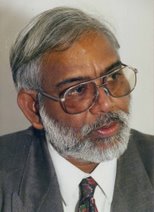
Unlike Swamy, Harsh Mander positively loves the religious minorities. The Indian Administrative Service officer was working for Action Aid on a sabbatical when he resigned from government service denouncing the massacre of Muslims in Gujarat in 2002. Since then, he has done wonderful work to ensure justice for the victims, himself rising to be made a member of the National Advisory Council headed by United Progressive Alliance chairperson Mrs Sonia Gandhi. In the NAC, Mander is in charge of issues concerning religious minorities, specially the Communal and Targetted Violence Prevention Bill, which is now nearing completion, and the Food Guarantee Bill, which has been completed. A major input in the Communal Violence prevention bill is the recognition that it is not just Muslims who are victims of such actions, but also Christians, and therefore the Bill has provisions to help Christian victims.
It is therefore frightening, no less, to read a long report written by Mander on why government’s affirmative action must be openly targetted only at Muslims. Christians would be right in presuming that Mander does not want the grants diluted by being passed on to the Christians or the Buddhists.
As reported in the Times of India of 21 July 2011, Mender’s Centre for Equity Studies prepared report dubs the Centre's minority welfare schemes and the Prime Minister’s 15-point programme as non-starters, blaming government's timidity in declaring the schemes as Muslim-oriented for fear of opposition campaign of minority appeasement. “The diffidence on the Muslim-word led to schemes being dubbed as "minority" or "area based", thereby diluting targeted community approach. “
He asks the government to openly resolve to improve the lot of Muslims by making a dedicated 14 per cent budgetary allocation for the Muslim community on the lines of sub-plans for SCs and STs. With the findings raising an alarm, NAC has sought a "detailed response" from the minority affairs ministry on the study.
Mander’s r report questions the efficacy of schemes launched with fanfare for amelioration of minorities — in education, self-employment and infrastructure among others. He dismisses UPA's minority outreach as tokenism. The Ministry for Minority Affairs is the target. Mander says it lacks institutional and political authority to ensure compliance of its objectives from other arms of government. He says the anxiety over appeasement charge led to Multi-Sector Development Programme for Muslims morph into one for "minorities" and ultimately to an "area-scheme" — aiming to improve infrastructure in 90 districts with over 25% Muslims.
Mander’s Centre for Equity Studies, which publishes his report, terms the allocations for minorities as small — 19 per cent of population got 5 per cent budgetary allocation, with per capita allocation of a mere Rs 797. It recommended that the PM’s 15-point programme implemented by various ministries be turned into an independent minority sub-plan having earmarked funds in each ministry and monitors to check their use.
While Subramanian Swamy’s rantings are easily dismissed as the delusional outpourings of a demented Hindutva fundamentalist, Mander’s report seems to hit at the very basis of constitutional guarantees to “all” religious minorities, and may aggravate and empower the Hindutva forces.
Not many know that the very formation of the Ministry of Minority affairs by the UPA in 2006 two years after it came to power after the rule of the BJP-dominated NDA has been challenged by anti-minority forces.
There have been several court cases against the ministry, challenging its very existence. One argument, facile as it may be, is of course that why are separate ministries, Plan and budget components and other affirmative action required at all when the Constitution guarantees every citizen equal rights and equal protection. Why then, it is argued, should we have special provisions for Scheduled Castes and Tribes, for instance, or for women in terms of reservations, and certainly whey for religious minorities when the nation is secular and the movement holds all religions in equal respect. This argument flies in the face of the fact that three thousand years of a religion-sponsored hierarchy has created situations which have kept Dalits and Tribals, even women, and certainly several religious groups outside the pail of development, denying them equity in national progress.
It, perhaps, is not widely known that that Ministry has been made party in Writ Petition no. SCANO No. 2245/2008 of Vijay Harish Chandra Patel in the High Court of Gujarat, Writ Petition (PIL) 84 of 2008 of S. G. Punalekar in the High Court of Bombay and Writ Petition no. (298/08 and WPC No. 9569 of 207) in Delhi High Court.
One Vijay Harish Chandra Patel challenged the Prime Minister’s New 15 Point Programme and filed a public interest litigation challenging the steps taken by the Union of India and the Planning Commission to utilize the national resources in favour of a particular minority community, which according to the petitioner is discriminatory, arbitrary and violative of various constitutional provisions.
Chief Justice K. S. Radhakrishnan ruled that “funds used to minimize inequalities among minority Communities by adopting various social and welfare activities like public safety, health, slum development, improving the deficiencies in civic amenities, economic opportunities, improving standard of education, skills and entrepreneurship development, employment opportunities, eradication of poverty etc., would no way violate the constitutional principles of equality or affect any of the fundamental rights guaranteed to the members of other communities.”
S. G. Punalekar in the High Court of Bombay also challenged the scholarship schemes of the Ministry of Minority Affairs including PM’s New 15 Point Programme for the welfare of minorities in the public interest as violative of Articles 14 and 15 of the Constitution of India. The High court recently dismissed this PIL.
In Delhi, the petitioners said that Muslims of India could not be treated as minority community that the treatment of Christians, Buddhists, Sikhs, Parsis and Muslims as a “minority” is irrational from a constitutional point of view. The High court is yet to pass a judgment on this PIL.
Sources in the Union government say the Ministry of Minority Affairs has been able to win some cases and sustain their argument because of the approach adopted of not focusing on any particular minority but on all the identified minorities and that the disadvantaged and economically deprived amongst them.
Harsh Mander’s report denies this well settled and sound government policy.
The All India Christian Council and the All India Catholic Union have been struggling with the Union government to set up a Justice Sachchar Commission to assess the economic and development infirmity in the Christian community, especially among the Tribals and the Dalits, the boatmen, fishermen, landless labour and other deprived communities. This campaign started when the government first set up the Justice Sachchar committee after decades of campaigning and advocacy by Muslims groups. The data in the Sachhar committee report has greatly strengthened the Muslim cause and has given a tool to NGOs and community leaderships to strengthen the struggle for their rights in the development pie.
Unfortunately, the government has not given heed to the Christian demand, partly because the Church leadership has not been as vocal in its interaction with the government, remaining satisfied with minor crumbs.
If the government were to listen to the Mander report, it would entirely undo whatever little headway has been made towards the empowerment of the poor in the Christian community through the advocacy in the Working Group on Minorities of the Planning Commission now involved with the 12th Five Year Plan Document. A minority sub plan, which Mander suggests, will be feasible only if it covers all minorities and is not confined just to the Muslim community. Our argument in the working committee has been that the major budgetary and plan allocations for minorities have not percolated to the Christian community, whatever be the reason, and whether the fault lies with the government or with the church leadership.
Another danger if the government were to accept the Mander recommendations is the threat to secular unity, and giving additional ammunition to people like Subramaniam Swamy. At present, the dialogue between Christians and other minorities is very little. The formal dialogue is limited to casual and occasional contact by the Catholic Bishops Conference of India and its equivalent federations in the protestant churches meeting once or twice a year with sundry Maulanas and Granthis, RK Mission, the Bahais and the Brahmkumaris for some lip service to common issues of peace and brotherly love. There never has been a serious political dialogue between minorities on issues of development and demands to the Union and State governmetns.
The result has been that Christians have had to chalk their own destiny or accept whatever little may come out of, on a pro rata basis, from government’s plans for the major minority community, the Muslims. Christians have therefore felt discriminated and isolated, feeling that Muslims have taken away all the development booty earmarked in the Budgets. This in a way creates a distance between Muslims and Christians and shatters whatever element o unity could be created.
The government would do extreme damage to micro minorities such as Christians if it goes by the Mander thesis, without making adequate provisions on a pro rata basis for the uplift of the Christian community. The government must acknowledged that islands of gross underdevelopment occur in all religious minorities, and specially in Christianity where the Dalit Christians and other groups are not even officially acknowledged, and millions of believers are not even counted in the Census as Christians. Their needs have to be addressed. Therefore an “inclusive” thesis, which will ultimately save the government from the charge of “appeasement” or “vote bank politics”
Showing posts with label harsh mander. Show all posts
Showing posts with label harsh mander. Show all posts
Monday, July 25, 2011

Tuesday, August 24, 2010
Report of the Justice Shah National Tribunal on Kandhamal
NATIONAL PEOPLE’S TRIBUNAL ON KANDHAMAL
JURY’S PRELIMINARY FINDINGS & RECOMMENDATIONS
24 AUGUST 2010
The National People’s Tribunal (NPT) on Kandhamal, held in New Delhi on 22-24 August 2010, was organized by the National Solidarity Forum - a countrywide solidarity platform of concerned social activists, media persons, researchers, legal experts, film makers, artists, writers, scientists and civil society organizations to assist the victims and survivors of the Kandhamal violence 2008 to seek justice, accountability and peace and to restore the victim-survivors’ right to a dignified life.
The jury of the NPT was headed by Justice A.P. Shah, former Chief Justice of the Delhi High Court. Joining him as jury members were Harsh Mander (member of National Advisory Council), Mahesh Bhatt (film maker and activist), Miloon Kothari (former UN Special Rapporteur on Right to Housing), P.S.Krishnan (retired Secretary, Government of India), Rabi Das (senior journalist based in Bhubaneswar), Ruth Manorama (women and dalit rights activist), Sukumar Muralidharan (Delhi-based free lance journalist), Syeeda Hameed (member of Planning Commission, Government of India), Vahida Nainar (expert on international law, mass crimes and gender), Vinod Raina (scientist and social activist with a specific focus on right to education), Admiral Vishnu Bhagwat (former Chief of Naval Staff) and Vrinda Grover (advocate, Delhi High Court).
******
Introduction
Thousands of dalits and tribals belonging to the Christian minorities in the Kandhamal region of Orissa were victims of organized violence starting in August 2007. According to government figures during the last bout of violence from August to December 2008, in Kandhamal district alone more than 600 villages were ransacked, 5600 houses were looted and burnt, 54000 people were left homeless, 38 people were murdered. Human rights groups estimate that over 100 people were killed, including women, disabled and aged persons and children; and an unestimated number suffered severe physical injuries and mental trauma. While there are reports of four women being gang-raped, many more victims of sexual assault are believed to have been intimidated into silence. 295 churches and other places of worship, big and small, were destroyed. 13 schools, colleges, and offices of 5 non-profit organizations damaged. About 30,000 people were uprooted and lived in relief camps and continue to be displaced. During this period about 2,000 people belonging to minority communities were forced to repudiate their Christian faith. More than 10,000 children had their education severely disrupted due to displacement and fear. Today, after two years, the situation has not improved, although the administration time and again claims it is peaceful and has returned to normalcy. With a view to create conditions for justice and accountability for the violence, the National Solidarity Forum organized a National People’s Tribunal (NPT) on 22-24 August 2010 at the Constitution Club in Delhi. The objectives of the Tribunal were:
1. To provide a platform for victim-survivors and their families to voice their experiences, perceptions, demands and aspirations to civil society at large;
2. To study and analyse the long-term and short-term causes and impact of the Kandhamal violence;
3. To assess the role, conduct and responsibility of various organizations, groups of individuals or persons, in influencing, precipitating and escalating the violence;
4. To assess the role played by the state and district administration and public officials, including the police, before, during and after the pogrom;
5. To assess the functioning of the criminal justice system for fixing criminal accountability and prosecuting the guilty;
6. To study and analyse the various rights of victims and survivors that have been violated during the violence and thereafter;
7. To recommend both short-term and long-term remedial measures for promoting an efficient delivery of justice and reparations, and for strengthening peace-building, prevention of communal violence and secularism; and
8. To present the findings and recommendations before civil society, including the media, and to persuade the government and other agencies to pursue the necessary follow up action to restore dignity, right to life, justice and peace to the victim-survivors of Kandhamal violence.
The Tribunal heard 43 victims, survivors and their representatives, and 15 experts who presented studies / fact-finding reports on the Kandhamal violence. Documentation related to each case, consisting of affidavits, court documents, medical and other supporting documents, as well as copies of reports and studies on the violence were placed before the jury for its perusal. The depositions were on a range of issues including a) adivasi and dalit rights to religious and culture freedom; b) role of police, administration and the criminal justice system; c) issues relating to housing, compensation, relief, rehabilitation, food and livelihood, displacement and migration of the victims; d) impact on children and their education; e) gender violence and violations of human rights; and f) role of media, political parties, and civil society in peace and reconciliation processes. Formal invitations were extended to the Ministry of Minority Affairs, Ministry of Tribal Affairs, Ministry of Women’s Development and Child Welfare, Ministry of Social Justice and Empowerment, as well as the National Human Rights Commission, National Commission for Minorities, National Commission for Scheduled Castes, National Commission for Scheduled Tribes and National Commission for Women to participate in the proceedings of the Tribunal. However, there was no participation from the concerned ministries and commissions.
PREAMBLE
The jury records its shock and deep concern for the heinous and brutal manner in which the members of the Christian community, a vast majority of who are dalits and tribals were killed, dismembered, sexually assaulted and tortured. The deliberate destruction of evidence pertaining to these crimes came to the attention to the jury. There was rampant and systematic looting and destruction of houses and places of worship and means of livelihood. The victim-survivors continue to be intimidated and systematically denied protection and access to justice.
From the testimonies heard and the detailed reports received, the jury is convinced that the carnage in Kandhamal is an act of communalism mainly directed against the Christian community, a vast majority of who are of scheduled caste origin and anyone who supported or worked with the community. It is clear to us that there was deliberate strategy of targeting of the community, fed by groups of the Hindutva ideology such as Rashtriya Swayamsevak Sangh (RSS), Vishwa Hindu Parishad (VHP), Bajrang Dal and the active members of Bharatiya Janata Party (BJP).
The jury is further convinced that the communal violence in Kandhamal was the consequence of a subversion of constitutional governance in which state agents were complicit.
The jury acknowledges and appreciates the courage, determination and resilience of the victim-survivors and the human rights defenders supporting them, who have braved physical, psychological and economic hardships and intimidation to tell their stories before this Tribunal, thereby breaking the culture of silence. After listening to the myriad accounts of all the victim-survivors and their representatives, as well as the experts who presented a summary of their studies / fact-finding reports on the Kandhamal violence, the jury offers the following preliminary findings and recommendations:
GENERAL OBSERVATIONS
The jury observes that a majority of victim-survivors and their families are from marginalized groups, particularly from the dalit and adivasi (SC and ST) Christian community, and that most live in abject poverty and on the brink of despair. The victim-survivors and their families are yet to obtain justice, rehabilitation or regain a right to life with dignity. The victims/survivors have undergone incredible hardships, including physical and psychological trauma, threats and humiliation, deprivation of a dignity, an extensive loss of movable and immovable property, a source and means of livelihood and their right to a decent standard of living - including food, housing, education and health services. They have faced persecution in all its forms – such as social and economic boycott as well as religious, caste-based and cultural discrimination. They live under a constant threat to their lives and personal security and continue to suffer from trauma. The consequence is that even two year after the outbreak of the violence, the victim-survivors are unable to return to their villages and resume their normal way of life. They continue to be subjected to constant and overt manifestations of communal, caste and class-based discrimination. All victim-survivors and their representatives who deposed before the Tribunal strongly articulated their demand for justice and security.
The jury observes that communal forces have used religious conversions as an issue for political mobilisation and to incite horrific forms of violence and discrimination against the Christians of SC origin and their supporters in Kandhamal. The object is to dominate them and ensure that they never rise above their low caste status and remain subservient to the upper castes. The jury observes, with deep concern, that a range of coercive tactics have been used by the communal forces for conversion or re-conversion of a person into the Hindu fold, including threat, intimidation, social and economic boycott and coercion, as well as the institutionalization of humiliating rituals. The state and district administrations have, on no occasion, intervened to protect the freedom of religion and freedom of expression.
The jury observes, with concern, the institutionalised communal and casteist bias of state agencies, and their deliberate dereliction of constitutionally mandated duties, their connivance with communal forces, participation in and support to the violence and a deliberate scuttling of processes of justice through acts of commission and omission. The state agencies have blatantly failed to extend much-needed institutional support to victim-survivors and protect them from ostracism , socio-economic boycott and subjugation by non-state actors.
SPECIFIC OBSERVATIONS
A. State’s Complicity and Collusion
• Institutional Bias: All testimonies and reports have pointed towards the complicity of the police – senior officers as well as the constabulary – during the phase of violence, and their collusion with the wrongdoers during the phase of investigation and prosecution. Based on the testimonies, the jury concludes that this was not an aberration of a few individual police men, but evidence of an institutional bias against the targeted Christian community.
• Failure to Prevent the Violence: The police deliberately failed to prevent the violence by a) non-implementation of the recommendations made by the National Commission for Minorities in its reports of January and April 2008; b) permitting the funeral procession of Swami Lakshmananda through a 170 kilometre route through communally sensitive areas; c) allowing hate speeches and incitement to violence; d) allowing a series of programmes by the communal forces (such as the bandh of 25 August 2008, shraddhanjali sabhas and dharnas by Hindu religous leaders). In particular, the permission given by the state administration to the funeral procession cannot, in any way, be a mere lapse of judgment. The state agencies displayed long overdue political resolve when they stopped VHP leader Praveen Togadia from visiting Kandhamal in March 2010. This late awakening was however, of little help to the victim-survivors of the district.
• Suspension of Police Officials: Many witnesses deposed about the failure of the police to protect them from the violence and their refusal to register First Information Reports subsequently. There were long delayed actions to check police complicity, when five police officials were suspended for misconduct and negligence in connection with the sexual assault on Sister Meena, and the identification of 13 police officials for failure to protect persons and property in Kandhamal by A.K. Upadhyay, DIG (Training).
• Destruction of Evidence by Public Officials: The jury is constrained to observe that public officials have colluded in the destruction of evidence and there is testimony directly implicating the District Collector in this misdemeanour (Case No. 24)
B. Communal Forces, Freedom of Religion and Discrimination
• Forcible Conversions: Testimonies pointed towards forcible conversion of Christians to Hinduism during the violence and subsequently, as a condition for their return to their villages. No known action has been initiated against any of the perpetrators by the administration under the provisions either of criminal law, or the state’s Freedom of Religion Act.
• Serious Violation of Religious Freedom: The violent intimidation of the Christian community, accompanied by social sanctions against the practice of Christianity, the destruction and desecration of places of worship, the forcible conversions to Hinduism, the killing and torture of victims and survivors for their refusal to repudiate their faith, are all acts violative of the constitutional guarantees of right to life, equality and non-discrimination, as well as the right to religious freedom.
• The Role of Hindutva forces: The accused identified in all witness testimonies were members of Hindutva organisations. This is substantiated by the response of Orissa Chief Minister, to a query raised in the state Legislative Assembly, on 23 November 2009. In his written response, Mr. Naveen Patnaik said that pursuant to investigation, 85 members of the RSS, 321 members of the VHP and 118 members of the Bajrang Dal had been arrested.
• Discrimination on the Basis of Caste and Religion: The targeted violence against dalit Christians, as well as the continued discrimination against them are violative of Constitutional guarantees of equality, non-discrimination, right to a dignified life and the prohibition of untouchability. Further, they amount to a serious violation of all provisions of the UN Convention on Elimination of Racial Discrimination (CERD), a convention ratified by India. The Concluding Observations of its forty-ninth session held in August/September 1996 (as it reviewed India's tenth to fourteenth periodic reports under the International Convention on the Elimination of All Forms of Discrimination, 1965), the Committee on the Elimination of Racial Discrimination affirmed that "the situation of Scheduled Castes and Scheduled Tribes falls within the scope of" the Convention. The Committee states that "descent" contained in Article 1 of the Convention does not refer solely to race, and includes the situation of scheduled castes and tribes.
C. Sexual Violence and Other Gender Concerns
• Silence and Invisibility: The jury observes, with deep concern, that silence continues to prevail in matters of sexual assault. This applies at all levels, including documenting, reporting, investigating, charging and prosecuting cases. Though witness testimonies show that sexual violence was rampant, there are only five reported cases, and an even smaller number that have been registered and are pending in the courts. One of the testimonies refers to the gang rape (Case No. 3), but none of the accused has been formally charged.
• Special Vulnerability of Women: While all victims and survivors face intimidation and threats, women face the additional danger of sexual violence not just against themselves but also against their daughters (Case No. 12). The immediate consequence of such threats is a hightened sense of vulnerability and a restriction on their movement. The jury observes that the threat of sexual assault against women continues to be used as a tool to prevent families from returning to their villages, to prevent women from resuming their livelihood activities, and pursuing justice.
• Violation of international covenants: The pattern of violence against women is violative of constitutional guarantees of equality, non-discrimination on the ground of sex as well as a right to life with dignity. In addition, the attacks violate international standards, including the UN Convention on Elimination of Violence Against Women (CEDAW) which has been ratified by India. The CEDAW Committee, through General Recommendation 19, has clarified that gender-based violence, that is, violence that is directed against a woman because she is a woman or that affects women disproportionately, amounts to discrimination against women.
D. Failure of the Criminal Justice System
• Arbitrary Exercise of Discretionary Power: The jury observes, with concern, an arbitrary exercise of the discretionary power vested in the police and the prosecuting agencies. In many instances, the police have refused to register FIRs, have delayed registering FIRs by 2-5 months, and dissuaded victim-survivors from registering FIRs and coerced them to omit the names of perpetrators and other details from the FIRs, particularly if they indicated the complicity of public officials or members of communal organizations. Victim-survivors were also shunted between various police stations for registration of FIRs in contexts where their safety was at risk.
• Arrests: Many victim-survivors deposed before the jury that the perpetrators of heinous crimes had not been arrested, and were roaming freely and continuing to threaten, intimidate and humiliate them. Testimonies point to an inordinate delay in arresting the perpetrators, and a failure to arrest many more, contributing to an overall climate of impunity. Honest police officials who attempted to arrest perpetrators were threatened. Testimonies indicate that victim-survivors were often threatened with arrest under fabricated charges in order to silence them and deter them from pursuing justice.
• Investigation & Prosecution: The deliberate destruction of evidence, particularly of killings, through the burning or disposal of bodies, has resulted in the absence of forensic evidence in many cases. Investigations were marked by a neglect of the basic requirements of gathering evidence, which severely impaired the efficacy of the prosecution. Delay in obtaining forensic evidence, failure in obtaining corroborative evidence and the rampant intimidation of victim-survivors and witnesses, have led to many acquittals.
• Appreciation of Evidence by the Fast Track Courts: Upon perusal of judgments, affidavits and statements, the jury concludes that the judicial weighing of evidence failed to recognise the extraordinary context in which these mass crimes have been committed. Minor discrepancies in witness testimonies in court have been given undue weightage, leading to an alarmingly high number of acquittals.
• Judgment and Sentencing: Studies indicate that lenient sentences have been awarded without an acknowledgment of the gravity of the crimes committed and their consequences, both in terms of heinous killings and assault, as well as rampant looting of movable property and destruction of immovable property belonging to the dalit and adivasi Christians. A fine of Rs. 2000 has been mechanically imposed, without any correlation with the value of property destroyed. Further there seems to have been little attempt to apply S. 357 of the Cr.PC which provides for an imposition of a higher amount of fine, which could be recovered and paid to victim-survivors as compensation.
• Gaps in Indian Criminal Law: The jury observes that clear gaps exist in the criminal law to prosecute and punish those responsible for targeted mass violence. These include the absence of investigative procedures and evidentiary rules relating to mass crimes, such as punishing for murder even in the absence of the body of deceased. The protections guaranteed by law to public servants obstruct their accountability. Such gaps make dispensation of justice in contexts of mass violence extremely difficult.
• Relevance of International Criminal Law: The testimonies shows that the Kandhamal violence meets all the elements of Crimes Against Humanity as defined in applicable international law. The jury has come across cases where victims were dismembered or burnt alive, constituting the crime of torture under jurisprudence of international courts and tribunals. (The International Criminal Court’s definition of torture in Article 7 does not require that torture be committed by public officials.) That a victim was forced to drink cow urine and shave his head amounts to cruel, inhuman and degrading treatment under the United Nations Convention Against Torture.
E. Protection of Victims and Witnesses, Access to Justice & Fair Trial
• Willingness to Testify in Court: Those who deposed before the Tribunal were keen, ready and willing to depose before the Fast Track courts. However, they face severe intimidation and threats. Despite the concerned authorities being informed, no steps have been taken to provide any protection to the witnesses and victim-survivors.
• Hostile Atmosphere in Court: The atmosphere in the trial court (Fast Track courts) was described as hostile. The atmosphere was fearful as the accused were accompanied by a large number of persons representing the accused, and from communal forces. The atmosphere in court is not conducive to a fair trial. There has been no initiative taken, either by the Prosecutor or the court, to hold the proceedings in camera.
• Absence of Safe Passage: Victims who have dared to lodge complaints & witnesses who have courageously given evidence in court are unable to return to their homes. There is no guarantee of safe passage to and from the courts. They are living in other cities and villages, many of them in hiding, as they apprehend danger to their lives.
• Threat of Sexual Assault: Women victims and witnesses have received constant threats of sexual violence and rape to themselves and their daughters. Ironically most of the accused roam freely and live in their villages and homes.
• Absence of Free Legal Aid: Since most of the victim-survivors are from underprivileged communities, there is a dire need for quality legal aid services at state expenses. None of those who deposed before us had been extended free legal aid services. Most victim-survivors have been supported in court through the initiatives of non-profit organizations. The failure of the state to provide free legal aid has contributed substantially to an absence of fair trial.
F. Concerns Related to Children
The most important finding related to children status in Kandahamal is sense of hopelessness, injustice discrimination and fear prevailing among children, threatening to severely impact their growth and development.
• Mental Health: Children are in deep state of mental trauma. There has been no trauma counselling for the affected children and adolescents in Kandhamal. Even today they have night mares of running in the jungle, with the killers in pursuit, are scared of any loud sound and are afraid of people walking in groups or talking loudly.
• Education: Large number of children has dropped out of school due to financial and social insecurity and many have them have gone out for work. Many of them had to discontinue their education due to discrimination meted out to them by the school authority and also in some cases by children in schools. Many children were forced to change school and many of them opted for residential schools out of the state. Post violence many dropped out due to the inability of the families to bear the expenses, fear, and also due to lack of facilities to commute to school.
• Child Labour: Many children have left education and have gone to Kerala, Surat and neighbouring states. Even girls have gone to Udhagamandalam (Ooty)and working in coffee plantation. there is no data available with the district Labour Office regarding the present status of child labour in the state. Last child labour census in the district was done in 1997.
• Child Trafficking: There are rise incidences of trafficking for children, mainly for labour, sexual exploitation and abuse. Though there are no consolidated data on number of children being trafficked post violence in the district, we have come across some instances.
G. Reparations
• Compensation: Compensation for loss of life, injuries and loss of / damage to property has been awarded in an extremely arbitrary manner. The amounts awarded are grossly inadequate and do permit victim-survivors to regain the standards of living enjoyed prior to the violence. The award of compensation does not recognize sexual assault or the extent of loss of house and movable property destruction, the exclusion of which has caused immense difficulties to victim-survivors and their families.
• Relief and Humanitarian Assistance: From the testimonies of victim-survivors and reports, it is evident that the relief camps did not provide for basic facilities such as nutritious food, clean water and sanitation, or adequate security. There was a lack of trauma counselling, medical assistance and other forms of humanitarian assistance that ought to have been made available to all victim-survivors in the relief camps.
• Safe Return or Resettlement: Many victim-survivors have been forced or duped into returning to their villages, where they have faced continuous threat, intimidation and fear of attacks if they did not repudiate their faith. Many victim-survivors and their families continue to live on the outskirts of their villages, without any source of livelihood. The state and district authorities have taken no proactive measures at creating an atmosphere conducive for the safe return of victim-survivors to their villages. By failing to recognize the right of all victim-survivors and their families to a safe return to their villages or resettlement at state expense, the state has grossly violated the UN Guiding Principles on Internal Displacement 1998.
• Reconstruction of Houses and Places of Worship: Some victim-survivors have been provided inadequate compensation for rebuilding their houses and many excluded from an award of compensation altogether. A majority of places of religious worship that had been damaged or destroyed during the violence, have not been re-built. The amounts awarded as compensation to some are grossly inadequate for re-building such structures, while many others have been denied compensation altogether on technical grounds. The jury strongly believes that reconstruction of houses and places of worship at state expense would restore a sense of confidence and justice among the victim-survivors and their families, and restore them to a life with dignity.
• Livelihood and Education: Many educational institutions that had been damaged or destroyed during the violence are yet to be rebuilt, thereby depriving children from victim-survivor communities of their right to education, jeopardizing their future opportunities and causing a generational setback for emerging deprived dalit communities. Many victim-survivors who lost their source of livelihood, including agricultural land and government jobs, due to the mass displacement that took place, have received no assistance from the state for a restoration of the same. Many testimonies presented before the jury highlighted the fact that victim-survivors have been illegally deprived of employment under the National Rural Employment Guarantee Act subsequent to the violence.
• Peace-building: Although village level peace committees had been set up, the testimonies before the jury as well as studies and reports indicate that such committees have not enjoyed the confidence of the victim-survivors and have been used as a platform for further intimidation. Notably, there has been no involvement of women in peace-building and negotiating processes, which violates standards set by international law, particularly UN Security Council Resolution 1325.
H. Human Rights Defenders
Non-profit organizations and human rights defenders have been targeted for their role in assisting victims with aid, relief, rehabilitation and process of justice. Victim-survivors have testified with regard to the destruction of personal and official property, attacks and damage to the offices of such organizations. These are contrary to the United Nations Declaration on Human Rights Defenders that calls upon the State to protect Human Rights Defenders and their work.
RECOMMENDATIONS
• Enquiry into and suspension of police and administrative officials responsible for grave dereliction of duty.
• Proactive prevention of programmes planned by Hindutva forces that are divisive and propagate hate such as kalash yatra, Shraddhanjali sabhas (memorial meetings) and dharnas by Hindu religious leaders of Orissa held to perform rituals to eliminate the ‘enemies of Hindus.’
• Sections 153 A and B of the Indian Penal Code be strictly enforced.
• National Legal Services Authorities at both State and Central level to set up legal cell to assist victims to register FIRs where they were not registered or inaccurately registered, re-open closed cases, and transfer pending cases to outside the Kandhamal jurisdiction.
• A Special Investigation Team (SIT) be constituted to re-examine the already registered FIRs for accuracy, examine registrations of fresh FIRs, the trials that resulted in acquittals due to intimidation and/or lack of evidence and recommend the trials that need to be transferred or fresh trial conducted outside Kandhamal;
• Proactively identify cases of sexual assault has been grossly underreported due to fear and intimidation; and recognize and charge sexual assault in FIRs where they have not been so recognized.
• Appoint Special Public Prosecutors who enjoy the confidence of the affected community.
• State must provide protection to victims and witnesses before, during and after the trial process according to the guidelines provided in the recent judgment of the Delhi High Court.
• Endorse the recommendations of the National Advisory Council of drafting a new bill on mass crimes against impunity and secure accountability for mass crimes. The draft be in accordance with the emerging international standards of individual criminal accountability for mass crimes as set in the statute of the International Criminal Court and jurisprudence of international courts and tribunals.
• Both the State and Central government adopt at the very minimum the Gujarat compensation package to enhance the compensation already announced. In addition, victims of sexual assault be included as a ground eligible for compensation and employment. , Compensation for loss of livelihood
• All mechanisms set up to improve the criminal justice response, provide reparations, including compensation and rehabilitation be based on human rights indicators and standards that recognises the fact that even after two years thousands continue to be displaced.
• State make all effort to provide medical and psychological, particularly trauma counceling to the victims/ survivors, particularly the women and children.
• The specific educational needs of the children who have suffered displacement as a result of the violence be address with measures such as bridge school under the Sarva siksha Abhiyan, Kasturba Balika Vidhyalaya for SCs and STs girls; and residential ashram schools.
• The livelihood schemes of the state and central government be particularly provided to the affected community including M G Narega and special thrust be given for the affected youth in the PM’s skill training mission.
• The special component plan for the SC and the tribal sub-plan for STs should given priority focus to the schemes directed at the affected community. Dalit Christians to be provided all non-statutory benefits available to schedule castes.
• All training centres both of administrative and police to focus on education and awareness about rights, secularism and constitutional gurantees to minorities.
• Restitution and Rehabilitation to follow the international standards set in paragraphs 16-18 and 25-29 of the UN Guiding Principles on Internal Displacement and paragraphs 52 to 68 of the UN Basic Principles and Guidelines on Development based Evictions and Displacement, 2007.
• The State should recognize the Internally Displaced Persons’ right to return to their homes and create all possible enabling conditions to facilitate such safe return in accordance with the above standards.
• Review The Orissa Freedom of Religion Act 1967 given the failure of the state machinery to prevent the violence and protect lives and properties of the people.
• Designate the affected areas as communally sensitive, appoint officers with professional integrity and sensitivity to the overall communal context and be alert to any early warning signs and develop appropriate response mechanisms to halt the brewing of hate mobilization and religious and caste-based discriminative activities.
• Given the fact that human rights violations continue to take place as outlined in this report, the NHRC should take immediate steps to initiate an investigation into the incidences of violence.
• The National Commission on protection of Children Rights should investigate the need for children of the affected community to receive trauma councelling, to respect and promote their right to education and nutrition, take specific steps to prevent child labour and child trafficking. Appropriate agencies at the central and state levels need to respond to these issues.
• All efforts by the central and state government to improve the situation in Kandhamal must comply with the provisions of international human rights instruments that India has signed and ratified including CERD, CAT, CEDAW, CESCR, CRC, , UNPCR, UNDHR.
• Confidence-building and peace-building initiatives by the state and district administration should have the participation of members of the affected community, particularly women.
• The state and district administration should, with immediate effect, implement the recommendations of the National Commission for Minorities, issued in their reports of January, April and September 2008
Justice A.P. Shah Harsh Mander Mahesh Bhatt
Former Chief Justice Member Film maker and activist
Delhi High Court National Advisory Council
P.S.Krishnan Miloon Kothari Admiral Vishnu Bhagwat
Former Secretary, Former UN Special Former Chief of Naval Staff
Government of India Rapporteur on
Right to Housing
Syeeda Hameed Vahida Nainar Sukumar Muralidharan
Member Expert Free lance journalist
Planning Commission International law
Vinod Raina Ruth Manorama Vrinda Grover
Scientist and Activists Dalit & women’s rights Advocate
Right to Education Activist
Rabi Das
Senior Journalist
Bhubaneswar
JURY’S PRELIMINARY FINDINGS & RECOMMENDATIONS
24 AUGUST 2010
The National People’s Tribunal (NPT) on Kandhamal, held in New Delhi on 22-24 August 2010, was organized by the National Solidarity Forum - a countrywide solidarity platform of concerned social activists, media persons, researchers, legal experts, film makers, artists, writers, scientists and civil society organizations to assist the victims and survivors of the Kandhamal violence 2008 to seek justice, accountability and peace and to restore the victim-survivors’ right to a dignified life.
The jury of the NPT was headed by Justice A.P. Shah, former Chief Justice of the Delhi High Court. Joining him as jury members were Harsh Mander (member of National Advisory Council), Mahesh Bhatt (film maker and activist), Miloon Kothari (former UN Special Rapporteur on Right to Housing), P.S.Krishnan (retired Secretary, Government of India), Rabi Das (senior journalist based in Bhubaneswar), Ruth Manorama (women and dalit rights activist), Sukumar Muralidharan (Delhi-based free lance journalist), Syeeda Hameed (member of Planning Commission, Government of India), Vahida Nainar (expert on international law, mass crimes and gender), Vinod Raina (scientist and social activist with a specific focus on right to education), Admiral Vishnu Bhagwat (former Chief of Naval Staff) and Vrinda Grover (advocate, Delhi High Court).
******
Introduction
Thousands of dalits and tribals belonging to the Christian minorities in the Kandhamal region of Orissa were victims of organized violence starting in August 2007. According to government figures during the last bout of violence from August to December 2008, in Kandhamal district alone more than 600 villages were ransacked, 5600 houses were looted and burnt, 54000 people were left homeless, 38 people were murdered. Human rights groups estimate that over 100 people were killed, including women, disabled and aged persons and children; and an unestimated number suffered severe physical injuries and mental trauma. While there are reports of four women being gang-raped, many more victims of sexual assault are believed to have been intimidated into silence. 295 churches and other places of worship, big and small, were destroyed. 13 schools, colleges, and offices of 5 non-profit organizations damaged. About 30,000 people were uprooted and lived in relief camps and continue to be displaced. During this period about 2,000 people belonging to minority communities were forced to repudiate their Christian faith. More than 10,000 children had their education severely disrupted due to displacement and fear. Today, after two years, the situation has not improved, although the administration time and again claims it is peaceful and has returned to normalcy. With a view to create conditions for justice and accountability for the violence, the National Solidarity Forum organized a National People’s Tribunal (NPT) on 22-24 August 2010 at the Constitution Club in Delhi. The objectives of the Tribunal were:
1. To provide a platform for victim-survivors and their families to voice their experiences, perceptions, demands and aspirations to civil society at large;
2. To study and analyse the long-term and short-term causes and impact of the Kandhamal violence;
3. To assess the role, conduct and responsibility of various organizations, groups of individuals or persons, in influencing, precipitating and escalating the violence;
4. To assess the role played by the state and district administration and public officials, including the police, before, during and after the pogrom;
5. To assess the functioning of the criminal justice system for fixing criminal accountability and prosecuting the guilty;
6. To study and analyse the various rights of victims and survivors that have been violated during the violence and thereafter;
7. To recommend both short-term and long-term remedial measures for promoting an efficient delivery of justice and reparations, and for strengthening peace-building, prevention of communal violence and secularism; and
8. To present the findings and recommendations before civil society, including the media, and to persuade the government and other agencies to pursue the necessary follow up action to restore dignity, right to life, justice and peace to the victim-survivors of Kandhamal violence.
The Tribunal heard 43 victims, survivors and their representatives, and 15 experts who presented studies / fact-finding reports on the Kandhamal violence. Documentation related to each case, consisting of affidavits, court documents, medical and other supporting documents, as well as copies of reports and studies on the violence were placed before the jury for its perusal. The depositions were on a range of issues including a) adivasi and dalit rights to religious and culture freedom; b) role of police, administration and the criminal justice system; c) issues relating to housing, compensation, relief, rehabilitation, food and livelihood, displacement and migration of the victims; d) impact on children and their education; e) gender violence and violations of human rights; and f) role of media, political parties, and civil society in peace and reconciliation processes. Formal invitations were extended to the Ministry of Minority Affairs, Ministry of Tribal Affairs, Ministry of Women’s Development and Child Welfare, Ministry of Social Justice and Empowerment, as well as the National Human Rights Commission, National Commission for Minorities, National Commission for Scheduled Castes, National Commission for Scheduled Tribes and National Commission for Women to participate in the proceedings of the Tribunal. However, there was no participation from the concerned ministries and commissions.
PREAMBLE
The jury records its shock and deep concern for the heinous and brutal manner in which the members of the Christian community, a vast majority of who are dalits and tribals were killed, dismembered, sexually assaulted and tortured. The deliberate destruction of evidence pertaining to these crimes came to the attention to the jury. There was rampant and systematic looting and destruction of houses and places of worship and means of livelihood. The victim-survivors continue to be intimidated and systematically denied protection and access to justice.
From the testimonies heard and the detailed reports received, the jury is convinced that the carnage in Kandhamal is an act of communalism mainly directed against the Christian community, a vast majority of who are of scheduled caste origin and anyone who supported or worked with the community. It is clear to us that there was deliberate strategy of targeting of the community, fed by groups of the Hindutva ideology such as Rashtriya Swayamsevak Sangh (RSS), Vishwa Hindu Parishad (VHP), Bajrang Dal and the active members of Bharatiya Janata Party (BJP).
The jury is further convinced that the communal violence in Kandhamal was the consequence of a subversion of constitutional governance in which state agents were complicit.
The jury acknowledges and appreciates the courage, determination and resilience of the victim-survivors and the human rights defenders supporting them, who have braved physical, psychological and economic hardships and intimidation to tell their stories before this Tribunal, thereby breaking the culture of silence. After listening to the myriad accounts of all the victim-survivors and their representatives, as well as the experts who presented a summary of their studies / fact-finding reports on the Kandhamal violence, the jury offers the following preliminary findings and recommendations:
GENERAL OBSERVATIONS
The jury observes that a majority of victim-survivors and their families are from marginalized groups, particularly from the dalit and adivasi (SC and ST) Christian community, and that most live in abject poverty and on the brink of despair. The victim-survivors and their families are yet to obtain justice, rehabilitation or regain a right to life with dignity. The victims/survivors have undergone incredible hardships, including physical and psychological trauma, threats and humiliation, deprivation of a dignity, an extensive loss of movable and immovable property, a source and means of livelihood and their right to a decent standard of living - including food, housing, education and health services. They have faced persecution in all its forms – such as social and economic boycott as well as religious, caste-based and cultural discrimination. They live under a constant threat to their lives and personal security and continue to suffer from trauma. The consequence is that even two year after the outbreak of the violence, the victim-survivors are unable to return to their villages and resume their normal way of life. They continue to be subjected to constant and overt manifestations of communal, caste and class-based discrimination. All victim-survivors and their representatives who deposed before the Tribunal strongly articulated their demand for justice and security.
The jury observes that communal forces have used religious conversions as an issue for political mobilisation and to incite horrific forms of violence and discrimination against the Christians of SC origin and their supporters in Kandhamal. The object is to dominate them and ensure that they never rise above their low caste status and remain subservient to the upper castes. The jury observes, with deep concern, that a range of coercive tactics have been used by the communal forces for conversion or re-conversion of a person into the Hindu fold, including threat, intimidation, social and economic boycott and coercion, as well as the institutionalization of humiliating rituals. The state and district administrations have, on no occasion, intervened to protect the freedom of religion and freedom of expression.
The jury observes, with concern, the institutionalised communal and casteist bias of state agencies, and their deliberate dereliction of constitutionally mandated duties, their connivance with communal forces, participation in and support to the violence and a deliberate scuttling of processes of justice through acts of commission and omission. The state agencies have blatantly failed to extend much-needed institutional support to victim-survivors and protect them from ostracism , socio-economic boycott and subjugation by non-state actors.
SPECIFIC OBSERVATIONS
A. State’s Complicity and Collusion
• Institutional Bias: All testimonies and reports have pointed towards the complicity of the police – senior officers as well as the constabulary – during the phase of violence, and their collusion with the wrongdoers during the phase of investigation and prosecution. Based on the testimonies, the jury concludes that this was not an aberration of a few individual police men, but evidence of an institutional bias against the targeted Christian community.
• Failure to Prevent the Violence: The police deliberately failed to prevent the violence by a) non-implementation of the recommendations made by the National Commission for Minorities in its reports of January and April 2008; b) permitting the funeral procession of Swami Lakshmananda through a 170 kilometre route through communally sensitive areas; c) allowing hate speeches and incitement to violence; d) allowing a series of programmes by the communal forces (such as the bandh of 25 August 2008, shraddhanjali sabhas and dharnas by Hindu religous leaders). In particular, the permission given by the state administration to the funeral procession cannot, in any way, be a mere lapse of judgment. The state agencies displayed long overdue political resolve when they stopped VHP leader Praveen Togadia from visiting Kandhamal in March 2010. This late awakening was however, of little help to the victim-survivors of the district.
• Suspension of Police Officials: Many witnesses deposed about the failure of the police to protect them from the violence and their refusal to register First Information Reports subsequently. There were long delayed actions to check police complicity, when five police officials were suspended for misconduct and negligence in connection with the sexual assault on Sister Meena, and the identification of 13 police officials for failure to protect persons and property in Kandhamal by A.K. Upadhyay, DIG (Training).
• Destruction of Evidence by Public Officials: The jury is constrained to observe that public officials have colluded in the destruction of evidence and there is testimony directly implicating the District Collector in this misdemeanour (Case No. 24)
B. Communal Forces, Freedom of Religion and Discrimination
• Forcible Conversions: Testimonies pointed towards forcible conversion of Christians to Hinduism during the violence and subsequently, as a condition for their return to their villages. No known action has been initiated against any of the perpetrators by the administration under the provisions either of criminal law, or the state’s Freedom of Religion Act.
• Serious Violation of Religious Freedom: The violent intimidation of the Christian community, accompanied by social sanctions against the practice of Christianity, the destruction and desecration of places of worship, the forcible conversions to Hinduism, the killing and torture of victims and survivors for their refusal to repudiate their faith, are all acts violative of the constitutional guarantees of right to life, equality and non-discrimination, as well as the right to religious freedom.
• The Role of Hindutva forces: The accused identified in all witness testimonies were members of Hindutva organisations. This is substantiated by the response of Orissa Chief Minister, to a query raised in the state Legislative Assembly, on 23 November 2009. In his written response, Mr. Naveen Patnaik said that pursuant to investigation, 85 members of the RSS, 321 members of the VHP and 118 members of the Bajrang Dal had been arrested.
• Discrimination on the Basis of Caste and Religion: The targeted violence against dalit Christians, as well as the continued discrimination against them are violative of Constitutional guarantees of equality, non-discrimination, right to a dignified life and the prohibition of untouchability. Further, they amount to a serious violation of all provisions of the UN Convention on Elimination of Racial Discrimination (CERD), a convention ratified by India. The Concluding Observations of its forty-ninth session held in August/September 1996 (as it reviewed India's tenth to fourteenth periodic reports under the International Convention on the Elimination of All Forms of Discrimination, 1965), the Committee on the Elimination of Racial Discrimination affirmed that "the situation of Scheduled Castes and Scheduled Tribes falls within the scope of" the Convention. The Committee states that "descent" contained in Article 1 of the Convention does not refer solely to race, and includes the situation of scheduled castes and tribes.
C. Sexual Violence and Other Gender Concerns
• Silence and Invisibility: The jury observes, with deep concern, that silence continues to prevail in matters of sexual assault. This applies at all levels, including documenting, reporting, investigating, charging and prosecuting cases. Though witness testimonies show that sexual violence was rampant, there are only five reported cases, and an even smaller number that have been registered and are pending in the courts. One of the testimonies refers to the gang rape (Case No. 3), but none of the accused has been formally charged.
• Special Vulnerability of Women: While all victims and survivors face intimidation and threats, women face the additional danger of sexual violence not just against themselves but also against their daughters (Case No. 12). The immediate consequence of such threats is a hightened sense of vulnerability and a restriction on their movement. The jury observes that the threat of sexual assault against women continues to be used as a tool to prevent families from returning to their villages, to prevent women from resuming their livelihood activities, and pursuing justice.
• Violation of international covenants: The pattern of violence against women is violative of constitutional guarantees of equality, non-discrimination on the ground of sex as well as a right to life with dignity. In addition, the attacks violate international standards, including the UN Convention on Elimination of Violence Against Women (CEDAW) which has been ratified by India. The CEDAW Committee, through General Recommendation 19, has clarified that gender-based violence, that is, violence that is directed against a woman because she is a woman or that affects women disproportionately, amounts to discrimination against women.
D. Failure of the Criminal Justice System
• Arbitrary Exercise of Discretionary Power: The jury observes, with concern, an arbitrary exercise of the discretionary power vested in the police and the prosecuting agencies. In many instances, the police have refused to register FIRs, have delayed registering FIRs by 2-5 months, and dissuaded victim-survivors from registering FIRs and coerced them to omit the names of perpetrators and other details from the FIRs, particularly if they indicated the complicity of public officials or members of communal organizations. Victim-survivors were also shunted between various police stations for registration of FIRs in contexts where their safety was at risk.
• Arrests: Many victim-survivors deposed before the jury that the perpetrators of heinous crimes had not been arrested, and were roaming freely and continuing to threaten, intimidate and humiliate them. Testimonies point to an inordinate delay in arresting the perpetrators, and a failure to arrest many more, contributing to an overall climate of impunity. Honest police officials who attempted to arrest perpetrators were threatened. Testimonies indicate that victim-survivors were often threatened with arrest under fabricated charges in order to silence them and deter them from pursuing justice.
• Investigation & Prosecution: The deliberate destruction of evidence, particularly of killings, through the burning or disposal of bodies, has resulted in the absence of forensic evidence in many cases. Investigations were marked by a neglect of the basic requirements of gathering evidence, which severely impaired the efficacy of the prosecution. Delay in obtaining forensic evidence, failure in obtaining corroborative evidence and the rampant intimidation of victim-survivors and witnesses, have led to many acquittals.
• Appreciation of Evidence by the Fast Track Courts: Upon perusal of judgments, affidavits and statements, the jury concludes that the judicial weighing of evidence failed to recognise the extraordinary context in which these mass crimes have been committed. Minor discrepancies in witness testimonies in court have been given undue weightage, leading to an alarmingly high number of acquittals.
• Judgment and Sentencing: Studies indicate that lenient sentences have been awarded without an acknowledgment of the gravity of the crimes committed and their consequences, both in terms of heinous killings and assault, as well as rampant looting of movable property and destruction of immovable property belonging to the dalit and adivasi Christians. A fine of Rs. 2000 has been mechanically imposed, without any correlation with the value of property destroyed. Further there seems to have been little attempt to apply S. 357 of the Cr.PC which provides for an imposition of a higher amount of fine, which could be recovered and paid to victim-survivors as compensation.
• Gaps in Indian Criminal Law: The jury observes that clear gaps exist in the criminal law to prosecute and punish those responsible for targeted mass violence. These include the absence of investigative procedures and evidentiary rules relating to mass crimes, such as punishing for murder even in the absence of the body of deceased. The protections guaranteed by law to public servants obstruct their accountability. Such gaps make dispensation of justice in contexts of mass violence extremely difficult.
• Relevance of International Criminal Law: The testimonies shows that the Kandhamal violence meets all the elements of Crimes Against Humanity as defined in applicable international law. The jury has come across cases where victims were dismembered or burnt alive, constituting the crime of torture under jurisprudence of international courts and tribunals. (The International Criminal Court’s definition of torture in Article 7 does not require that torture be committed by public officials.) That a victim was forced to drink cow urine and shave his head amounts to cruel, inhuman and degrading treatment under the United Nations Convention Against Torture.
E. Protection of Victims and Witnesses, Access to Justice & Fair Trial
• Willingness to Testify in Court: Those who deposed before the Tribunal were keen, ready and willing to depose before the Fast Track courts. However, they face severe intimidation and threats. Despite the concerned authorities being informed, no steps have been taken to provide any protection to the witnesses and victim-survivors.
• Hostile Atmosphere in Court: The atmosphere in the trial court (Fast Track courts) was described as hostile. The atmosphere was fearful as the accused were accompanied by a large number of persons representing the accused, and from communal forces. The atmosphere in court is not conducive to a fair trial. There has been no initiative taken, either by the Prosecutor or the court, to hold the proceedings in camera.
• Absence of Safe Passage: Victims who have dared to lodge complaints & witnesses who have courageously given evidence in court are unable to return to their homes. There is no guarantee of safe passage to and from the courts. They are living in other cities and villages, many of them in hiding, as they apprehend danger to their lives.
• Threat of Sexual Assault: Women victims and witnesses have received constant threats of sexual violence and rape to themselves and their daughters. Ironically most of the accused roam freely and live in their villages and homes.
• Absence of Free Legal Aid: Since most of the victim-survivors are from underprivileged communities, there is a dire need for quality legal aid services at state expenses. None of those who deposed before us had been extended free legal aid services. Most victim-survivors have been supported in court through the initiatives of non-profit organizations. The failure of the state to provide free legal aid has contributed substantially to an absence of fair trial.
F. Concerns Related to Children
The most important finding related to children status in Kandahamal is sense of hopelessness, injustice discrimination and fear prevailing among children, threatening to severely impact their growth and development.
• Mental Health: Children are in deep state of mental trauma. There has been no trauma counselling for the affected children and adolescents in Kandhamal. Even today they have night mares of running in the jungle, with the killers in pursuit, are scared of any loud sound and are afraid of people walking in groups or talking loudly.
• Education: Large number of children has dropped out of school due to financial and social insecurity and many have them have gone out for work. Many of them had to discontinue their education due to discrimination meted out to them by the school authority and also in some cases by children in schools. Many children were forced to change school and many of them opted for residential schools out of the state. Post violence many dropped out due to the inability of the families to bear the expenses, fear, and also due to lack of facilities to commute to school.
• Child Labour: Many children have left education and have gone to Kerala, Surat and neighbouring states. Even girls have gone to Udhagamandalam (Ooty)and working in coffee plantation. there is no data available with the district Labour Office regarding the present status of child labour in the state. Last child labour census in the district was done in 1997.
• Child Trafficking: There are rise incidences of trafficking for children, mainly for labour, sexual exploitation and abuse. Though there are no consolidated data on number of children being trafficked post violence in the district, we have come across some instances.
G. Reparations
• Compensation: Compensation for loss of life, injuries and loss of / damage to property has been awarded in an extremely arbitrary manner. The amounts awarded are grossly inadequate and do permit victim-survivors to regain the standards of living enjoyed prior to the violence. The award of compensation does not recognize sexual assault or the extent of loss of house and movable property destruction, the exclusion of which has caused immense difficulties to victim-survivors and their families.
• Relief and Humanitarian Assistance: From the testimonies of victim-survivors and reports, it is evident that the relief camps did not provide for basic facilities such as nutritious food, clean water and sanitation, or adequate security. There was a lack of trauma counselling, medical assistance and other forms of humanitarian assistance that ought to have been made available to all victim-survivors in the relief camps.
• Safe Return or Resettlement: Many victim-survivors have been forced or duped into returning to their villages, where they have faced continuous threat, intimidation and fear of attacks if they did not repudiate their faith. Many victim-survivors and their families continue to live on the outskirts of their villages, without any source of livelihood. The state and district authorities have taken no proactive measures at creating an atmosphere conducive for the safe return of victim-survivors to their villages. By failing to recognize the right of all victim-survivors and their families to a safe return to their villages or resettlement at state expense, the state has grossly violated the UN Guiding Principles on Internal Displacement 1998.
• Reconstruction of Houses and Places of Worship: Some victim-survivors have been provided inadequate compensation for rebuilding their houses and many excluded from an award of compensation altogether. A majority of places of religious worship that had been damaged or destroyed during the violence, have not been re-built. The amounts awarded as compensation to some are grossly inadequate for re-building such structures, while many others have been denied compensation altogether on technical grounds. The jury strongly believes that reconstruction of houses and places of worship at state expense would restore a sense of confidence and justice among the victim-survivors and their families, and restore them to a life with dignity.
• Livelihood and Education: Many educational institutions that had been damaged or destroyed during the violence are yet to be rebuilt, thereby depriving children from victim-survivor communities of their right to education, jeopardizing their future opportunities and causing a generational setback for emerging deprived dalit communities. Many victim-survivors who lost their source of livelihood, including agricultural land and government jobs, due to the mass displacement that took place, have received no assistance from the state for a restoration of the same. Many testimonies presented before the jury highlighted the fact that victim-survivors have been illegally deprived of employment under the National Rural Employment Guarantee Act subsequent to the violence.
• Peace-building: Although village level peace committees had been set up, the testimonies before the jury as well as studies and reports indicate that such committees have not enjoyed the confidence of the victim-survivors and have been used as a platform for further intimidation. Notably, there has been no involvement of women in peace-building and negotiating processes, which violates standards set by international law, particularly UN Security Council Resolution 1325.
H. Human Rights Defenders
Non-profit organizations and human rights defenders have been targeted for their role in assisting victims with aid, relief, rehabilitation and process of justice. Victim-survivors have testified with regard to the destruction of personal and official property, attacks and damage to the offices of such organizations. These are contrary to the United Nations Declaration on Human Rights Defenders that calls upon the State to protect Human Rights Defenders and their work.
RECOMMENDATIONS
• Enquiry into and suspension of police and administrative officials responsible for grave dereliction of duty.
• Proactive prevention of programmes planned by Hindutva forces that are divisive and propagate hate such as kalash yatra, Shraddhanjali sabhas (memorial meetings) and dharnas by Hindu religious leaders of Orissa held to perform rituals to eliminate the ‘enemies of Hindus.’
• Sections 153 A and B of the Indian Penal Code be strictly enforced.
• National Legal Services Authorities at both State and Central level to set up legal cell to assist victims to register FIRs where they were not registered or inaccurately registered, re-open closed cases, and transfer pending cases to outside the Kandhamal jurisdiction.
• A Special Investigation Team (SIT) be constituted to re-examine the already registered FIRs for accuracy, examine registrations of fresh FIRs, the trials that resulted in acquittals due to intimidation and/or lack of evidence and recommend the trials that need to be transferred or fresh trial conducted outside Kandhamal;
• Proactively identify cases of sexual assault has been grossly underreported due to fear and intimidation; and recognize and charge sexual assault in FIRs where they have not been so recognized.
• Appoint Special Public Prosecutors who enjoy the confidence of the affected community.
• State must provide protection to victims and witnesses before, during and after the trial process according to the guidelines provided in the recent judgment of the Delhi High Court.
• Endorse the recommendations of the National Advisory Council of drafting a new bill on mass crimes against impunity and secure accountability for mass crimes. The draft be in accordance with the emerging international standards of individual criminal accountability for mass crimes as set in the statute of the International Criminal Court and jurisprudence of international courts and tribunals.
• Both the State and Central government adopt at the very minimum the Gujarat compensation package to enhance the compensation already announced. In addition, victims of sexual assault be included as a ground eligible for compensation and employment. , Compensation for loss of livelihood
• All mechanisms set up to improve the criminal justice response, provide reparations, including compensation and rehabilitation be based on human rights indicators and standards that recognises the fact that even after two years thousands continue to be displaced.
• State make all effort to provide medical and psychological, particularly trauma counceling to the victims/ survivors, particularly the women and children.
• The specific educational needs of the children who have suffered displacement as a result of the violence be address with measures such as bridge school under the Sarva siksha Abhiyan, Kasturba Balika Vidhyalaya for SCs and STs girls; and residential ashram schools.
• The livelihood schemes of the state and central government be particularly provided to the affected community including M G Narega and special thrust be given for the affected youth in the PM’s skill training mission.
• The special component plan for the SC and the tribal sub-plan for STs should given priority focus to the schemes directed at the affected community. Dalit Christians to be provided all non-statutory benefits available to schedule castes.
• All training centres both of administrative and police to focus on education and awareness about rights, secularism and constitutional gurantees to minorities.
• Restitution and Rehabilitation to follow the international standards set in paragraphs 16-18 and 25-29 of the UN Guiding Principles on Internal Displacement and paragraphs 52 to 68 of the UN Basic Principles and Guidelines on Development based Evictions and Displacement, 2007.
• The State should recognize the Internally Displaced Persons’ right to return to their homes and create all possible enabling conditions to facilitate such safe return in accordance with the above standards.
• Review The Orissa Freedom of Religion Act 1967 given the failure of the state machinery to prevent the violence and protect lives and properties of the people.
• Designate the affected areas as communally sensitive, appoint officers with professional integrity and sensitivity to the overall communal context and be alert to any early warning signs and develop appropriate response mechanisms to halt the brewing of hate mobilization and religious and caste-based discriminative activities.
• Given the fact that human rights violations continue to take place as outlined in this report, the NHRC should take immediate steps to initiate an investigation into the incidences of violence.
• The National Commission on protection of Children Rights should investigate the need for children of the affected community to receive trauma councelling, to respect and promote their right to education and nutrition, take specific steps to prevent child labour and child trafficking. Appropriate agencies at the central and state levels need to respond to these issues.
• All efforts by the central and state government to improve the situation in Kandhamal must comply with the provisions of international human rights instruments that India has signed and ratified including CERD, CAT, CEDAW, CESCR, CRC, , UNPCR, UNDHR.
• Confidence-building and peace-building initiatives by the state and district administration should have the participation of members of the affected community, particularly women.
• The state and district administration should, with immediate effect, implement the recommendations of the National Commission for Minorities, issued in their reports of January, April and September 2008
Justice A.P. Shah Harsh Mander Mahesh Bhatt
Former Chief Justice Member Film maker and activist
Delhi High Court National Advisory Council
P.S.Krishnan Miloon Kothari Admiral Vishnu Bhagwat
Former Secretary, Former UN Special Former Chief of Naval Staff
Government of India Rapporteur on
Right to Housing
Syeeda Hameed Vahida Nainar Sukumar Muralidharan
Member Expert Free lance journalist
Planning Commission International law
Vinod Raina Ruth Manorama Vrinda Grover
Scientist and Activists Dalit & women’s rights Advocate
Right to Education Activist
Rabi Das
Senior Journalist
Bhubaneswar
Wednesday, June 27, 2007
Former Civil Service officer Harsh Mander lists the many forms of Persecution of Christians in Secular India
A heavy cross to bear
Harsh Mander [Editorial Page article , Hindustan Times, New Delhi, 27 June 2007]
Gusts of hot winds have scorched India’s hills, plains, valleys and forests. These winds are of hatred manufactured systematically against bitterly demonised communities. The campaigns of hate that target the populous Muslim community are better known than those mounted against the tiny Christian minority who peacefully inhabit most corners of this diverse land.
The attacks on Christians, unlike in Hindu-Muslim riots, very rarely involve mass clashes between people of Christian and non-Christian faiths. Instead, the intimidation takes mainly three other forms. The first is of violent assaults on Christian priests, rape of nuns of numerous denominations, destruction and desecration of churches and chapels, and burning of Bibles. These have recurred with growing frenzy since 1997-98, when a priest was paraded naked in Dumka, and nuns were raped in Jhabua and Mayurbhan. In the same district, a priest was murdered in 1999. Churches were destroyed in the Dangs in Gujarat in 1998. India’s then Home Minister LK Advani admitted in Parliament that there were 400 attacks on Christian priests, nuns and churches between 1998 and 2000.
These attacks have continued unabated in the new century and recently spread to cities. The intensity of these attacks may be gauged by the fact that in the month of May 2007 alone, physical attacks on priests were reported from locations in Jharkhand, Madhya Pradesh, Karnataka, Tamil Nadu, Rajasthan, Kerala, Orissa, Maharashtra, Chhatisgarh, Andhra Pradesh and Uttar Pradesh. There was a common pattern, of armed mobs of Hindutva activists thrashing the priests, often in front of their families, sometimes proudly before the cameras of invited television channels, accusing them of propagating a ‘foreign’ religion by fraud, insulting the Hindu faith and demanding that they are permanently expelled. The police, on occasion, accompanied the mobs, but rarely restrained or registered complaints against the attackers. Instead, at times, it arrested the priests.
A second form of intimidation is when converts themselves are attacked. A people’s tribunal convened by Angana Chatterji and Mihir Desai painstakingly tracks the frightening sequence of such recent attacks for the state of Orissa alone. Their long and chilling litany includes: in 1999, 157 Christian homes were set ablaze in Ranalai village, and three people suffered gunshot wounds; in 2003, seven women converts and a pastor were forcibly tonsured in Kilipal village, and a socio-economic boycott imposed on them; 15 homes were burnt in 2005 in Gandhavati village, and so on.
The third strategy for intimidation is of mobilising large masses for ‘re-conversion’ ghar wapsi ceremonies, mainly in tribal regions, in which thousands of alleged Christian converts are welcomed ‘home’ to Hinduism. Dilipsingh Judeo, BJP leader (caught receiving bribes in a television sting) who led the campaign with vicious speeches goading violence against converts, claimed in 1999 that by then 1,65,000 persons were reconverted. But all such claims are highly exaggerated, because independent investigations confirm that the majority of those who are bundled for these rallies are not converts to start with. Also most tribal people were not Hindus in the first place, but animists who worship the wind, forests, hills and animals that inhabit their world.
The Sangh propaganda is fuelling the attacks on Christians.These attacks are justified by the Sangh and its supporters as righteous expressions of mass popular resistance by an enraged Hindu majority against allegedly anti-national machinations of Christian missionaries. It is claimed that these missionaries coerce and bribe hapless dispossessed tribal people and Dalits with their foreign funded educational and health services, into the ‘foreign’ Christian faith. At its most extravagant, the missionaries are depicted as instruments of the CIA and the Pope with the mission to evangelise all of India and reduce Hindus to a minority. Sangh propaganda graphically depicts this alleged clash of patriots with traitors in pamphlets, posters and more recently CDs, through emotive images such as of the cross being triumphantly pierced by a trishul or trident and dripping with blood, or comparing the destruction of churches with Ram’s final assault on the demon Ravana.
These claims find a sympathetic echo among many middle-class people. Arun Shourie reacts with anguish to this sinister ‘'harvesting of souls’. And former Prime Minister Vajpayee sheds his masterly ambiguity in the wake of stunned international outrage followed the gruesome burning alive with his two small sons, in the interiors of Orissa in 1999, of Australian missionary Graham Staines who served highly- stigmatised leprosy patients. Vajpayee called for a national debate on conversions. Even Congress governments in states like Himachal Pradesh think it fit to bring in anti-conversion legislation. In this clouded climate, prejudice refuses to be illuminated or chastened by voices of reason. In the first place, as John Dayal, journalist and human rights worker
In this clouded climate, prejudice refuses to be illuminated or chastened by voices of reason. In the first place, as John Dayal, journalist and human rights worker, argues in his book ‘A Matter of Equity: Freedom of Faith in Secular India’, Christianity was not a British colonial import. This is another falsehood propagated by the Sangh. Indian soil was from the start uniquely welcoming of the world's diversity and persecuted, and Christianity struck deep roots in it one millennium before it gathered millions of followers in Europe. Although there is no evidence to confirm the folklore that Apostle Thomas, disciple of Jesus, himself preached the message of the Christian faith on Indian soil, it is historically confirmed that the Indian Christian community had established itself in India’s southern peninsular by the 200 AD. Dayal celebrates this as one more contribution to the diversity of this “wondrous and great” land of as many as 4,635 communities, only 3 per cent of which incidentally derive their names from their religious faith.
In many districts that I served, missionaries have reached love and hope to the most wretched of the Indian earth, its leprosy patients, orphans, disabled and infirm, rarely with conversions, in ways that few others have tried to achieve. But it is also true that missionary conversions of the past have tended to de-tribalise the proud tribal people, just as the Ramakrishna Mission has also done in their wake. There have no doubt also been problems with the missionaries that acted as an adjunct of colonial rule.
But Ram Punyani points out that even after nearly 2,000 years since it first came to India and 200 years of British colonial rule, and constitutional protection in free India of the right to pursue and propagate one’s religious faith, the percentage of Christians was reported in the 1971 census to be a tiny 2.6 per cent of the Indian population. Their share in the population fell further to 2.44 in 1981, and 2.3 percent in 2001. If numerous new souls were indeed being harvested to this faith, the ratios would obviously not have so dropped.
The orchestrated battery of assaults over the past decade mounted on Christians is actually calculated to reduce the entire diverse Indian people of Christian faith to fear and subjugation. There have been rich electoral harvests of this hate in all tribal regions of India. The focus of the campaign is now gradually shifting to cities. This new agenda of the Sangh was probably crafted because the objective of breaking the spirit of Muslims, to live in fear in ghettoes, has already been substantially achieved after the Babri demolition and Gujarat massacre. A new minority has now to be domesticated into living in fear. Brick by brick, the secular democracy of this land is being demolished as the dangerous and incendiary politics of hate besiege new frontiers.
Harsh Mander [Editorial Page article , Hindustan Times, New Delhi, 27 June 2007]
Gusts of hot winds have scorched India’s hills, plains, valleys and forests. These winds are of hatred manufactured systematically against bitterly demonised communities. The campaigns of hate that target the populous Muslim community are better known than those mounted against the tiny Christian minority who peacefully inhabit most corners of this diverse land.
The attacks on Christians, unlike in Hindu-Muslim riots, very rarely involve mass clashes between people of Christian and non-Christian faiths. Instead, the intimidation takes mainly three other forms. The first is of violent assaults on Christian priests, rape of nuns of numerous denominations, destruction and desecration of churches and chapels, and burning of Bibles. These have recurred with growing frenzy since 1997-98, when a priest was paraded naked in Dumka, and nuns were raped in Jhabua and Mayurbhan. In the same district, a priest was murdered in 1999. Churches were destroyed in the Dangs in Gujarat in 1998. India’s then Home Minister LK Advani admitted in Parliament that there were 400 attacks on Christian priests, nuns and churches between 1998 and 2000.
These attacks have continued unabated in the new century and recently spread to cities. The intensity of these attacks may be gauged by the fact that in the month of May 2007 alone, physical attacks on priests were reported from locations in Jharkhand, Madhya Pradesh, Karnataka, Tamil Nadu, Rajasthan, Kerala, Orissa, Maharashtra, Chhatisgarh, Andhra Pradesh and Uttar Pradesh. There was a common pattern, of armed mobs of Hindutva activists thrashing the priests, often in front of their families, sometimes proudly before the cameras of invited television channels, accusing them of propagating a ‘foreign’ religion by fraud, insulting the Hindu faith and demanding that they are permanently expelled. The police, on occasion, accompanied the mobs, but rarely restrained or registered complaints against the attackers. Instead, at times, it arrested the priests.
A second form of intimidation is when converts themselves are attacked. A people’s tribunal convened by Angana Chatterji and Mihir Desai painstakingly tracks the frightening sequence of such recent attacks for the state of Orissa alone. Their long and chilling litany includes: in 1999, 157 Christian homes were set ablaze in Ranalai village, and three people suffered gunshot wounds; in 2003, seven women converts and a pastor were forcibly tonsured in Kilipal village, and a socio-economic boycott imposed on them; 15 homes were burnt in 2005 in Gandhavati village, and so on.
The third strategy for intimidation is of mobilising large masses for ‘re-conversion’ ghar wapsi ceremonies, mainly in tribal regions, in which thousands of alleged Christian converts are welcomed ‘home’ to Hinduism. Dilipsingh Judeo, BJP leader (caught receiving bribes in a television sting) who led the campaign with vicious speeches goading violence against converts, claimed in 1999 that by then 1,65,000 persons were reconverted. But all such claims are highly exaggerated, because independent investigations confirm that the majority of those who are bundled for these rallies are not converts to start with. Also most tribal people were not Hindus in the first place, but animists who worship the wind, forests, hills and animals that inhabit their world.
The Sangh propaganda is fuelling the attacks on Christians.These attacks are justified by the Sangh and its supporters as righteous expressions of mass popular resistance by an enraged Hindu majority against allegedly anti-national machinations of Christian missionaries. It is claimed that these missionaries coerce and bribe hapless dispossessed tribal people and Dalits with their foreign funded educational and health services, into the ‘foreign’ Christian faith. At its most extravagant, the missionaries are depicted as instruments of the CIA and the Pope with the mission to evangelise all of India and reduce Hindus to a minority. Sangh propaganda graphically depicts this alleged clash of patriots with traitors in pamphlets, posters and more recently CDs, through emotive images such as of the cross being triumphantly pierced by a trishul or trident and dripping with blood, or comparing the destruction of churches with Ram’s final assault on the demon Ravana.
These claims find a sympathetic echo among many middle-class people. Arun Shourie reacts with anguish to this sinister ‘'harvesting of souls’. And former Prime Minister Vajpayee sheds his masterly ambiguity in the wake of stunned international outrage followed the gruesome burning alive with his two small sons, in the interiors of Orissa in 1999, of Australian missionary Graham Staines who served highly- stigmatised leprosy patients. Vajpayee called for a national debate on conversions. Even Congress governments in states like Himachal Pradesh think it fit to bring in anti-conversion legislation. In this clouded climate, prejudice refuses to be illuminated or chastened by voices of reason. In the first place, as John Dayal, journalist and human rights worker
In this clouded climate, prejudice refuses to be illuminated or chastened by voices of reason. In the first place, as John Dayal, journalist and human rights worker, argues in his book ‘A Matter of Equity: Freedom of Faith in Secular India’, Christianity was not a British colonial import. This is another falsehood propagated by the Sangh. Indian soil was from the start uniquely welcoming of the world's diversity and persecuted, and Christianity struck deep roots in it one millennium before it gathered millions of followers in Europe. Although there is no evidence to confirm the folklore that Apostle Thomas, disciple of Jesus, himself preached the message of the Christian faith on Indian soil, it is historically confirmed that the Indian Christian community had established itself in India’s southern peninsular by the 200 AD. Dayal celebrates this as one more contribution to the diversity of this “wondrous and great” land of as many as 4,635 communities, only 3 per cent of which incidentally derive their names from their religious faith.
In many districts that I served, missionaries have reached love and hope to the most wretched of the Indian earth, its leprosy patients, orphans, disabled and infirm, rarely with conversions, in ways that few others have tried to achieve. But it is also true that missionary conversions of the past have tended to de-tribalise the proud tribal people, just as the Ramakrishna Mission has also done in their wake. There have no doubt also been problems with the missionaries that acted as an adjunct of colonial rule.
But Ram Punyani points out that even after nearly 2,000 years since it first came to India and 200 years of British colonial rule, and constitutional protection in free India of the right to pursue and propagate one’s religious faith, the percentage of Christians was reported in the 1971 census to be a tiny 2.6 per cent of the Indian population. Their share in the population fell further to 2.44 in 1981, and 2.3 percent in 2001. If numerous new souls were indeed being harvested to this faith, the ratios would obviously not have so dropped.
The orchestrated battery of assaults over the past decade mounted on Christians is actually calculated to reduce the entire diverse Indian people of Christian faith to fear and subjugation. There have been rich electoral harvests of this hate in all tribal regions of India. The focus of the campaign is now gradually shifting to cities. This new agenda of the Sangh was probably crafted because the objective of breaking the spirit of Muslims, to live in fear in ghettoes, has already been substantially achieved after the Babri demolition and Gujarat massacre. A new minority has now to be domesticated into living in fear. Brick by brick, the secular democracy of this land is being demolished as the dangerous and incendiary politics of hate besiege new frontiers.
Subscribe to:
Posts (Atom)