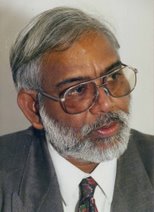
Polish president Komorowski wins vote, walks tight rope between Russia and US
From John Dayal
Warsaw, 6 July 2010
Ignoring sentiment and a subtle pressure from the Catholic Church, a highly polarized Poland electorate last night voted acting president Bronislaw Komorowski to power with his agenda for rapid privatization and a balance between Russia and nuclear ally United States, with whom his government two days ago signed a missile defence pact.
“Pragmatic” Komorowski won 53 per cent of the votes against Jaroslaw Kaczynski, who fought passionately on the memory of his twin brother, the late President Lech Kaczynski who died with 96 others on 10 April while flying to a memorial meeting in Katyn in Russia where Stalin’s Russian army had allegedly shot dead over 20,000 polish soldiers during the World War II.
The Church patently sided with Kaczynski and his Law and Justice Party, as did a large chunk of the traditional and rural poor in the highly Catholic post-communist Poland. But Komorowski’s poll managers in the Civic Platform party, a right of the centre group, marshalled a last minute turnout of the younger voters and the emerging middle class to beat back the tough but controversial leader of the Law and Justice party. Kaczynski received 46.99 per cent of the vote in a 55.31 per cent turnout, which was a huge change from the apathy shown by voters in the first round.
Komorowski, a former defence minister, was Marshal of the Sejm -- Speaker of the Lower house of the Polish Parliament – at the time of the air crash and was automatically elevated President under the country’s constitution. He managed a high profile support base when he decided to fight the elections, preponed from their scheduled date in autumn this year. Poland’s modern-age hero Lech Walesa, the founder of Solidarity movement, backed him, as did men of the caliber of film maestro Andrei Wajda who told this correspondent at Komorowski’s victory headquarters, aptly in a building housing Coca Cola and many bank headquarters; “He is the man for the future, the man who will make Poland a major in the European Union.’ Wajda also praised the new president as a man who supported free speech and the arts – an abiding virtue in the land of music immortal Chopin.
The media here has noticed that Komorowski has had to dilute many of his policies to win over the Poles. Among his talking points was his party’s alliance with the UK’s ruling Tories, speaking of a larger alliance in the European Union which Poland will head in the second half of next year.
Despite a powerful Opposition, and a church looking over his shoulders, Komorowski hopes to have an easier time in his newly won term because his Civic Platform party now controls both the Presidency and the Parliament. “Polish democracy has won,” Komorowski told widely cheering, but visibly well off, supporters in his headquarters as he and his wife made an appearance last Sunday night in a US-inspired made for television event late Sunday night after polling officially ended.
Komorowski has been Minister of National Defence from 2000 to 2001 and Deputy Speaker from 2005 to 2007. His party backs church positions against abortion and gay marriages, but strongly calls for privatization of the remaining public sectors of Polish economy, direct elections to local body chiefs such as mayors and other electoral reforms,. labour law reform, and a 15% flat tax.
Symbolic possibly of modern Poland, a country which has repeatedly seen its nobility and intelligentsia murdered en masse by invading armies over the last several centuries, Komorowski traces his origins to an old and noble family which was active against the communist regime, many relatives ending up in prison.
International observers here noted that the elections coincided with a high profile trip to Poland and Eastern Europe by US Secretary of State Hillary Clinton. She participated in ceremonies marking ten years of Council for Democracy – for which international media had been invited – but took time off to supervise the signing of a deal with Poland last Saturday allowing a revised missile-shield program to defend against potential threats from Iran or elsewhere. It has been reported that Poland also received a Patriot missile battery, manned by American soldiers and situated at the military base at Morag, some 250 kilometers north of Warsaw and just 60 kilometers from the border with Russia's Kaliningrad territory.
Thursday, July 8, 2010

Friday, June 25, 2010
Sangh dominates Orissa's schools
BHUBANESWAR, [PRASHANTI,] JUNE 25 2010-06-25
Radical Hindu groups in the Indian state of Orissa may have stolen a march on Christians by developing a large network of schools in rural areas of the state neglected by the Church, an education expert fears.
Since 1978, the Rashtriya Swayamsevak Sangh (RSS, national volunteer corps) has built a network of 793 schools in the eastern state with a faculty of 12,000 teachers, local reports say.
“The RSS has spearheaded the movement, successfully penetrating into the educational systems of both the grassroots and centralized regulatory commissions,” Angana Chatterji is a professor of Social and Cultural Anthropology at the California Institute of Integral Studies, USA.
“A whole new generation is being grown indoctrinated in Hindutva (Hindu ideology). It is a devious strategy to teach hate to the young,” the paper claims, with as many as 55 of the top 100 10th grade students now coming from these schools.
“The RSS made it clear that the schools, called Shishu Mandirs, together with the Ekal Vidyalayas (single-teacher primary schools in villages), were set up to counter the influence of the schools run by the Church,” John Dayal, secretary general of the All India Christian Council, said.
He lamented that Christian schools, which are mostly located in metropolitan cities and towns, have earned the reputation of being elite English language institutions for the rich and powerful.
Barring a few exceptions, there are hardly any Christian schools in rural areas, Dayal added, and the RSS-run schools fill the vacuum, providing high quality education without the elitism. “The Church needs to do a rethinking in this regard,” he warned.
Father Anselm Biswal, former director of social work, agreed. “The schools that we have are no match for the RSS schools,” he said. “What we require today is a commitment and direction to the issue of education”.
In this year’s annual examinations for the tenth class, children of the RSS schools, many of them sons and daughters of government officials, took the top positions across Orissa.
BHUBANESWAR, [PRASHANTI,] JUNE 25 2010-06-25
Radical Hindu groups in the Indian state of Orissa may have stolen a march on Christians by developing a large network of schools in rural areas of the state neglected by the Church, an education expert fears.
Since 1978, the Rashtriya Swayamsevak Sangh (RSS, national volunteer corps) has built a network of 793 schools in the eastern state with a faculty of 12,000 teachers, local reports say.
“The RSS has spearheaded the movement, successfully penetrating into the educational systems of both the grassroots and centralized regulatory commissions,” Angana Chatterji is a professor of Social and Cultural Anthropology at the California Institute of Integral Studies, USA.
“A whole new generation is being grown indoctrinated in Hindutva (Hindu ideology). It is a devious strategy to teach hate to the young,” the paper claims, with as many as 55 of the top 100 10th grade students now coming from these schools.
“The RSS made it clear that the schools, called Shishu Mandirs, together with the Ekal Vidyalayas (single-teacher primary schools in villages), were set up to counter the influence of the schools run by the Church,” John Dayal, secretary general of the All India Christian Council, said.
He lamented that Christian schools, which are mostly located in metropolitan cities and towns, have earned the reputation of being elite English language institutions for the rich and powerful.
Barring a few exceptions, there are hardly any Christian schools in rural areas, Dayal added, and the RSS-run schools fill the vacuum, providing high quality education without the elitism. “The Church needs to do a rethinking in this regard,” he warned.
Father Anselm Biswal, former director of social work, agreed. “The schools that we have are no match for the RSS schools,” he said. “What we require today is a commitment and direction to the issue of education”.
In this year’s annual examinations for the tenth class, children of the RSS schools, many of them sons and daughters of government officials, took the top positions across Orissa.
Thursday, June 24, 2010
Chistian Copmmunity tells Sonia's Council to revise Law against Communal Violence
Observations of the Christian Community on Proposed Communal violence Prevention Bill 2005/10
National Advisory Council meeting 24th June 2010
A. The Christian community, approximately 2.4 per cent of the Indian population, is yet to emerge from the trauma of the violence against it in Kandhamal District of Orissa in 2007 and 2008, which saw mass murder, unprecedented arson, gang rapes and coercive change of religion, among other crimes, and the continuing acts of violence against its members, individual pastors, priests, nuns, institutions, prayer meetings and tract distribution, across the country but more viciously in Karnataka, Orissa, Maharashtra, Andhra Pradesh, Gujarat, Rajasthan, Punjab, Uttarakhand, and occasionally even in the National Capital Region of Delhi. This experience is marked by our understanding of the protection given to the aggressors, issues of command responsibility and impunity, and a callous attitude towards Christianity which is seen even in official circles as an alien religion, and its faithful as so much lesser citizens in the exercise of their Constitutional rights. This experience, as much as our empathy with the experiences of our brothers and sisters in the Dalit community, the Tribal people and members of the Sikh and Muslim faiths, guides our understating of communal violence, and our response to the Communal Violence Control and Prevention Bill through its various incarnations from when it was first moved in Parliament in 2005 till the last Cabinet note of December 2009.
The Catholic Bishops Conference of India gave a detailed note to the Government some time ago. On behalf of the All India Christian Council, its office bearers also conveyed to Government our feelings. Other denominations and groups have also communicated with the government. The Christian community consists of several ecclesiastical groups and denominations, apart from ranging across all linguistic and ethnic groups in the country as is proper for its 2,000 year old history of existence in this great country.
It may be mentioned that we entirely support the major recommendations made by the Muslim community groups and by concerned Civil society. We strongly feel any Law to be relevant must empower the people, specially the survivor-victims. It must in no way further empower the State and the political apparatus to harass religious minorities.
This note therefore covers not just the experience of the Catholic and Episcopal groups in all their diversity as already enunciated by them, but also the experiences and needs if the membership of the All India Christian Council from the Evangelical and Pentecost churches, Independent Church groups and pastors, and above all, the common Christians, specially Tribal and Dalits, who may worship in their house, or go to a Church, and who are untied in their faith in the Salvation assured by Jesus Christ.
B. Needless to say, the proposed CV Bill is ignorant of the diversity of the minority communities, and specifically of the following issues of the Christian Community.
1. Dalit Christians: 60 per cent of all Christians in India trace their origins from the Dalit communities, now called the Scheduled Castes. They live with their fellow Indians in Dalit colonies, semi urban hovels, and village Cheris. They are subject to all atrocities faced by the others. In addition, they are targeted for being Christians, taunted, vilified and subject to sustained hate campaigns. And yet they do not get the hope or the security provided by anti-atrocity laws, or other provisions of the IPC.
2. TRIBALS: A large number of tribals are Christinas in the States of Rajasdthan, Madhya Pradesh, Gujarat, Maharashtra, Andhra, Chhatisgarh, Orissa and Jharkhand, apart from the Tribals of the North-Eastern region. The tribals of the so-called Chhotanagpur region particularly suffer from administrative and communal action, and find little or no recourse in the law. The experience in Kandhamal has brought this to the fore.
3. PLACES OF WORSHIP: While large cathedrals are landmarks in cities, the churches in small towns and villages may be just a kutcha hut or a log cabin. Often, both in Catholic and Protestant traditions, prayers are held within the house together with family members and neighbours. Sometimes, prayers are also held in the open on Sundays and other special days. Increasingly house churches have been targeted and often the police has been a party to the violence.
4. VIOLENCE AGAINST WOMEN: Nuns of the Catholic, Orthodox and of some Episcopal churches, as well as wives of Evangelical and Independent pastors have been particularly targeted in Madhya Pradesh, up to and including gang grape and sexual coercion, with the police entirely inactive, if not complicit. The Nuns can be identified at a distance and are therefore vulnerable all the more.
5. DIFFUSED POPULATION: Apart from certain districts, the Christian population is widely dispersed, and ingle families or a small cluster becomes very vulnerable.
6. PATTERN OF VIOLENCE: Though populations are dispersed in the major states – barring Kerala, Meghalaya, Nagaland and Goa, -- the violence is consistent. And yet authorities, especially the police dismiss it as “sporadic” unrelated and unconnected violence. The overall Pattern of Violence is never taken into account while taking preventive or curative measures.
7. HATE CAMPAIGNS: For the last forty years, there has been a consistent and sustained hate campaign against Christians, often officially supported. Where huge temples exist in government building and even in police stations, it is perhaps difficult to expect a secular approach from subordinate officials and policemen. The hate campaign in media is supported by partisanship in the district administration, further aggravating the communal harmony in those regions. These include refusal to distribute religious tracts and refusal of permission to sell or distribute Bibles, permission for holding Healing Ministries and Prayer meetings on public or private grounds and fields, and mis-reporting in the mass media painting the Christians in a negative light.
The following is an internal commentary by the All India Christian Council and its expert associates, which takes into account the above and assesses the new Bill with its suggestions.
C. OUR OBSERVATIONS ON THE CV BILL
The government has proposed a law to prevent control and deal with the aftermath of communal violence, which would include caste-based or religiously-motivated violence. Communal violence is recognised as a problem which runs deeper than simply undermining law and order. The UN Special Rapporteur on freedom of religion or belief echoed the NCM in emphasising that communal violence is most likely to occur in a situation in which the following elements are present:
• Long-standing antagonism along religious lines;
• A specific occurrence triggering an emotional response among members of religious communities;
• A sense among perpetrators and the religious community to which they belong that communal violence is justifiable;
• A sense among perpetrators that the reaction of police to communal violence would be absent, partisan or ineffective.
The Communal Violence (Prevention, Control and Rehabilitation of Victims) Bill, 2009, was first introduced on 26 November 2005, and has undergone a series of revisions, which include the adoption of a number of recommendations issued by the NCM. It is expected to be introduced in the Lok Sabha in 2010, having received Cabinet approval in December 2009.
PROVISIONS:
The purpose of the Bill is outlined in the Statement of Objects and Reasons:
“Communal violence threatens the secular fabric, unity, integrity and internal security of a nation. With a view to empowering the State Governments and the Central Government to take effective measures to provide for the prevention and control of communal violence and to rehabilitate the victims of such violence, for speedy investigation and trial of offences including imposition of enhanced punishments, than those provided in the Indian Penal Code, on persons involved in communal violence and for matters connected therewith, it has been decided to enact a law by Parliament.”
The current version of the Bill sets out a series of measures to these ends, and includes the following provisions:
• Article 3(1) groups a number of offences under the Indian Penal Code (IPC) and other laws in a schedule. If one or more of these offences are committed “in such manner and on such a scale which involves the use of criminal force or violence against any group, caste or community, resulting in grievous hurt, loss of life, or extensive damage or destruction of property” and where “such use of criminal force or violence is committed with a view to create disharmony or feelings of enmity, hatred or ill-will between different groups, castes or communities”, resulting in an imminent “threat to the secular fabric, integrity, unity or internal security of India”, a state government is required to notify this as a “communally disturbed area”.
• Article 4 specifies that a state government may request the central government to deploy armed forces in these circumstances.
• Article 5 provides for preventative measures to be taken by a district magistrate prior to any outbreak of communal violence.
• Articles 6-10 provide for preventative measures to be taken by the “competent authority” after an area has been designated as communally disturbed.
• Articles 11-16 proscribe and stipulate punishments for certain acts associated with communal violence, including possessing weapons or threatening witnesses;
• Article 17 stipulates punishments for public servants or competent authorities who act in a mala fide manner or wilfully fail to exercise lawful authority, and thereby fail to prevent communal violence.
• Article 19 provides that punishments stipulated for scheduled offences must be doubled if the offences are committed on a scale and in a manner which constitute communal violence.
• Article 21 provides for the declaration of police stations within the scheduled area, and for the provision of women police officers to investigate scheduled offences committed against women or children.
• Article 22 provides for the review of cases where the investigating officer does not file a charge sheet within three months of a First Information Report (FIR) being registered.
• Article 23 provides for the constitution of “Special Investigation Teams” if the state government believes the investigation of offences was not carried out in a fair and impartial manner.
• Articles 24-37 provide for the establishment and procedure of “Special Courts” for the trial of scheduled offences, and for the appointment of public prosecutors. Article 32 provides for concealing the identities of witnesses testifying before a special court.
• Articles 38-41 provide for the creation and functions of a “State Communal Disturbance Relief and Rehabilitation Council” by the relevant state government, including several ex officio members and several members nominated by the state government, including representatives of all major religious communities. Article 40 stipulates the functions of the council in planning relief efforts, including advising the state government on compensation and the establishment of relief camps, taking a range of remedial measures for the welfare of victims and the reparation of damage, recommending measures for activating a “district communal harmony committee” and reporting to the government on shortcomings in remedial measures. Article 41 stipulates the preparation of a plan “for promotion of communal harmony and prevention of communal violence” to be recommended for adoption by the council to the state government.
• Articles 42-44 provide for the creation and functions of a district equivalent of the state committee, to act as the implementing body for relief and rehabilitation measures.
• Articles 45-48 provide for the creation and functions of a national equivalent of the state committee, with responsibilities including advising relevant state governments on relief, rehabilitation and compensation and making recommendations to the central government.
• Articles 49-52 provide for state governments to establish schemes for the compensation of victims of communal violence.
• Articles 53-54 provide for the payment of compensation for damages by offenders.
• Articles 55-56 set out special powers of the central government to deal with communal violence. These include directing the
relevant state government to take appropriate measures, and declaring a “communally disturbed area” if the state fails to do so when necessary, and deploying armed forces under the authority of the central government.
• Article 58 provides that there should be no discrimination in the provision of relief or compensation “on the ground of sex, caste, community, descent or religion”.
D. OUR CRITIQUE:
The principle of a CV Bill has been welcomed by religious minorities in India, and it has the potential to add positively to India’s excellent body of legislation protecting against acts of discrimination or prejudicial violence. However, there exist legitimate concerns about the effectiveness of the 2005 and the 2009 drafts of the Bill, which have been voiced by civil society and religious minority organisations, by the NCM and by the UN Special Rapporteur on freedom of religion or belief in the report of her 2008 visit to India. The Special Rapporteur recommended specifically that the legislation “should take into account the concerns of religious minorities” (paragraph 67).
The most serious, substantive and prominent concerns about the Bill in its current form include the following:
1. The Bill does not define “communal violence” adequately, and therefore cannot protect against it effectively. Firstly, it construes communal violence as disharmony between two different communities, or mass rioting by one community against another, but it does not recognise the process by which communal tension or hatred is incited, and it does not recognise the phenomenon of state complicity in the incitement or execution of communal violence. Secondly, the premise of the “communally disturbed area” does not do justice to the reality of communal violence as experienced by some religious minorities, especially Christians: certain states see frequent, well-targeted, single incidents of religiously-motivated violence, which are often orchestrated by extremist organisations, and this pattern of violence would not be addressed under the provisions of the Bill. Thirdly, the Bill inadequately covers the possible range of offences which might constitute “communal violence” (including specific forms of sexual violence), and the implications of this context for evidentiary standards in the investigative process.
2. The Bill does not provide for sufficient safeguards against the poor or discriminatory exercise of power by those responsible for protecting the rights of victims, which is a recurrent problem in cases of communal violence. The Special Rapporteur noted that civil society organisations have “voiced their concern that the sweeping powers given by the Bill to state governments could be misused to intimidate members of the minority community” (paragraph 40). Article 17 provides for the prosecution of public servants for the dereliction of duty, but this requires the prior sanction of the state government, and if the state government is complicit in (or not unfavourable towards) the communal violence, it becomes extremely unlikely that discriminatory behaviour or the dereliction of duty by public servants will be prosecuted. Article 22 of the Bill provides for the review of every case in which the investigating officer does not file a charge sheet within three months of an FIR being registered, but this may be circumvented by the common tactic whereby police officers fail to register FIRs according to proper procedure. Article 57, the so-called “good faith” clause, provides immunity for officials; however, the standard of mens rea, or command responsibility, should be enshrined in the Bill, so that superior authorities are held accountable for the unlawful activities of their subordinates. The NCM made a number of relevant additional recommendations to increase accountability: That the reports of any commissions of inquiry should be made public as a matter of course; that the National Human Rights Commission should be mandated to monitor the performance of special courts; and that those found guilty of involvement in communal violence should be debarred permanently from government jobs and from contesting any office.
3. The Bill should provide additional measures to protect witnesses or victims from intimidation. Article 15 criminalises acts which threaten witnesses, and Article 32 provides that the identity of witnesses may be concealed. However, the Bill should draw upon the guidelines of the Supreme Court and recommendations of the Law Commission. It would be strengthened considerably by providing for the police protection of witnesses at risk of threat or intimidation. Incentivising witnesses by providing travel and maintenance expenses (as recommended in Article 21(2)(ii) of The Scheduled Castes and the Scheduled Tribes (Prevention of Atrocities) Act), would further protect against witnesses preferring to stay silent rather than risking intimidation as a consequence of giving evidence. In addition, the rights of persons displaced into camps as a result of communal violence, as outlined in Article 40(b), should be in line with the UN Guiding Principles on Internal Displacement, including the provision of education to displaced children (principle 23) and ensuring that camps continue until the establishment of suitable conditions and the means for the displaced persons to return voluntarily, in safety and with dignity, to their homes, or to resettle voluntarily (principle 28).
4. The Bill should set out a uniform, binding scheme for the provision of compensation to victims of communal violence, to address the inconsistencies shown in previous cases. It should establish the rights of victims or their dependents to financial compensation, and should also provide compensation to rebuild places of worship damaged or destroyed as a result of communal violence. This was among the recommendations of the NCM not included among the amendments in the 2009 version of the Bill.
E. Aftermath of 2008 anti-Christian violence in Orissa
In August to October 2008, Orissa witnessed the worst spate of communal violence ever faced by the Christian community in post-independence India, including brutal murders and rapes, widespread destruction of churches and property, and forcible conversions to Hinduism. The attacks, centred in Kandhamal district, were catalysed by the assassination on 23 August 2008 of Lakshmananda Saraswati, local head of the radical Hindu nationalist group VHP, by assailants believed to have been Maoists. On 24 August, when his remains were paraded around the district, mobs began setting up roadblocks, shouting Hindu nationalist and violent anti-Christian slogans, openly blaming Christians for the murder and calling for revenge as they attacked Christian targets. Although rural poverty and underlying issues of ethnic tensions over entitlements in Kandhamal played a role in the violence, these were not the primary causes but provided a context for the radicalisation of one community and the incitement of violence. The Orissa chief minister publicly acknowledged the role of extremist Hindu nationalist organisations in the violence in the legislative assembly for the first time in November 2009.
The violence which started in August 2008 continued for over eight weeks. At least 50,000 were displaced and 70 were killed; among the victims were Hindus opposing the rioters. Widespread anti-Christian attacks had also taken place in Kandhamal in December 2007, impunity for which laid the foundations for the second more serious wave of violence in 2008. The state government failed to implement detailed recommendations made by India’s NCM in early 2008.
F. SOCIAL CONTEXT:
Rural poverty is endemic in southern Orissa, the area in which the violence was centred, and the rural poverty ratio actually increased in this area during the period 1983-2000. There exist deep underlying issues of entitlement in Kandhamal, which created a context for the instigation of the 2008 violence: one such issue is the classification of Scheduled Caste and Scheduled Tribe communities, which was formalised in 1950. Both communities trace their ancestry to the indigenous inhabitants of the land, and constitute a single ethnic, linguistic and cultural group. However, Kandhamal is designated as a ‘Scheduled Area’ under the provision of the fifth schedule of the constitution, and as such, certain entitlements are reserved for the Scheduled Tribes, including freehold (patta) ownership of land. This is a potential cause of tension between Scheduled Castes and Scheduled Tribes. Moreover, Christians of Scheduled Caste background or ancestry are not eligible to the same entitlements as Scheduled Castes (see section 4.3 above). It is in the interest of those Scheduled Castes who profess Christianity to be reclassified as Scheduled Tribes, as this would reverse their double disenfranchisement, so tensions among Scheduled Castes and Scheduled Tribes can therefore take on a religious colouring in the right circumstances.
Although these factors of ethnicity and entitlement provided a context for the violence, it is important to emphasise that Christians in the area have been drawn from both Scheduled Caste and Scheduled Tribe communities. During the violence, Christians from both communities were attacked.
The extremist Hindu nationalist presence in Kandhamal has played upon existing sensitivities, and co-opted them onto a religious nationalist template. Extremist Hindu nationalists have been operational in the area for around 40 years, and they originate from a non-indigenous, caste Hindu, trader community. Their agenda has been the preservation of Hindu purity, including the prevention of cow slaughter and of religious conversions. Christians, as the largest religious minority in the area, constitute a threatening ‘other’, and provide a ready scapegoat.
The local prominence of Naxalites, or Maoist insurgents, creates an additional layer of complication. Naxalites were almost certainly responsible for the assassination of Swami Lakshmananda Saraswati, which precipitated the mass violence against Christians. There are numerous theories about the Naxalites’ motivation for the murder, one of which is that it was an act of retribution against his activities, and that it was calculated to gain support from disenfranchised people in the area, including Christians. The palpable absence of state machinery from the area, means that the scene has been set for something of a ‘turf war’ between Hindu extremists and Naxalites.
G. ISSUES ARISING FROM CHRISTIAN EXPERIENCE OF KANDHAMAL FAST TRACK COURTS:
We had welcomed the Fast track courts and had high hopes from the two Additional Sessions Judges and the Public prosecutors. We feel betrayed after the lapse of one year. Out of 12 deaths by murder, where judgement is pronounced, there was only one conviction; and accused in 11 deaths are acquitted. Justice, reconciliation and peace remain an unfulfilled objective. There are legitimate fears of impunity on a large scale. Local lawyers suggest that the majority of crimes have not been registered properly by the police, and the majority of cases which reach the courts have resulted in acquittals. There is also widespread evidence of endemic bias and dereliction of duty in the investigation and prosecution of offences. As of now, lawyers in Kandhamal said that of 3,223 complaints submitted to the police; only 831 had been registered as First Information Reports (FIRs). The judicial system in place has been partially successful, but the realities of trying cases in a rural situation amidst widespread fear, combined with poverty and illiteracy, create special needs which the current system is failing to address adequately. Many witnesses or victims are reluctant to testify in court for fear of retribution and lack of confidence in the efficacy of the system, and they have been intimidated and threatened, sometimes by mobs outside courtrooms;
We suggest that the new CV bill take care of the following issues:
1. The Fast Track courts should be set up outside the affected area, preferably in a neighbouring district, and in special cases, in an adjoining state to remove any inference with the course of justice.
2. The Judges appointed should be subjected to review for their performances by superior courts to weed out bigotry and vested interest, if any
3. Special public prosecutors be appointed at government expense out a panel whetted by civil society and survivors-victims
4. Survivor-victims are allowed to arrange their own lawyers to assist the Special PPs.
5. Survivor Victims be allowed to file additional FIRs other than those filed by police suo motu
6. Survivor-Victims’ lawyers be allowed to cross examine defence witness and intervene properly in the judicial court process.
7. Witnesses security and transport be taken care of by government in a foolproof witness protection programme
8. In case of gender violence cases, in camera proceedings be arranged
9. Adequate security be provided in court premises and environments
10. Legal observers / amicus curie be allowed to monitor the course of the trial
11. Special Investigation Teams be set up in case police investigations are found to be inadequate.
John Dayal
Secretary General, All India Christian Council
National Advisory Council meeting 24th June 2010
A. The Christian community, approximately 2.4 per cent of the Indian population, is yet to emerge from the trauma of the violence against it in Kandhamal District of Orissa in 2007 and 2008, which saw mass murder, unprecedented arson, gang rapes and coercive change of religion, among other crimes, and the continuing acts of violence against its members, individual pastors, priests, nuns, institutions, prayer meetings and tract distribution, across the country but more viciously in Karnataka, Orissa, Maharashtra, Andhra Pradesh, Gujarat, Rajasthan, Punjab, Uttarakhand, and occasionally even in the National Capital Region of Delhi. This experience is marked by our understanding of the protection given to the aggressors, issues of command responsibility and impunity, and a callous attitude towards Christianity which is seen even in official circles as an alien religion, and its faithful as so much lesser citizens in the exercise of their Constitutional rights. This experience, as much as our empathy with the experiences of our brothers and sisters in the Dalit community, the Tribal people and members of the Sikh and Muslim faiths, guides our understating of communal violence, and our response to the Communal Violence Control and Prevention Bill through its various incarnations from when it was first moved in Parliament in 2005 till the last Cabinet note of December 2009.
The Catholic Bishops Conference of India gave a detailed note to the Government some time ago. On behalf of the All India Christian Council, its office bearers also conveyed to Government our feelings. Other denominations and groups have also communicated with the government. The Christian community consists of several ecclesiastical groups and denominations, apart from ranging across all linguistic and ethnic groups in the country as is proper for its 2,000 year old history of existence in this great country.
It may be mentioned that we entirely support the major recommendations made by the Muslim community groups and by concerned Civil society. We strongly feel any Law to be relevant must empower the people, specially the survivor-victims. It must in no way further empower the State and the political apparatus to harass religious minorities.
This note therefore covers not just the experience of the Catholic and Episcopal groups in all their diversity as already enunciated by them, but also the experiences and needs if the membership of the All India Christian Council from the Evangelical and Pentecost churches, Independent Church groups and pastors, and above all, the common Christians, specially Tribal and Dalits, who may worship in their house, or go to a Church, and who are untied in their faith in the Salvation assured by Jesus Christ.
B. Needless to say, the proposed CV Bill is ignorant of the diversity of the minority communities, and specifically of the following issues of the Christian Community.
1. Dalit Christians: 60 per cent of all Christians in India trace their origins from the Dalit communities, now called the Scheduled Castes. They live with their fellow Indians in Dalit colonies, semi urban hovels, and village Cheris. They are subject to all atrocities faced by the others. In addition, they are targeted for being Christians, taunted, vilified and subject to sustained hate campaigns. And yet they do not get the hope or the security provided by anti-atrocity laws, or other provisions of the IPC.
2. TRIBALS: A large number of tribals are Christinas in the States of Rajasdthan, Madhya Pradesh, Gujarat, Maharashtra, Andhra, Chhatisgarh, Orissa and Jharkhand, apart from the Tribals of the North-Eastern region. The tribals of the so-called Chhotanagpur region particularly suffer from administrative and communal action, and find little or no recourse in the law. The experience in Kandhamal has brought this to the fore.
3. PLACES OF WORSHIP: While large cathedrals are landmarks in cities, the churches in small towns and villages may be just a kutcha hut or a log cabin. Often, both in Catholic and Protestant traditions, prayers are held within the house together with family members and neighbours. Sometimes, prayers are also held in the open on Sundays and other special days. Increasingly house churches have been targeted and often the police has been a party to the violence.
4. VIOLENCE AGAINST WOMEN: Nuns of the Catholic, Orthodox and of some Episcopal churches, as well as wives of Evangelical and Independent pastors have been particularly targeted in Madhya Pradesh, up to and including gang grape and sexual coercion, with the police entirely inactive, if not complicit. The Nuns can be identified at a distance and are therefore vulnerable all the more.
5. DIFFUSED POPULATION: Apart from certain districts, the Christian population is widely dispersed, and ingle families or a small cluster becomes very vulnerable.
6. PATTERN OF VIOLENCE: Though populations are dispersed in the major states – barring Kerala, Meghalaya, Nagaland and Goa, -- the violence is consistent. And yet authorities, especially the police dismiss it as “sporadic” unrelated and unconnected violence. The overall Pattern of Violence is never taken into account while taking preventive or curative measures.
7. HATE CAMPAIGNS: For the last forty years, there has been a consistent and sustained hate campaign against Christians, often officially supported. Where huge temples exist in government building and even in police stations, it is perhaps difficult to expect a secular approach from subordinate officials and policemen. The hate campaign in media is supported by partisanship in the district administration, further aggravating the communal harmony in those regions. These include refusal to distribute religious tracts and refusal of permission to sell or distribute Bibles, permission for holding Healing Ministries and Prayer meetings on public or private grounds and fields, and mis-reporting in the mass media painting the Christians in a negative light.
The following is an internal commentary by the All India Christian Council and its expert associates, which takes into account the above and assesses the new Bill with its suggestions.
C. OUR OBSERVATIONS ON THE CV BILL
The government has proposed a law to prevent control and deal with the aftermath of communal violence, which would include caste-based or religiously-motivated violence. Communal violence is recognised as a problem which runs deeper than simply undermining law and order. The UN Special Rapporteur on freedom of religion or belief echoed the NCM in emphasising that communal violence is most likely to occur in a situation in which the following elements are present:
• Long-standing antagonism along religious lines;
• A specific occurrence triggering an emotional response among members of religious communities;
• A sense among perpetrators and the religious community to which they belong that communal violence is justifiable;
• A sense among perpetrators that the reaction of police to communal violence would be absent, partisan or ineffective.
The Communal Violence (Prevention, Control and Rehabilitation of Victims) Bill, 2009, was first introduced on 26 November 2005, and has undergone a series of revisions, which include the adoption of a number of recommendations issued by the NCM. It is expected to be introduced in the Lok Sabha in 2010, having received Cabinet approval in December 2009.
PROVISIONS:
The purpose of the Bill is outlined in the Statement of Objects and Reasons:
“Communal violence threatens the secular fabric, unity, integrity and internal security of a nation. With a view to empowering the State Governments and the Central Government to take effective measures to provide for the prevention and control of communal violence and to rehabilitate the victims of such violence, for speedy investigation and trial of offences including imposition of enhanced punishments, than those provided in the Indian Penal Code, on persons involved in communal violence and for matters connected therewith, it has been decided to enact a law by Parliament.”
The current version of the Bill sets out a series of measures to these ends, and includes the following provisions:
• Article 3(1) groups a number of offences under the Indian Penal Code (IPC) and other laws in a schedule. If one or more of these offences are committed “in such manner and on such a scale which involves the use of criminal force or violence against any group, caste or community, resulting in grievous hurt, loss of life, or extensive damage or destruction of property” and where “such use of criminal force or violence is committed with a view to create disharmony or feelings of enmity, hatred or ill-will between different groups, castes or communities”, resulting in an imminent “threat to the secular fabric, integrity, unity or internal security of India”, a state government is required to notify this as a “communally disturbed area”.
• Article 4 specifies that a state government may request the central government to deploy armed forces in these circumstances.
• Article 5 provides for preventative measures to be taken by a district magistrate prior to any outbreak of communal violence.
• Articles 6-10 provide for preventative measures to be taken by the “competent authority” after an area has been designated as communally disturbed.
• Articles 11-16 proscribe and stipulate punishments for certain acts associated with communal violence, including possessing weapons or threatening witnesses;
• Article 17 stipulates punishments for public servants or competent authorities who act in a mala fide manner or wilfully fail to exercise lawful authority, and thereby fail to prevent communal violence.
• Article 19 provides that punishments stipulated for scheduled offences must be doubled if the offences are committed on a scale and in a manner which constitute communal violence.
• Article 21 provides for the declaration of police stations within the scheduled area, and for the provision of women police officers to investigate scheduled offences committed against women or children.
• Article 22 provides for the review of cases where the investigating officer does not file a charge sheet within three months of a First Information Report (FIR) being registered.
• Article 23 provides for the constitution of “Special Investigation Teams” if the state government believes the investigation of offences was not carried out in a fair and impartial manner.
• Articles 24-37 provide for the establishment and procedure of “Special Courts” for the trial of scheduled offences, and for the appointment of public prosecutors. Article 32 provides for concealing the identities of witnesses testifying before a special court.
• Articles 38-41 provide for the creation and functions of a “State Communal Disturbance Relief and Rehabilitation Council” by the relevant state government, including several ex officio members and several members nominated by the state government, including representatives of all major religious communities. Article 40 stipulates the functions of the council in planning relief efforts, including advising the state government on compensation and the establishment of relief camps, taking a range of remedial measures for the welfare of victims and the reparation of damage, recommending measures for activating a “district communal harmony committee” and reporting to the government on shortcomings in remedial measures. Article 41 stipulates the preparation of a plan “for promotion of communal harmony and prevention of communal violence” to be recommended for adoption by the council to the state government.
• Articles 42-44 provide for the creation and functions of a district equivalent of the state committee, to act as the implementing body for relief and rehabilitation measures.
• Articles 45-48 provide for the creation and functions of a national equivalent of the state committee, with responsibilities including advising relevant state governments on relief, rehabilitation and compensation and making recommendations to the central government.
• Articles 49-52 provide for state governments to establish schemes for the compensation of victims of communal violence.
• Articles 53-54 provide for the payment of compensation for damages by offenders.
• Articles 55-56 set out special powers of the central government to deal with communal violence. These include directing the
relevant state government to take appropriate measures, and declaring a “communally disturbed area” if the state fails to do so when necessary, and deploying armed forces under the authority of the central government.
• Article 58 provides that there should be no discrimination in the provision of relief or compensation “on the ground of sex, caste, community, descent or religion”.
D. OUR CRITIQUE:
The principle of a CV Bill has been welcomed by religious minorities in India, and it has the potential to add positively to India’s excellent body of legislation protecting against acts of discrimination or prejudicial violence. However, there exist legitimate concerns about the effectiveness of the 2005 and the 2009 drafts of the Bill, which have been voiced by civil society and religious minority organisations, by the NCM and by the UN Special Rapporteur on freedom of religion or belief in the report of her 2008 visit to India. The Special Rapporteur recommended specifically that the legislation “should take into account the concerns of religious minorities” (paragraph 67).
The most serious, substantive and prominent concerns about the Bill in its current form include the following:
1. The Bill does not define “communal violence” adequately, and therefore cannot protect against it effectively. Firstly, it construes communal violence as disharmony between two different communities, or mass rioting by one community against another, but it does not recognise the process by which communal tension or hatred is incited, and it does not recognise the phenomenon of state complicity in the incitement or execution of communal violence. Secondly, the premise of the “communally disturbed area” does not do justice to the reality of communal violence as experienced by some religious minorities, especially Christians: certain states see frequent, well-targeted, single incidents of religiously-motivated violence, which are often orchestrated by extremist organisations, and this pattern of violence would not be addressed under the provisions of the Bill. Thirdly, the Bill inadequately covers the possible range of offences which might constitute “communal violence” (including specific forms of sexual violence), and the implications of this context for evidentiary standards in the investigative process.
2. The Bill does not provide for sufficient safeguards against the poor or discriminatory exercise of power by those responsible for protecting the rights of victims, which is a recurrent problem in cases of communal violence. The Special Rapporteur noted that civil society organisations have “voiced their concern that the sweeping powers given by the Bill to state governments could be misused to intimidate members of the minority community” (paragraph 40). Article 17 provides for the prosecution of public servants for the dereliction of duty, but this requires the prior sanction of the state government, and if the state government is complicit in (or not unfavourable towards) the communal violence, it becomes extremely unlikely that discriminatory behaviour or the dereliction of duty by public servants will be prosecuted. Article 22 of the Bill provides for the review of every case in which the investigating officer does not file a charge sheet within three months of an FIR being registered, but this may be circumvented by the common tactic whereby police officers fail to register FIRs according to proper procedure. Article 57, the so-called “good faith” clause, provides immunity for officials; however, the standard of mens rea, or command responsibility, should be enshrined in the Bill, so that superior authorities are held accountable for the unlawful activities of their subordinates. The NCM made a number of relevant additional recommendations to increase accountability: That the reports of any commissions of inquiry should be made public as a matter of course; that the National Human Rights Commission should be mandated to monitor the performance of special courts; and that those found guilty of involvement in communal violence should be debarred permanently from government jobs and from contesting any office.
3. The Bill should provide additional measures to protect witnesses or victims from intimidation. Article 15 criminalises acts which threaten witnesses, and Article 32 provides that the identity of witnesses may be concealed. However, the Bill should draw upon the guidelines of the Supreme Court and recommendations of the Law Commission. It would be strengthened considerably by providing for the police protection of witnesses at risk of threat or intimidation. Incentivising witnesses by providing travel and maintenance expenses (as recommended in Article 21(2)(ii) of The Scheduled Castes and the Scheduled Tribes (Prevention of Atrocities) Act), would further protect against witnesses preferring to stay silent rather than risking intimidation as a consequence of giving evidence. In addition, the rights of persons displaced into camps as a result of communal violence, as outlined in Article 40(b), should be in line with the UN Guiding Principles on Internal Displacement, including the provision of education to displaced children (principle 23) and ensuring that camps continue until the establishment of suitable conditions and the means for the displaced persons to return voluntarily, in safety and with dignity, to their homes, or to resettle voluntarily (principle 28).
4. The Bill should set out a uniform, binding scheme for the provision of compensation to victims of communal violence, to address the inconsistencies shown in previous cases. It should establish the rights of victims or their dependents to financial compensation, and should also provide compensation to rebuild places of worship damaged or destroyed as a result of communal violence. This was among the recommendations of the NCM not included among the amendments in the 2009 version of the Bill.
E. Aftermath of 2008 anti-Christian violence in Orissa
In August to October 2008, Orissa witnessed the worst spate of communal violence ever faced by the Christian community in post-independence India, including brutal murders and rapes, widespread destruction of churches and property, and forcible conversions to Hinduism. The attacks, centred in Kandhamal district, were catalysed by the assassination on 23 August 2008 of Lakshmananda Saraswati, local head of the radical Hindu nationalist group VHP, by assailants believed to have been Maoists. On 24 August, when his remains were paraded around the district, mobs began setting up roadblocks, shouting Hindu nationalist and violent anti-Christian slogans, openly blaming Christians for the murder and calling for revenge as they attacked Christian targets. Although rural poverty and underlying issues of ethnic tensions over entitlements in Kandhamal played a role in the violence, these were not the primary causes but provided a context for the radicalisation of one community and the incitement of violence. The Orissa chief minister publicly acknowledged the role of extremist Hindu nationalist organisations in the violence in the legislative assembly for the first time in November 2009.
The violence which started in August 2008 continued for over eight weeks. At least 50,000 were displaced and 70 were killed; among the victims were Hindus opposing the rioters. Widespread anti-Christian attacks had also taken place in Kandhamal in December 2007, impunity for which laid the foundations for the second more serious wave of violence in 2008. The state government failed to implement detailed recommendations made by India’s NCM in early 2008.
F. SOCIAL CONTEXT:
Rural poverty is endemic in southern Orissa, the area in which the violence was centred, and the rural poverty ratio actually increased in this area during the period 1983-2000. There exist deep underlying issues of entitlement in Kandhamal, which created a context for the instigation of the 2008 violence: one such issue is the classification of Scheduled Caste and Scheduled Tribe communities, which was formalised in 1950. Both communities trace their ancestry to the indigenous inhabitants of the land, and constitute a single ethnic, linguistic and cultural group. However, Kandhamal is designated as a ‘Scheduled Area’ under the provision of the fifth schedule of the constitution, and as such, certain entitlements are reserved for the Scheduled Tribes, including freehold (patta) ownership of land. This is a potential cause of tension between Scheduled Castes and Scheduled Tribes. Moreover, Christians of Scheduled Caste background or ancestry are not eligible to the same entitlements as Scheduled Castes (see section 4.3 above). It is in the interest of those Scheduled Castes who profess Christianity to be reclassified as Scheduled Tribes, as this would reverse their double disenfranchisement, so tensions among Scheduled Castes and Scheduled Tribes can therefore take on a religious colouring in the right circumstances.
Although these factors of ethnicity and entitlement provided a context for the violence, it is important to emphasise that Christians in the area have been drawn from both Scheduled Caste and Scheduled Tribe communities. During the violence, Christians from both communities were attacked.
The extremist Hindu nationalist presence in Kandhamal has played upon existing sensitivities, and co-opted them onto a religious nationalist template. Extremist Hindu nationalists have been operational in the area for around 40 years, and they originate from a non-indigenous, caste Hindu, trader community. Their agenda has been the preservation of Hindu purity, including the prevention of cow slaughter and of religious conversions. Christians, as the largest religious minority in the area, constitute a threatening ‘other’, and provide a ready scapegoat.
The local prominence of Naxalites, or Maoist insurgents, creates an additional layer of complication. Naxalites were almost certainly responsible for the assassination of Swami Lakshmananda Saraswati, which precipitated the mass violence against Christians. There are numerous theories about the Naxalites’ motivation for the murder, one of which is that it was an act of retribution against his activities, and that it was calculated to gain support from disenfranchised people in the area, including Christians. The palpable absence of state machinery from the area, means that the scene has been set for something of a ‘turf war’ between Hindu extremists and Naxalites.
G. ISSUES ARISING FROM CHRISTIAN EXPERIENCE OF KANDHAMAL FAST TRACK COURTS:
We had welcomed the Fast track courts and had high hopes from the two Additional Sessions Judges and the Public prosecutors. We feel betrayed after the lapse of one year. Out of 12 deaths by murder, where judgement is pronounced, there was only one conviction; and accused in 11 deaths are acquitted. Justice, reconciliation and peace remain an unfulfilled objective. There are legitimate fears of impunity on a large scale. Local lawyers suggest that the majority of crimes have not been registered properly by the police, and the majority of cases which reach the courts have resulted in acquittals. There is also widespread evidence of endemic bias and dereliction of duty in the investigation and prosecution of offences. As of now, lawyers in Kandhamal said that of 3,223 complaints submitted to the police; only 831 had been registered as First Information Reports (FIRs). The judicial system in place has been partially successful, but the realities of trying cases in a rural situation amidst widespread fear, combined with poverty and illiteracy, create special needs which the current system is failing to address adequately. Many witnesses or victims are reluctant to testify in court for fear of retribution and lack of confidence in the efficacy of the system, and they have been intimidated and threatened, sometimes by mobs outside courtrooms;
We suggest that the new CV bill take care of the following issues:
1. The Fast Track courts should be set up outside the affected area, preferably in a neighbouring district, and in special cases, in an adjoining state to remove any inference with the course of justice.
2. The Judges appointed should be subjected to review for their performances by superior courts to weed out bigotry and vested interest, if any
3. Special public prosecutors be appointed at government expense out a panel whetted by civil society and survivors-victims
4. Survivor-victims are allowed to arrange their own lawyers to assist the Special PPs.
5. Survivor Victims be allowed to file additional FIRs other than those filed by police suo motu
6. Survivor-Victims’ lawyers be allowed to cross examine defence witness and intervene properly in the judicial court process.
7. Witnesses security and transport be taken care of by government in a foolproof witness protection programme
8. In case of gender violence cases, in camera proceedings be arranged
9. Adequate security be provided in court premises and environments
10. Legal observers / amicus curie be allowed to monitor the course of the trial
11. Special Investigation Teams be set up in case police investigations are found to be inadequate.
John Dayal
Secretary General, All India Christian Council
Friday, March 26, 2010
RSS and its favourite piques
Kurukshetra, Haryana, 26 Marh 2010
Courtesy India Today
The Rashtriya Swayamsevak Sangh on Friday evinced concern at the fluctuation in its work and sought more quality in its endeavours.
In the Sangh's annual report tabled at its Akhil Bharatiya Pratinidhi Sabha which was inaugurated by Sarsanghchalak Mohan Bhagwat in Kurukshetra, the RSS opposed religion-based reservation saying it was unnecessary. "While we are in favour of reservation to various deprived sections of Hindus considering their condition like untouchability, we are against the religion based reservation," said the report tabled by Sarkaryawah Suresh Bhaiyaji Joshi.
The report says that the RSS held 39,823 daily shakhas in 27,089 locations. Apart from that, the weekly shakhas are being held at 7,356 places while 6,949 places are witnessing other Sangh gatherings. The report says, "What is genuinely immediate is to concentrate on qualitative improvement" and says that "determined and committed workers can achieve results in any situation".
The two-day sabha started on Friday morning and there were sessions on Vidya Bharati and some other organisations of the Sangh Parivar like the Bharatiya Kisan Sangh and the Bharatiya Mazdoor Sangh.
The BJP's affairs are to be taken up tomorrow for which party organising general secretary Ramlal and senior leader Bal Apte have already arrived here. Along with the annual report, the resolutions on Jammu and Kashmir and complete development of villages were tabled and will be discussed.
This pratinidhi sabha is being attended by over 1,000 delegates from all over the country and is being held for the first time in Haryana. It is also the first pratinidhi sabha since Mohan Bhagwat took over as RSS chief.
The key points raised in the annual report:
Jammu and Kashmir: "Anti-national and separatist forces are becoming increasingly active. It is unfortunate that the policies of the Central government as well as those of the state government appears to be indirectly strengthening these forces."
Naxalism: "The initiative of home minister to seek talks with the Naxalites is most inappropriate when he is creditably pursuing strong anti-Naxal action."
Dialogue with Pakistan: "The government has taken the decision to restart dialogue with Pakistan only under influence of some pressure from external forces."
Ranganath Misra Committee report: "This is nothing but a mockery of reservations awarded to the Scheduled Castes."
Wednesday, March 17, 2010
Christian Council suggests major overhaul of bill against communal violence
The following is the text of the letter
Dr. Manmohan Singh
The Prime Minister of India
Your Excellency Dr. Manmohan Singh:
Greetings from the All India Christian Council.
We applaud your government for its desire to protect the idea of India – a secular government with equality for all. We welcome the intention to pass a Bill on
communal violence which will add to India’s strong body of laws.
However, the Christian community has deep concerns about the Communal Violence (Prevention, Control and Rehabilitation of Victims) Bill, 2009, from the drafts we’ve
read. We humbly request a serious re-write of this legislation. Our main concerns:
1. The Bill doesn’t adequately address the question of hate campaigns and the “communalisation process” (i.e. hate speech published in local language media) that
precede communal violence. This well-studied phenomenon of activities, some already illegal but not often prosecuted, is a root issue.
2. The Bill doesn’t take into account the demography and pattern of living of various communities. Specifically, anti-Christian violence is normally dismissed by
public officials as “sporadic” (although there may be a serious incident daily in some areas). Because other minorities live in concentrated or contiguous areas, those
“communally disturbed areas” are more easily identified. In Orissa, Kandhamal would likely not fit the Bill’s definition but we know what happened there in 2007-2008.
3. The Bill doesn’t give States guidelines on reparations and compensation. We need a uniform national policy as well standards on the assessment of damages after
riots in order to prevent ghettoisation.
4. The Bill doesn’t fully address police and administrative impunity properly or adequately. The “good faith” clause, which exempts police and public servants from
prosecution unless there is permission from the executive branch, is a major concern.
We share concerns, especially voiced by Muslim groups, that the Bill doesn’t fully acknowledge the individual victim, treats communal violence as spontaneous rioters
versus rioters (instead of acknowledging the possibility of premeditated or state-sponsored violence), and gives much power to state
governments which, historically, have occasionally acted in a biased manner. We need to see stronger checks and balances.
Also, we acknowledge that some shortcomings are systemic legal issues better addressed by your government in separate legislation or orders. The most important, in our
humble opinion, include:
• Establishing witness protection programs and guidelines
• Strengthening of National Commission for Minorities and state minority commissions
• Action against police who refuse to register FIRs
• Permanently debarring government officials guilty of involvement in communal violence – or any crime – from government jobs and from contesting any office
• The rights of “internally displaced persons” in relief camps should mirror UN Guiding Principles on Internal Displacement e.g. including immediate education
for displaced children
Many provisions of the current version of the Bill are acceptable. But we request you to consider the input above so that a weak Bill is not passed which requires the
almost impossible process of securing future amendments.
Our community has learned from recent waves of communal attacks in Orissa and Karnataka as well as ongoing onslaught on house churches, individual pastors/priests and
nuns, and the terrible hate campaigns in newspapers which are officially sponsored by several state governments. Our suggestions are rooted in the reality of rural
India where the vast majority of our members – thousands of Protestant, Catholic, and independent Christian organisations – live and work to improve our beloved
society.
Yours Sincerely and Most Respectfully,
Dr. Joseph D’souza, President, aicc, Hyderabad, dsouza@aiccindia.org
John Dayal, Secretary General, aicc, New Delhi, john.dayal@gmail.com
C.C.:
Shri M. Veerappa Moily, Union Cabinet Minister for Law & Justice
Shri P. Chidambaram, Union Minister of Home Affairs
Shri Salman Khurshid, Union Minister of State (Independent Charge) for Minority Affairs
Smt. Sonia Gandhi, Chairperson, Indian National Congress Party
-------------------
Hindustan Times report today:
Amended law to let Centre take charge in riot-hit states
Aloke Tikku, Hindustan Time
r
New Delhi, March 17, 2010
The government’s final version of the communal violence law empowers the Centre to take charge of an area where riots have broken out once it sends in central forces,
if it finds the state government concerned reluctant to act against the rioters.
The new law still does not allow the Centre to send armed forces on its own to a riot-hit spot. But once a state has asked for central forces to quell violence, the
Centre will have the right — under certain circumstances — of setting up a unified command, comprising these forces and the local police.
The amendment was cleared by the Cabinet last December and is expected to come for parliamentary approval next month.
The Communal Violence (Prevention, Control and Rehabilitation of Victims) Bill, however, says the Centre can declare an area “communally disturbed” and take direct
charge only if the state concerned refuses to act against the violence being perpetrated to such an extent that the secular fabric of the country, or internal
security, is endangered.
To guard against political misuse, the law stipulates that the Centre must
draw the attention of the state government to the deteriorating state of affairs, and set a deadline for it to take necessary steps to suppress the violence.
Until now, central forces deployed in a state worked under the control of the local district administration. But henceforth, in special circumstances, it will work
under the unified command, which will report to the Centre.
The amendment was conceived of in the backdrop of the 2002 Gujarat riots, when it was widely believed the state government had done little to discourage the rioters.
Even so, it is bound to anger state governments who will see it as an encroachment on their powers. Eight of 12 states that responded to a survey by a parliamentary
panel had even opposed an earlier, milder version.
Wednesday, March 10, 2010
Sangh Agenda in Education
GITA IN SCHOOLS
Madhya Pradesh CM wants Gita in school curricula
Hemender Sharma / CNN-IBN
Published on Wed, Mar 10, 2010 at 09:11
Shivraj Chouhan declared that his govt was contemplating introducing the Gita in schools.
Bhopal: First it was sun worship and yoga in government schools and now the Madhya Pradesh Chief Minister Shivraj Singh Chouhan has made it a mission to introduce the Bhagavad Gita in school curricula.
“I had met swami Arganad and there this thought had come why not introduce the Bhagwad Gita as a moral science subject. I am very seriously contemplating on this,” said Madhya Pradesh Chief Minister Shivraj Singh Chouhan.
Proponents call it an inspired plan. Chouhan critics call it yet another step by the BJP to saffronise schools.
"The Shivraj Singh led government wants to do everything that will annoy the minorities. That is their aim,” said Congress MLA Arif Aqueel.
Students feel that they may not be old enough understand all that the Gita teaches, but they certainly seem to be mirroring the government's enthusiasm.
Chauhan himself defends the move saying "Any Good thing that can be there in any human being is written in the Bhagwad Gita”.
But Chouhan will find it hard to answer the counter point from Congress MLA Arif Aqueel.
“I don't have any problem with introduction of the Bhagwad Gita but than why not the Quran, the Bible or the Guru Grant Sahib?,” said Arif Aqueel, Congress MLA.
The Chief Minister though assures that the Gita will not be introduced in syllabus in haste. But it’s surely a move that will please RSS Chief Mohan Bhagwat, who recently announced in Bhopal, that non-Hindus cannot be Indians.
-------------
Vivek Joyti Mar 9, 2010
Ekal Kumbh Resolves To Reach One Lakh Tribal Villages
from savarkar vinayak
date Tue, Mar 9, 2010
A massive Ekal Kumbh organized by Ekal Vidyalayas was inaugurated by the Sarsanghchalak of the RSS Shri Mohan Bhagwat in Delhi on October 30. More than 12,000 vanvasis & girivasis (Forest & Mountain dwellers) of Ekal Vidyalayas assembled in Swarna Jayanti Park of Rohini in North west Delhi. Vanvasis from almost all the states of India participated in the three day conclave.
Started in 1988 from Jharkhand, the Ekal Vidyalaya Movement has made its presence in 27110 villages of 22 states of India. Presently. 7,78,965 students are getting their education through these schools. With the objective of making India ‘Sikshit, swasthya and samridh’ (literate, healthy and prosperous), the Ekal Vidyalaya has also undertaken the responsibility of imparting education for health care, community development and promoting village folk for constructive activities.
The three day conclave formally concluded with the address of Sadhvi Ritambhara on the first of November with the resolve to reach out to one lakh tribal villages. A grand exhibition depicting real India living in rural and forest areas was also inaugurated by the Yoga guru Baba Ram Dev on 29th October evening. Many NRIs also participated in the conference hosted by the Bharat Lok Siksha Parishad, Delhi. All the sessions were organized and conducted by vanvasi volunteers exclusively.
Eight townships were setup in the 24 acres of land in Swarna Jayanti Park. A common conference hall, grand exhibition hall, reception booth, health centre and office etc. occupied another 20 acres of the park area. Speaking on the occasion Shri Mohan Bhagwat appreciated the work being done by Ekal Volunteers in providing education in the remote areas of India. He said, “It is only education that would make the country great. In fact, through Ekal Vidyalayas, we are not only running schools but trying to make India of our dreams”. Addressing the gathering Baba Ramdev described the Ekal Movement as Master Plan for country’s integrated development “The body of human being is nothing but a temple and Ekal Vidyalaya is nothing but worship of the God”, he added. Vishwa Hindu Parishad (VHP) President Shri Ashok Singhal expressed his concern saying that the benefits of Independence have not reached the villages whereas 60 percent of national resources should have reached there.
Tuesday, March 2, 2010
REPORT OF THE ALL INDIA CHRISTIAN COUNCIL FACT FINDING TEAM ON INCIDENTS IN BATALA AND OTHER AREAS OF PUNJAB
18-21 FEBRUARY 2010
EXECUTIVE SUMMARY ISSUED ON MARCH 2, 2010
Attempted Murders
The Punjab police are hiding the fact that Sangh Parivar-led hoodlums in Batala, Punjab tried to burn five Christians alive. The Christians were from two families who live in the Church of North India’s historic Church of the Epiphany compound built in 1865. Batala is a small business town in Punjab’s Gurdaspur district. On February 20th, the CNI church was set on fire and all its furniture burnt. Attempts were made to destroy a nearby Salvation Army church, raised in 1958, where the pastor was seriously injured. “We pleaded with the police to help, but they did not,” said the Pastor, Maj. Gurnam Singh.
Even as the larger group of attackers focused on burning the CNI church, a group of men armed with sticks and rods, and came to the CNI Deacon’s house. The deacon, Victor Gill, and his wife Parveen, hid themselves under the bed. The assailants damaged the doors, tried to enter the room forcibly, and told the couple they would be burnt alive if they did not come out. Meanwhile, at a second CNI house, the group overturned a scooter, took out the petrol, and doused teacher Christopher Morris and his daughter Daisy with the fuel while the mother, Usha, cringed in their home. They tried to set the two on fire, but the matchbox had also been soaked in the petrol and despite three attempts to strike a match, the matchsticks would not ignite saving the family from being burnt alive. The police were watching. The fire brigade came later but was blocked by a mob for quite some time.
Police Bias
No police report has been filed on the attempted murders even as the top police and administrative officers enforced a one sided “peace accord” on the local Christian leadership. Christians were instructed not to press for charges immediately so that a number of Christian youth who were arrested – together with a few Hindu men – could be released. The strategy of the assailants was eerily reminiscent of what was practiced and perfected against churches in Orissa in 2008. Police forcibly cleaned up the Church of the Epiphany. They removed burnt furniture and made the presbyter whitewash the walls to remove traces of fuel oil used in the blaze. This was done before a formal enquiry could be conducted by the government.
Background on Violence
The Christians, all of them of Dalit origin, were trying to enforce a closure or "bandh" in Batala markets to protest a blasphemous picture of Jesus Christ holding a can of beer in one hand a lit cigarette in another which appeared on roadside banners to celebrate the Hindu "Ram Nauvmi" festival. The banners were sponsored by a coalition of local political, media and business leaders, together with the trading community which is almost entirely Hindu.
The Sangh Parivar reacted to the Christian protest by mobilising shopkeepers and youth in attacks that left many injured, two churches damaged, and clergy traumatised. We noted that local shopkeepers routinely enforce closures e.g. a bandh during the last week of February to protest the execution of two Sikhs by the Taliban in Pakistan.
Timeline
16-17 February -- people noticed Jesus Christ image on banners, newspapers, posters
18 February -- Jalandhar protests; two people arrested for printing posters
19 February -- road protests in various villages, violence in Majitha
20 February -- Batala churches burnt; widespread violence
21 February -- police firing on Christian protesters in Tibbar village and others places; many arrested, injured; peace accord reached in Batala
22 February -- curfew partially lifted
23 February -- curfew completely lifted
Police Reaction
The police force was outnumbered and looked on during the violence. Despite intelligence reports of the Christian anger and the Hindutva plans to counterattack, the sub-divisional magistrate of Batala, Mr. Rahul Chaba, PCS, said he could not enforce a quick curfew until late on 20 February 2010 because most of the police force were sent to the Pakistani border nearby where Union Home Minister P. Chidambaram inaugurated a defence outpost. By the time the police returned and a curfew was imposed, violence had already occurred. The curfew was relaxed on 22 February 2010.
Results of Violence and Political Reaction
On February 21st, protest rallies were held across the western districts of Punjab and in Chandigarh against the desecration of the churches. There were reports of police who broke up protest meetings in villages with lathi charges and indiscriminate arrests. At present, there are no Christians or Hindus in police custody barring the printer and publisher of the banners.
On February 23rd, Punjab Chief Minister Sardar Prakash Singh Badal assured the aicc delegation’s head, Dr. John Dayal, aicc Secretary General and member, National Integration Council, that he viewed the matter seriously and has ordered officials to unravel the “entire conspiracy”. Dr. Dayal demanded a judicial enquiry into the incidents during the meeting.
Part of Larger Religious Discrimination in Punjab
At the last meeting of the National Integration Council in New Delhi on 13 October 2008 chaired by Prime Minister Manmohan Singh, Dr. Dayal had personally briefed Mr. Badal on the tension brewing in the rural districts of western Punjab where tens of thousands of Christians, most of them of Dalit origin, live and are suffering from caste oppression and attacks on their freedom of religion. Church meetings are routinely denied permission, for example, and caste epithets are used against the Christians. The chief minister had promised to have the situation investigated and remedial action taken.
The recent incidents also exposed the utter lack of Christian representation among the Punjab government. Less than half a dozen Christian leaders, many of them related to each other, hold positions in the Akali Dal, Bharatiya Janata Party (BJP), and the Indian National Congress. They have little connection with the masses living in villages, slums and poorly constructed ghettos outside some villages. Most live in shadow of mansions owned by local Jat Sikhs with relatives living abroad or the trading classes. Class and caste barriers are clearly evident. In some villages, we were shocked to find Dalit Christian working under bonded labour conditions with family in brick kilns, and many employed in the fields during the sowing or harvesting season where they compete with cheaper labour from Bihar. The exception is Christians who have risen to high positions in academics, the military, and the Church, with one becoming a CNI bishop some years ago.
Punjab’s Christian population is around 300,000, about 1.2% of the state population, mostly concentrated in Amritsar and villages in west Punjab. The government is Akali-BJP coalition elected in February 2007.
Fact Finding Team Composition
The fact finding team included: Dr. John Dayal; Rev. Madhu Chandra, aicc Regional Secretary, Delhi; M. Adeeb, Human Rights Law Network lawyer; and Mr. Marang Hansda, aicc assistant. They visited Jalandhar, Ludhiana, Amritsar, and Gurdaspur districts, including villages deep in the rural hinterland from 22 to 25 February 2010, and Chandigarh.
-----------------
Subscribe to:
Posts (Atom)